
Adapting Skills for Functional Positions
Gusti Ayu Tita P
12 Agustus 2026
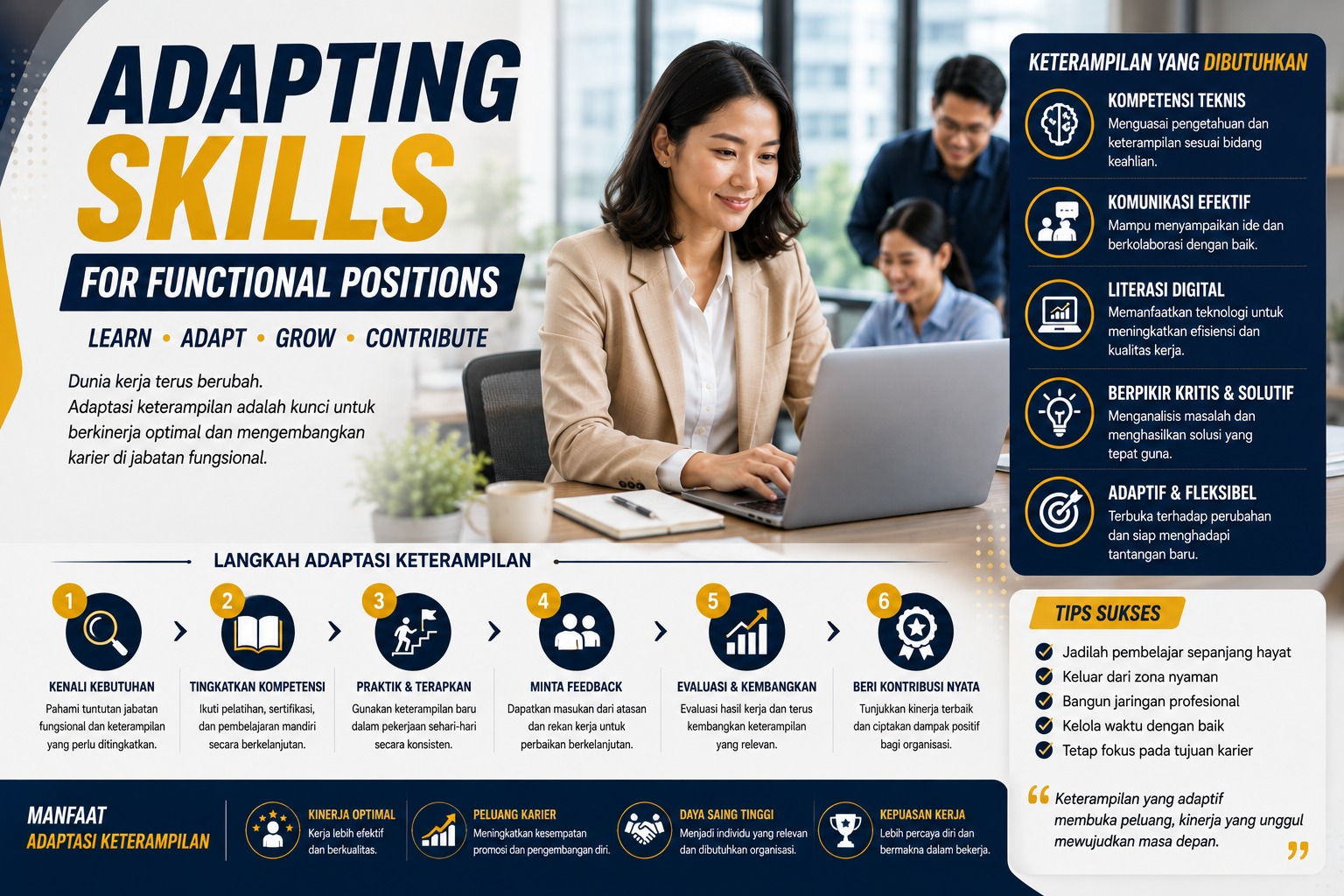
The modern workplace continues to change because of technology, organizational development, and evolving professional requirements. These changes require employees to adjust their skills so they can remain effective in their functional positions. Technical expertise remains important, but professionals also need communication, problem-solving, digital, and adaptability skills. Developing the right combination of abilities can help employees maintain strong performance and prepare for future career opportunities.
Skill adaptation is not simply about learning as many new abilities as possible. Professionals need to identify which competencies are relevant to their responsibilities and career goals. By continuously evaluating their capabilities and learning new approaches, employees can become more flexible, productive, and professionally prepared.
UNDERSTANDING SKILL ADAPTATION
Skill adaptation refers to the process of adjusting and developing abilities according to changing workplace requirements. In functional positions, employees may need to update their technical knowledge when procedures, technologies, or professional standards change. This process helps ensure that existing competencies remain relevant. Continuous skill development is therefore an important part of professional growth.
Adaptation also requires employees to recognize gaps between their current abilities and future requirements. Identifying these gaps allows professionals to determine which skills should receive greater attention. With a clear understanding of their development needs, employees can create a more focused professional learning strategy.
DEVELOPING TECHNICAL COMPETENCE
Technical competence remains the foundation of most functional positions. Professionals need sufficient knowledge and practical skills to perform their specific responsibilities accurately. Strong technical abilities can improve work quality and help employees solve problems more effectively. However, technical competence must evolve as professional practices change.
Employees can strengthen their technical abilities through training, education, practical assignments, and independent learning. Applying new knowledge directly to workplace situations can also improve understanding and confidence. This approach helps professionals maintain relevant and up-to-date expertise.
STRENGTHENING DIGITAL SKILLS
Digital transformation has changed how many functional positions are performed. Professionals may use digital platforms for communication, documentation, data management, reporting, and analysis. Understanding relevant technologies can make work processes faster and more efficient. Digital competence has therefore become an increasingly valuable supporting skill.
Digital skills should be developed according to actual workplace needs. Professionals do not necessarily need to master every new technology, but they should understand tools that can improve their responsibilities. Combining digital capabilities with specialized expertise can create more effective professional performance.
IMPROVING COMMUNICATION AND COLLABORATION
Technical skills are more valuable when professionals can communicate their knowledge clearly. Employees may need to explain information, coordinate responsibilities, present findings, or work with colleagues from different departments. Communication skills can reduce misunderstandings and support more efficient teamwork.
Collaboration also provides opportunities to learn from people with different experiences and expertise. Professionals should be willing to listen, share information, and contribute constructively to group tasks. Strong communication and collaboration can support better workplace relationships and professional results.
BUILDING PROBLEM SOLVING SKILLS
Functional professionals often encounter situations that cannot be solved through routine procedures alone. They need to identify problems, analyze available information, and determine appropriate solutions. Problem-solving skills help employees respond effectively to unexpected workplace challenges.
Problem solving can be strengthened through practical experience and reflection. Professionals can review previous challenges and identify which approaches worked well and which need improvement. Developing this ability can increase professional confidence and decision-making quality.
DEVELOPING ADAPTABILITY
Adaptability is essential when workplace conditions change. New technologies, procedures, responsibilities, and organizational priorities can require employees to modify their working methods. Professionals with strong adaptability can respond to these changes while maintaining their core responsibilities.
Adaptability also involves having an open attitude toward learning. Employees should be willing to accept feedback and consider better approaches to completing their work. By combining flexibility with professional standards, individuals can remain effective in changing work environments.
CREATING A CONTINUOUS LEARNING HABIT
Skill adaptation becomes easier when learning is treated as a regular professional habit. Employees can set aside time to read, practice, attend training, or explore developments within their field. Continuous learning helps professionals stay informed about changes that may affect their responsibilities.
Learning should also be connected to practical application. New knowledge becomes more valuable when it can improve an actual work process or solve a professional problem. This connection between learning and practice can support sustainable competency development.
PLANNING FUTURE SKILLS
Professionals should consider not only the skills they need today but also those that may become important in the future. Reviewing workplace trends and changes in their professional field can help employees identify potential areas for development. Future skill planning allows individuals to prepare before new requirements become urgent.
Career goals should also influence skill development priorities. Professionals can choose competencies that support both their current responsibilities and their long-term career direction. This approach creates a more strategic and purposeful professional development plan.
CONCLUSION
Adapting skills for functional positions requires professionals to continuously develop technical expertise while strengthening digital, communication, problem-solving, and adaptability skills. The most effective development strategy begins with identifying current competency gaps and connecting learning activities with real workplace needs. Continuous learning can help employees remain relevant as professional requirements evolve. By combining specialized expertise with adaptable skills, professionals can improve performance and build stronger long-term careers.
About the Author
Gusti Ayu Tita P
Author — STEKOM University
An active author focused on academic issues, educational technology, and human resource development in the campus environment.















