Advantages of KRL Compared to Other Public Transportation
Gusti Ayu Tita P
11 Agustus 2026
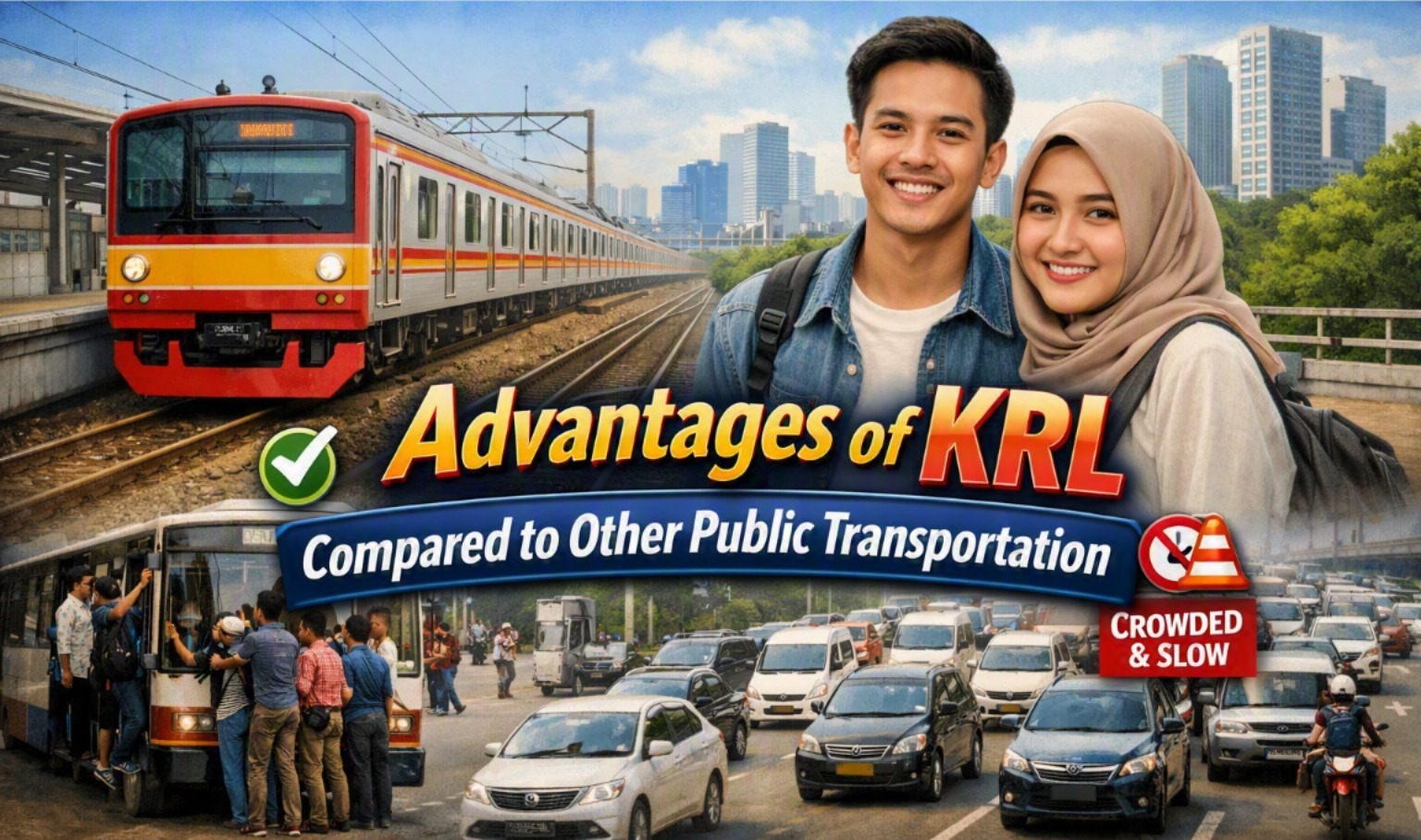
KRL, or Commuter Rail, is one of the most important forms of public transportation for people who travel regularly in urban areas. In Indonesia, KRL helps connect residential areas with business districts, educational centers, and other important destinations. Compared with buses, private vehicles, and other public transportation options, KRL offers several advantages for daily commuters. Its combination of speed, capacity, affordability, and efficiency makes it an attractive choice for people who need reliable transportation. Understanding these advantages can help commuters choose a transportation mode that better suits their daily needs.
FASTER TRAVEL FOR DAILY COMMUTERS
One of the main advantages of KRL is its ability to provide relatively fast travel between connected areas. KRL operates on dedicated railway tracks, so it is generally less affected by road traffic congestion than buses and private vehicles. This can make travel times more predictable, especially during busy commuting hours. Passengers can also use their travel time to rest, read, or prepare for work and school instead of focusing on driving.
KRL is particularly useful for commuters who regularly travel between suburban areas and city centers. Direct railway connections can reduce the need to change transportation several times during a journey. Although travel time still depends on the route, station stops, and operating conditions, KRL can be an efficient option for long daily commutes. This makes it valuable for workers, students, and other passengers with regular travel schedules.
HIGH PASSENGER CAPACITY
KRL can carry a large number of passengers in a single trip, making it more efficient for busy urban routes. A train can transport many more people than a typical private car, while multiple train cars can increase total capacity even further. This characteristic is especially important in densely populated areas where transportation demand is high. By moving many passengers at once, KRL can help reduce the number of individual vehicles using busy roads.
High passenger capacity also supports more efficient use of urban transportation infrastructure. Instead of requiring every commuter to use a separate vehicle, KRL allows many people to travel together. When managed properly, this can help reduce road congestion and improve overall mobility. However, passengers may still experience crowded conditions during peak hours, so proper scheduling and service management remain important.
MORE AFFORDABLE FOR REGULAR TRAVEL
Another important advantage of KRL is its potential to provide affordable transportation for daily commuters. Compared with the cost of owning and operating a private vehicle, public transportation can reduce expenses related to fuel, parking, maintenance, insurance, and vehicle depreciation. For people who travel frequently, these savings can become significant over time. KRL therefore provides a practical option for commuters who want to manage their daily transportation budget.
The affordability of KRL is also beneficial for students, employees, and other passengers who need to travel regularly. Passengers generally pay according to the applicable fare system rather than bearing the full operating cost of a private vehicle. Lower transportation costs can leave more of a person's income available for other daily needs. For this reason, KRL can be an economical alternative to private transportation for suitable routes.
REDUCES DEPENDENCE ON PRIVATE VEHICLES
Using KRL can help people reduce their dependence on private cars and motorcycles for daily travel. When more commuters choose trains, fewer individual vehicles may be needed on the road. This can contribute to lower traffic pressure, particularly on routes that experience heavy congestion during peak hours. Public transportation is therefore an important part of efforts to create more efficient urban mobility.
KRL also supports the concept of shared transportation, where many passengers use the same vehicle for one journey. This can make transportation resources more efficient compared with every person traveling separately. However, the impact depends on factors such as service frequency, network coverage, station accessibility, and passenger demand. Good integration with other transportation services is essential to make KRL a convenient alternative to private vehicles.
SUPPORTS MORE SUSTAINABLE URBAN MOBILITY
KRL can contribute to more sustainable urban transportation because rail systems are designed to move large numbers of passengers efficiently. When public transportation is widely used, cities can reduce their reliance on individual vehicles and potentially lower transportation-related environmental impacts. Electric commuter trains can also support cleaner urban mobility when their electricity supply is increasingly supported by cleaner energy sources. This makes rail transportation an important component of long-term sustainable transport planning.
Beyond environmental benefits, KRL can improve the overall efficiency of urban movement. A reliable railway network can connect residential communities with workplaces, schools, commercial areas, and transportation hubs. Integrated public transportation can make it easier for passengers to combine KRL with buses, walking, cycling, or other modes. As cities continue to grow, this integration becomes increasingly important for building a practical and sustainable transportation system.
COMPARISON WITH OTHER PUBLIC TRANSPORTATION
Compared with buses, KRL generally has the advantage of operating on dedicated tracks, which can reduce the impact of road congestion. Buses, however, can serve more flexible routes and reach neighborhoods that are not connected to railway stations. Compared with taxis and ride-hailing services, KRL is usually more economical for regular travel but does not provide the same door-to-door convenience. Each transportation mode therefore has different strengths depending on the passenger's destination, budget, and travel requirements.
KRL is particularly effective when passengers need to travel along busy and well-connected railway corridors. Buses and other feeder services remain important because they can connect passengers from residential areas to train stations. This means KRL does not necessarily replace other forms of public transportation. Instead, the best urban mobility system combines different modes so passengers can travel efficiently from their starting point to their final destination.
CONCLUSION
The advantages of KRL compared to other public transportation include fast travel on dedicated railway tracks, high passenger capacity, affordable fares, and reduced dependence on private vehicles. KRL can also support more sustainable urban mobility by encouraging shared transportation and improving connections between different areas. Nevertheless, its effectiveness depends on route coverage, service frequency, station accessibility, comfort, and integration with other transportation modes. For commuters traveling along suitable railway routes, KRL can be a practical, economical, and efficient transportation choice. With continued improvements in public transportation infrastructure and service quality, KRL can play an increasingly important role in supporting modern urban mobility.
About the Author
Gusti Ayu Tita P
Author — STEKOM University
An active author focused on academic issues, educational technology, and human resource development in the campus environment.