
Affordable Public Transportation for Better City Access
Gusti Ayu Tita P
11 Agustus 2026
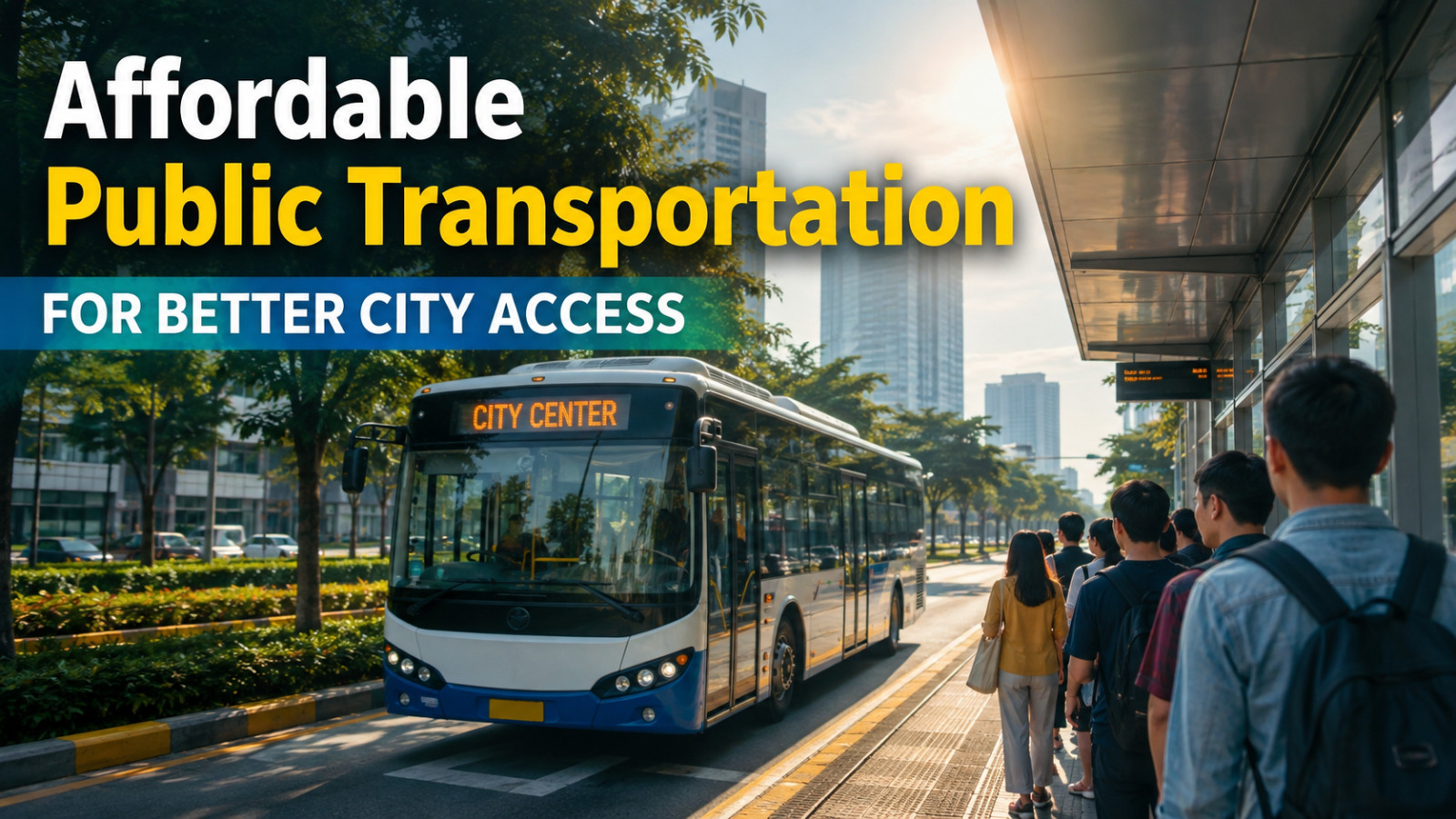
Affordable public transportation plays an important role in making cities more accessible to everyone. Low-cost buses, trains, and other public transit services help people travel to work, school, healthcare facilities, shopping areas, and other important destinations without spending too much money. As cities continue to grow, affordable transit becomes increasingly important for supporting daily mobility and reducing transportation inequality. A well-planned public transportation system can also help communities become more connected and economically active.
THE IMPORTANCE OF AFFORDABLE PUBLIC TRANSPORTATION
Affordable public transportation gives people a practical alternative to using private vehicles every day. Lower transportation costs can help households manage their budgets while still allowing family members to reach essential destinations. Students, workers, older adults, and people without private vehicles can benefit greatly from reliable and reasonably priced transit services. Affordable fares are especially valuable in cities where living and commuting costs continue to increase.
Public transit can also support equal access to opportunities. When transportation is affordable and widely available, people can more easily reach employment centers, educational institutions, medical services, and public facilities. This can reduce the disadvantages experienced by residents who live far from major urban areas. Therefore, affordable transportation is not only a mobility service but also an important part of building a more inclusive city.
HOW AFFORDABLE TRANSIT IMPROVES CITY ACCESS
Affordable transit makes it easier for residents to move between different parts of a city. Integrated bus and rail networks can provide convenient connections between residential neighborhoods, business districts, schools, and public facilities. When fares remain reasonable, people are more likely to use public transportation regularly instead of depending entirely on private vehicles. This creates better mobility for both individuals and communities.
Good accessibility also depends on more than cheap fares. Public transportation should be reliable, safe, frequent, and easy to understand. Clear routes, convenient schedules, accessible stations, and simple payment systems can make transit more useful for a wider range of passengers. Combining affordability with service quality can encourage more people to choose public transportation for their daily activities.
SUPPORTING WORKERS AND STUDENTS
Transportation costs can have a significant effect on workers and students who travel frequently. Affordable public transit can reduce the amount of money spent on daily commuting, leaving more income available for food, education, housing, and other essential needs. Workers can reach employment opportunities more easily when transportation networks connect residential areas with business and industrial zones. Students can also benefit from affordable routes to schools, colleges, libraries, and other learning facilities.
Reliable transit can further expand access to employment and education. People are not limited to opportunities located within walking distance or near their homes when they have access to affordable transportation. Better mobility can widen the range of jobs and educational opportunities available to residents. In the long term, this can contribute to stronger economic participation and improved quality of life.
REDUCING TRANSPORTATION INEQUALITY
Transportation inequality occurs when some groups have much greater difficulty accessing essential services and opportunities than others. High fares, limited routes, or poor service can create additional challenges for low-income households and underserved communities. Affordable public transportation can help reduce these barriers by providing a more accessible way to travel. However, affordability should be supported by routes that actually serve the areas where people live and work.
Cities can address transportation inequality by studying travel patterns and identifying communities with limited mobility options. Targeted fare programs, improved routes, and better connections can help make public transit more inclusive. Accessibility features such as low-floor vehicles, elevators, ramps, and clear information are also important for passengers with different mobility needs. A transportation system designed around diverse users can provide broader benefits across the entire city.
AFFORDABLE TRANSPORTATION AND URBAN DEVELOPMENT
Affordable public transportation can influence how cities grow and develop. When reliable transit connects different neighborhoods, businesses may gain access to a larger pool of workers and customers. Transit-connected communities can become more attractive places to live, work, and invest when transportation is convenient and reasonably priced. Public transportation can therefore support urban development beyond simply moving passengers from one location to another.
Better transit planning can also encourage more balanced development. Instead of concentrating opportunities in only a few central areas, cities can improve connections between residential neighborhoods and emerging economic centers. Transit-oriented development can support walkable communities and reduce dependence on private vehicles. This approach can help cities use land and transportation infrastructure more efficiently as populations increase.
MAKING PUBLIC TRANSIT MORE ATTRACTIVE
Affordable fares are important, but passengers also expect a comfortable and dependable experience. Cities can improve public transit by increasing service frequency, maintaining vehicles, improving stations, and providing accurate travel information. Clean and safe transportation can encourage people to use public transit more often. When passengers receive good service for a reasonable price, public transportation becomes a stronger alternative to private vehicles.
Digital technology can also improve the passenger experience. Mobile ticketing, real-time arrival information, route-planning applications, and digital payment systems can make transit easier to use. Simple and convenient technology can reduce uncertainty and help passengers plan their journeys more effectively. These improvements are particularly useful in growing cities where transportation networks are becoming more complex.
ENVIRONMENTAL BENEFITS OF AFFORDABLE TRANSIT
Affordable public transportation can contribute to more sustainable urban mobility by encouraging people to share transportation instead of relying on individual cars. Higher public transit use can help reduce the number of private vehicles on busy roads, particularly when services are frequent and convenient. Fewer vehicles can contribute to lower fuel consumption, reduced congestion, and potentially lower transportation-related emissions. The environmental impact depends on factors such as vehicle technology, energy sources, passenger numbers, and overall system efficiency.
Cities can strengthen these benefits by investing in cleaner transit technologies. Electric buses, efficient rail systems, and other low-emission transportation options can support environmental goals while maintaining mobility. Sustainable public transportation can therefore combine affordability, accessibility, and environmental responsibility. This makes transit an important component of long-term urban planning.
CONCLUSION
Affordable public transportation is essential for creating cities where people can reach important destinations without facing excessive travel costs. Reasonable fares, reliable services, extensive coverage, safety, and accessibility can make public transit useful for a broader section of society. Affordable transportation can support workers and students, reduce transportation inequality, encourage economic activity, and contribute to more sustainable urban mobility.
As cities continue to grow, transportation planning should focus on both affordability and service quality. Investing in well-connected networks and passenger-friendly technology can make public transit more attractive and practical. Better public transportation can help create more connected, inclusive, and accessible cities where mobility is available to more people.
About the Author
Gusti Ayu Tita P
Author — STEKOM University
An active author focused on academic issues, educational technology, and human resource development in the campus environment.















