
AI Animation for Beginners What You Need to Know Before Getting Started
Gusti Ayu Tita P
31 Agustus 2026
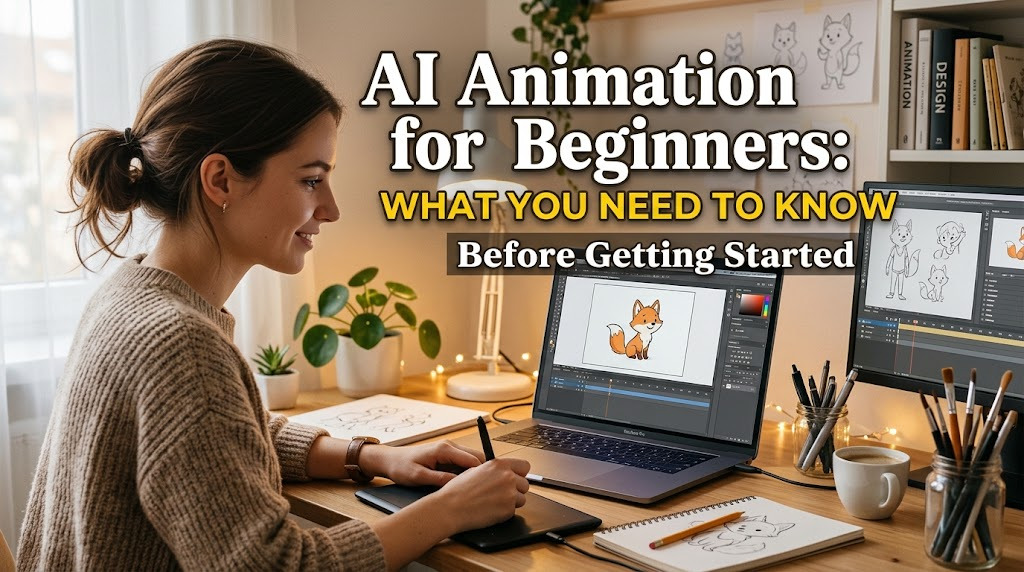
AI animation is a modern way to create moving visual content with the assistance of artificial intelligence. Instead of producing every movement manually, beginners can use AI tools to generate animations from text prompts, images, sketches, or existing video. This makes animation more accessible to people who have little or no experience with traditional animation software.
For beginners, the most important thing is understanding that AI does not automatically create a perfect animation every time. The quality of the result depends on the prompt, reference material, AI tool, visual direction, and editing process. Learning how to describe an idea clearly is therefore an important skill when starting with AI video generation.
HOW DOES AI ANIMATION WORK?
Most AI animation tools begin with an input provided by the user. This input can be a written description, such as a character walking through a busy city, or an image that the creator wants to transform into a moving scene. The AI analyzes the input and generates motion or visual elements based on patterns learned from its training.
Different platforms use different approaches. Some specialize in text to video, while others can transform a still picture into a short animated sequence through image to video technology. More advanced systems may also provide controls for camera movement, character motion, visual style, duration, and other creative elements.
WHAT SHOULD BEGINNERS PREPARE BEFORE STARTING?
Before creating an animation, beginners should first decide what they want to produce. A simple concept, such as a short character story or educational animation, is usually easier to manage than a complicated film with many characters and locations. Having a clear idea helps prevent unnecessary experimentation and makes the production process more organized.
It is also useful to prepare reference images, character descriptions, story ideas, and visual styles before opening an AI animation platform. These materials can help maintain consistency throughout the project. Beginners should also understand the platform's available features, limitations, pricing, usage rights, and export options before relying on it for important content.
HOW TO WRITE EFFECTIVE AI ANIMATION PROMPTS
A good AI animation prompt should explain the important visual and motion details clearly. Instead of writing only "a woman walking," a more useful prompt might describe the character, environment, movement, camera perspective, lighting, and overall visual style. Specific instructions can give the AI a clearer understanding of the desired result.
However, adding too many unrelated details can also make a prompt confusing. Beginners should start with the main subject, action, environment, camera movement, and style, then gradually improve the prompt based on the output. Learning through repeated testing is one of the most practical ways to understand how a particular AI animation tool interprets instructions.
BEST TYPES OF AI ANIMATION PROJECTS FOR BEGINNERS
Beginners should start with projects that have simple movements and limited visual complexity. Examples include animating a photograph, creating a short product presentation, producing an animated social media post, or making a short character scene. These projects allow users to understand the basic workflow without dealing with too many variables.
Short-form content is another good starting point because it requires less material than a long video. A creator can produce several short clips and learn how AI-generated animation behaves before attempting a larger project. This approach also makes it easier to identify problems with character consistency, motion, composition, and timing.
COMMON MISTAKES BEGINNERS SHOULD AVOID
One common mistake is expecting AI to produce a finished professional animation from a single prompt. Although modern systems can generate impressive results, outputs may still contain inconsistent characters, unnatural movements, distorted objects, or unexpected visual details. Reviewing and editing the generated material is therefore essential.
Another mistake is ignoring the importance of storytelling. Attractive visuals alone do not guarantee an interesting video. Beginners should pay attention to story structure, pacing, sound, transitions, and audience expectations. They should also avoid copying recognizable characters, copyrighted artwork, or other people's creative work without appropriate rights or permission.
HOW TO IMPROVE YOUR AI ANIMATION SKILLS
The easiest way to improve is to practice with small projects and compare different prompts. Try changing one element at a time, such as camera movement, lighting, character action, or animation style. This makes it easier to understand which instructions produce better results.
Beginners should also learn basic video editing skills alongside AI animation. Editing software can help cut unwanted sections, combine multiple AI-generated clips, add subtitles, synchronize audio, and improve the final presentation. The strongest workflow often combines AI animation technology with human creativity and editing judgment.
CONCLUSION
Starting with AI animation for beginners does not require advanced animation expertise, but it does require patience and experimentation. Understanding how AI tools work, preparing clear ideas, and writing effective prompts can significantly improve the quality of generated content.
The best approach is to start small, learn from each result, and gradually develop more complex projects. By combining AI animation tools, creative storytelling, effective prompts, and basic video editing, beginners can create engaging animated content while continuing to develop their creative skills.
About the Author
Gusti Ayu Tita P
Author — STEKOM University
An active author focused on academic issues, educational technology, and human resource development in the campus environment.















