
Air Pollution: The Invisible Danger
Gusti Ayu Tita P
1 Oktober 2026
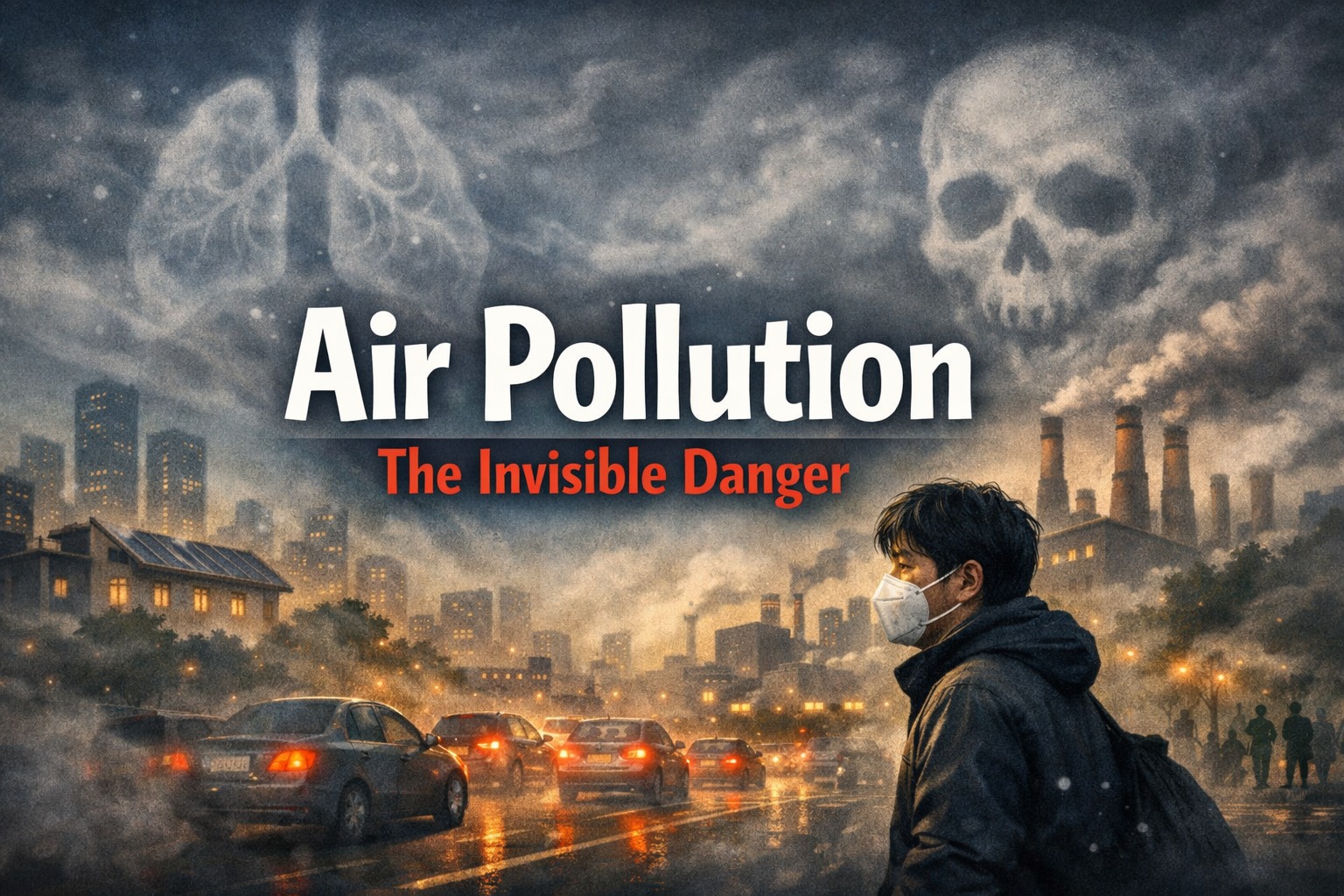
Air pollution is one of the most serious environmental threats facing the world today. Unlike floods or earthquakes, it cannot always be seen, yet its impact is felt every day. From busy cities to rural communities, polluted air affects human health, ecosystems, and the global climate. Understanding this invisible danger is the first step toward protecting our future.
---
## WHAT IS AIR POLLUTION?
Air pollution occurs when harmful substances such as gases, dust, and smoke enter the atmosphere and reduce air quality. These pollutants can come from both natural and human-made sources, but modern industrial activities have significantly accelerated the problem.
Common air pollutants include carbon monoxide, sulfur dioxide, nitrogen oxides, and fine particulate matter. These particles are so small that they can enter the lungs and bloodstream, causing serious health issues.
---
## MAIN SOURCES OF AIR POLLUTION
### 1. VEHICLE EMISSIONS
Cars, motorcycles, and trucks release large amounts of harmful gases into the air. Urban areas with heavy traffic often experience the worst air quality.
### 2. INDUSTRIAL ACTIVITIES
Factories and power plants burn fossil fuels to produce energy, releasing pollutants that contribute to smog and acid rain.
### 3. BURNING OF WASTE
Open burning of garbage and agricultural waste releases toxic smoke and dangerous particles.
### 4. HOUSEHOLD ACTIVITIES
Cooking with traditional fuels and using certain household chemicals can also contribute to indoor air pollution.
---
## HEALTH IMPACTS OF AIR POLLUTION
Air pollution poses a serious risk to human health. Long-term exposure can lead to respiratory diseases, heart problems, and reduced immune function.
Children and elderly people are especially vulnerable. Poor air quality has been linked to asthma, lung infections, and decreased life expectancy. Even short-term exposure can cause headaches, irritation, and breathing difficulties.
---
## ENVIRONMENTAL CONSEQUENCES
Beyond human health, air pollution damages the environment in multiple ways:
* Contributes to climate change
* Damages crops and forests
* Causes acid rain
* Reduces visibility and sunlight
These effects threaten food security, biodiversity, and overall environmental balance.
---
## HOW TO REDUCE AIR POLLUTION
Everyone can play a role in reducing air pollution through simple daily actions.
### 1. USE PUBLIC TRANSPORTATION
Reducing the number of private vehicles on the road helps cut emissions.
### 2. SAVE ENERGY AT HOME
Using energy-efficient appliances and turning off unused electronics reduces fossil fuel consumption.
### 3. PLANT MORE TREES
Trees absorb carbon dioxide and help improve air quality.
### 4. AVOID BURNING WASTE
Proper waste management prevents toxic smoke from entering the air.
---
## CONCLUSION
Air pollution may be invisible, but its impact is real and dangerous. By understanding its sources and taking action to reduce emissions, individuals and communities can help create cleaner air and a healthier planet. The fight against air pollution starts with awareness and small steps taken every day.
---
About the Author
Gusti Ayu Tita P
Author — STEKOM University
An active author focused on academic issues, educational technology, and human resource development in the campus environment.