
Airport Facilities You Should Know Before Flying
Gusti Ayu Tita P
10 Agustus 2026
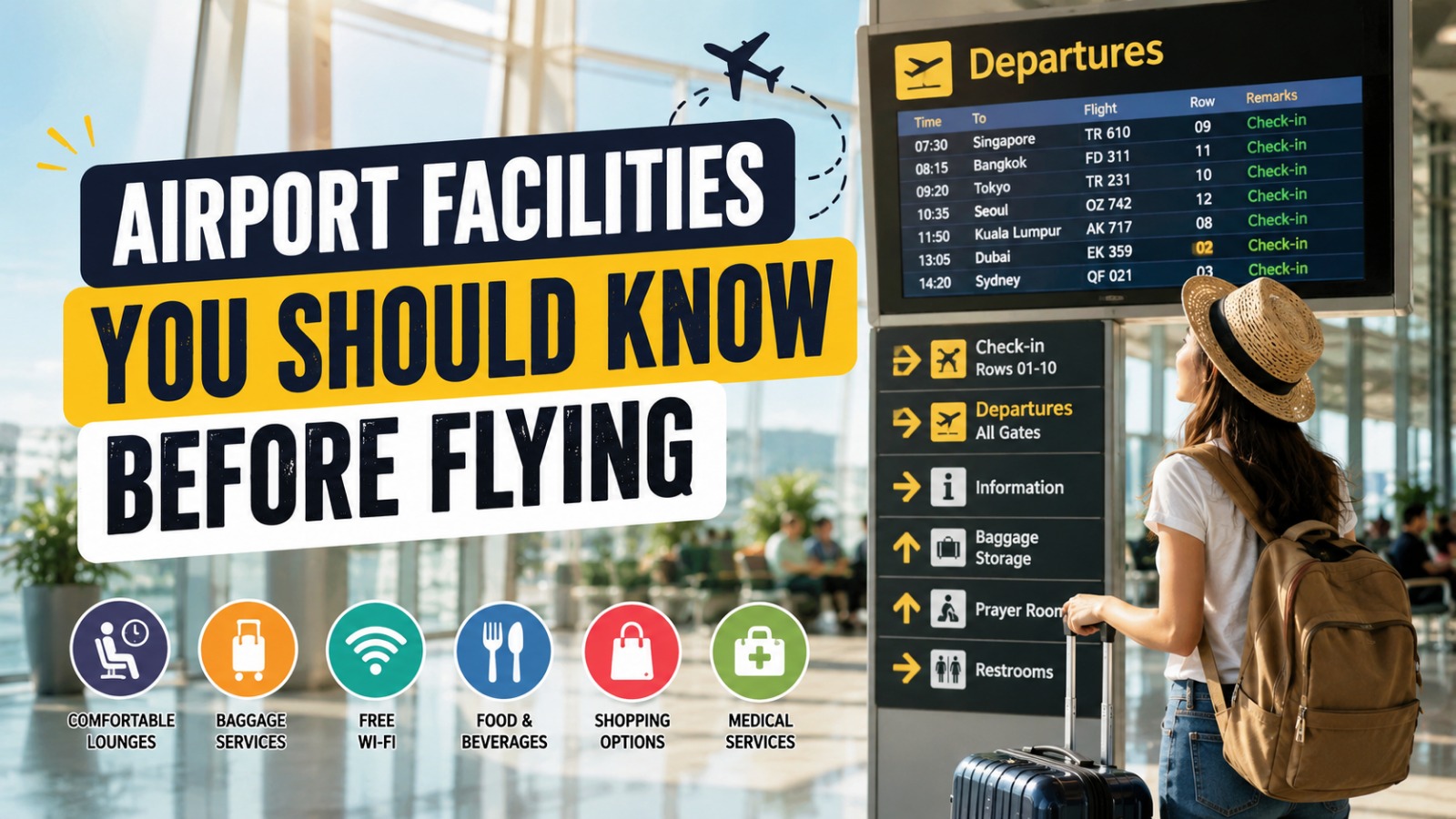
Airports are more than just places to catch a flight. They provide various facilities designed to make the travel experience safer, easier, and more comfortable. For first time travelers, knowing where these facilities are located can save time and reduce confusion.
From check in counters and security screening areas to lounges, information desks, and medical services, each facility has a specific purpose. Understanding these facilities before flying helps passengers plan their journey better and navigate the airport with greater confidence.
CHECK IN COUNTERS AND SELF SERVICE KIOSKS
Check in counters are one of the most important facilities at an airport. Passengers can use them to confirm their flight, receive a boarding pass, check in luggage, and ask airline staff about their journey. The exact location of the counter can usually be found on airport flight information screens.
Many airports also provide self service kiosks that allow passengers to check in without waiting at a traditional counter. Depending on the airline and airport, passengers may be able to select seats and print boarding passes or baggage tags through these machines. Travelers with special requests or certain international documents may still need assistance from airline staff.
SECURITY SCREENING AREA
The security screening area is where passengers and their cabin baggage are checked before entering the departure area. Passengers may be asked to place bags and selected personal items into trays for screening. Security procedures can vary depending on the airport, country, and current security requirements.
Travelers should prepare their belongings before reaching the screening point to avoid unnecessary delays. Items such as liquids, electronic devices, and other restricted goods may be subject to specific rules. Following instructions from security officers is important for a smooth and safe screening process.
INFORMATION DESK
An information desk can be extremely helpful, especially for first time travelers. Airport staff can provide directions and general information about terminals, gates, transportation, facilities, and airport procedures. If you are unsure where to go, asking for assistance is usually faster than trying to navigate a large airport alone.
Some airports also provide information through digital screens, mobile applications, or customer service counters. Make sure you have your flight number ready when asking about a specific flight. This allows staff to provide more relevant information about your journey.
BAGGAGE SERVICES
Baggage services help passengers deal with checked luggage before and after a flight. These services may assist with delayed, damaged, or missing baggage and can provide information about the baggage claim process. The location of the baggage service office may vary between airports and airlines.
After landing, passengers should follow signs to the baggage claim area. Check the baggage carousel information on airport screens before collecting a suitcase. Always compare the baggage tag with your own receipt or identification details before leaving the airport.
AIRPORT LOUNGES
Airport lounges provide a quieter and more comfortable place to wait before a flight. Depending on the airport and lounge, facilities may include seating areas, Wi Fi, food, drinks, charging stations, and workspaces. Access may be available through certain airline tickets, memberships, payment, or eligible travel cards.
Not every passenger needs to use a lounge, but it can be useful during long waits or flight connections. Check the lounge location and access requirements before traveling. Some lounges are located after security, so passengers should make sure they have enough time to reach their boarding gate.
RESTROOMS AND BABY CARE ROOMS
Restrooms are available throughout most airports and are generally located near check in areas, departure gates, and baggage claim zones. Larger airports may also provide accessible restrooms designed for passengers with mobility needs. Knowing their location can be particularly useful during long airport waits.
Many airports also provide baby care rooms or family facilities for passengers traveling with infants. These spaces may offer changing tables and areas for feeding or caring for children. Families should check airport maps to find the nearest facilities before moving between terminals or gates.
CHARGING STATIONS AND WI FI
Free Wi Fi and charging facilities can be very useful while waiting for a flight. Passengers can use them to check flight updates, contact family members, access digital travel documents, or work while waiting. However, availability and connection quality can vary between airports.
Travelers should charge their devices before boarding because flights may not always provide convenient charging options. Carrying a suitable charging cable and a permitted power bank can provide additional flexibility. Always follow airline rules regarding batteries and power banks.
MEDICAL AND FIRST AID SERVICES
Many airports have medical facilities or first aid services for passengers who become unwell or need emergency assistance. Their availability and operating hours can vary depending on the airport. Passengers with specific medical needs should check available services before traveling.
If you need regular medication during a trip, keep essential medicine accessible and follow the applicable airline and airport requirements. Do not wait until a serious problem occurs before asking for help. Airport employees can direct passengers to the appropriate medical service when necessary.
TRANSPORTATION AND PARKING FACILITIES
Airports usually provide several transportation options for passengers traveling to and from the terminal. These may include airport buses, trains, taxis, ride services, rental cars, and private parking areas. The available options depend on the airport and its location.
Before flying, check how long it takes to travel from the airport entrance or parking area to your terminal. Large airports may require additional time to reach the correct terminal. Planning transportation in advance can help prevent delays before check in.
ACCESSIBILITY FACILITIES
Accessibility facilities are designed to help passengers with disabilities, reduced mobility, or other special requirements. Airports may provide accessible toilets, elevators, ramps, dedicated assistance services, and priority facilities. The exact services available differ between airports.
Passengers who need special assistance should contact their airline in advance whenever possible. Early communication allows the airline and airport to prepare appropriate support. Travelers should also arrive with enough time to complete the check in and security process comfortably.
CONCLUSION
Understanding airport facilities before flying can make the travel experience more comfortable and organized. Important facilities include check in counters, security screening areas, information desks, baggage services, lounges, restrooms, charging stations, medical services, transportation areas, and accessibility facilities.
First time travelers should check the airport website or terminal map before departure to understand where important facilities are located. Preparing in advance reduces confusion and gives passengers more time to focus on their flight.
About the Author
Gusti Ayu Tita P
Author — STEKOM University
An active author focused on academic issues, educational technology, and human resource development in the campus environment.















