
Ancient Javanese Palace Traditions That Still Survive Today
Gusti Ayu Tita P
4 September 2026
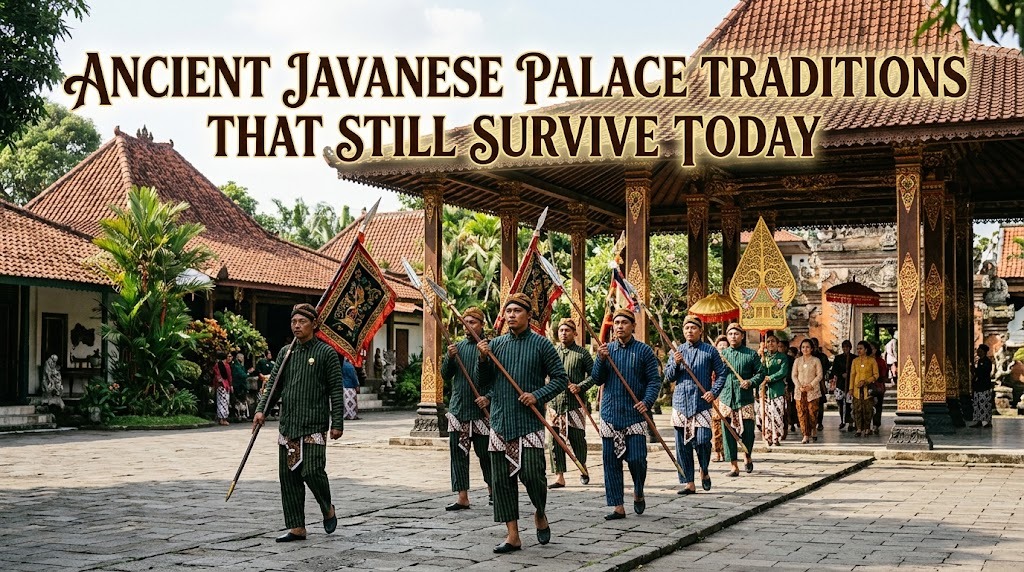
Javanese royal palaces are more than historical buildings. They are living cultural spaces where ancient traditions, arts, ceremonies, values, and social customs continue to be practiced. Although Indonesia has experienced significant social and technological changes, several palace traditions remain relevant and are still passed from one generation to another.
THE HISTORICAL ROOTS OF JAVANESE PALACE TRADITIONS
Javanese palace traditions developed alongside the growth of royal centers in Java. Palaces such as the Kraton Yogyakarta and Kasunanan Surakarta became important places for political activities as well as the development of Javanese culture. Within these environments, customs were organized and preserved through generations. Many traditions were closely connected to ideas about respect, harmony, discipline, and relationships between people and their surroundings.
The palace was also an important center for Javanese arts and cultural education. Music, dance, language, ceremonies, clothing, and traditional etiquette developed within palace communities. Even after the political role of Javanese kingdoms changed, many of these cultural practices continued because communities considered them valuable parts of their heritage.
TRADITIONAL CEREMONIES THAT REMAIN ALIVE
One of the clearest examples of surviving palace traditions is the continuation of traditional ceremonies. Various ceremonies are held to mark important moments in the Javanese cultural calendar, including royal celebrations and traditional commemorations. These events often involve special clothing, music, offerings, processions, and established sequences that have been maintained over long periods.
Ceremonies such as Sekaten demonstrate how palace traditions can remain connected to the wider community. In Yogyakarta and Surakarta, Sekaten has historical links to the spread of Islam in Java and remains an important cultural event. The continuation of such ceremonies shows that traditions can adapt to changing circumstances while retaining their historical character.
JAVANESE GAMELAN AND PALACE PERFORMING ARTS
Gamelan music has an important place in Javanese palace culture. Traditional ensembles are used in ceremonies, cultural performances, and other important occasions. The music is not simply entertainment because it can also create a particular atmosphere during rituals and reinforce the cultural identity of the palace community.
Traditional dances and theatrical performances are also preserved in palace environments. Javanese dance often emphasizes controlled movements, gestures, facial expressions, and disciplined body positions. Palace traditions have helped maintain knowledge about these art forms, including their movements, musical accompaniment, costumes, and cultural meanings. Through performances and training, younger generations can continue learning artistic practices that might otherwise become less familiar.
PALACE ETIQUETTE, CLOTHING, AND DAILY CUSTOMS
Another tradition that continues to survive is Javanese etiquette. Respectful behavior, appropriate speech, and awareness of social relationships have traditionally been important within palace culture. These values can still be observed during formal palace events, where participants are expected to follow established manners and procedures.
Traditional clothing also remains an important cultural symbol. Javanese batik, traditional dress, and specific styles of wearing accessories may appear during ceremonies and cultural occasions. These forms of clothing are not merely decorative because they can communicate identity, social context, and respect for tradition. The continued use of traditional attire helps connect contemporary communities with the cultural practices of earlier generations.
SYMBOLS, PHILOSOPHY, AND CULTURAL VALUES
Javanese palaces contain numerous symbols and philosophical meanings. Architectural layouts, traditional objects, ornaments, gates, and ceremonial spaces can reflect ideas about harmony, order, leadership, and human relationships. Understanding these symbols provides visitors with a deeper perspective on the palace beyond its physical appearance.
Many palace traditions also emphasize harmony and self-control. These values are reflected in traditional arts, etiquette, ceremonies, and patterns of interaction. Although modern life has changed how people communicate and work, such principles can still be meaningful today. Cultural preservation therefore involves not only maintaining physical buildings but also keeping the values associated with them understandable to younger generations.
THE ROLE OF MODERN GENERATIONS IN PRESERVING TRADITIONS
The survival of ancient Javanese palace traditions depends greatly on cultural transmission. Palace communities, artists, cultural institutions, educators, and younger generations all have roles in maintaining traditional knowledge. Cultural performances, educational programs, documentation, and tourism can provide opportunities for people to learn about traditions in ways that fit contemporary society.
At the same time, preservation should not mean treating culture as something frozen in the past. Adaptation is important because traditions must remain understandable and relevant to modern communities. When younger people participate in traditional arts, ceremonies, and cultural education, they help create a connection between historical heritage and contemporary life.
CONCLUSION
Ancient Javanese palace traditions continue to survive because they are supported by communities that recognize their historical and cultural value. Ceremonies, gamelan music, dance, traditional clothing, etiquette, symbols, and philosophical teachings remain important elements of Javanese heritage. Their continued practice demonstrates that cultural traditions can survive modernization when they are actively taught, practiced, and appreciated.
Preserving these traditions is important for maintaining Indonesia's cultural identity. By learning about Javanese palace heritage, younger generations can understand where many cultural practices originated and why they remain meaningful today. The future of these traditions ultimately depends on creating a balance between respecting their historical roots and allowing them to remain relevant in modern society.
About the Author
Gusti Ayu Tita P
Author — STEKOM University
An active author focused on academic issues, educational technology, and human resource development in the campus environment.















