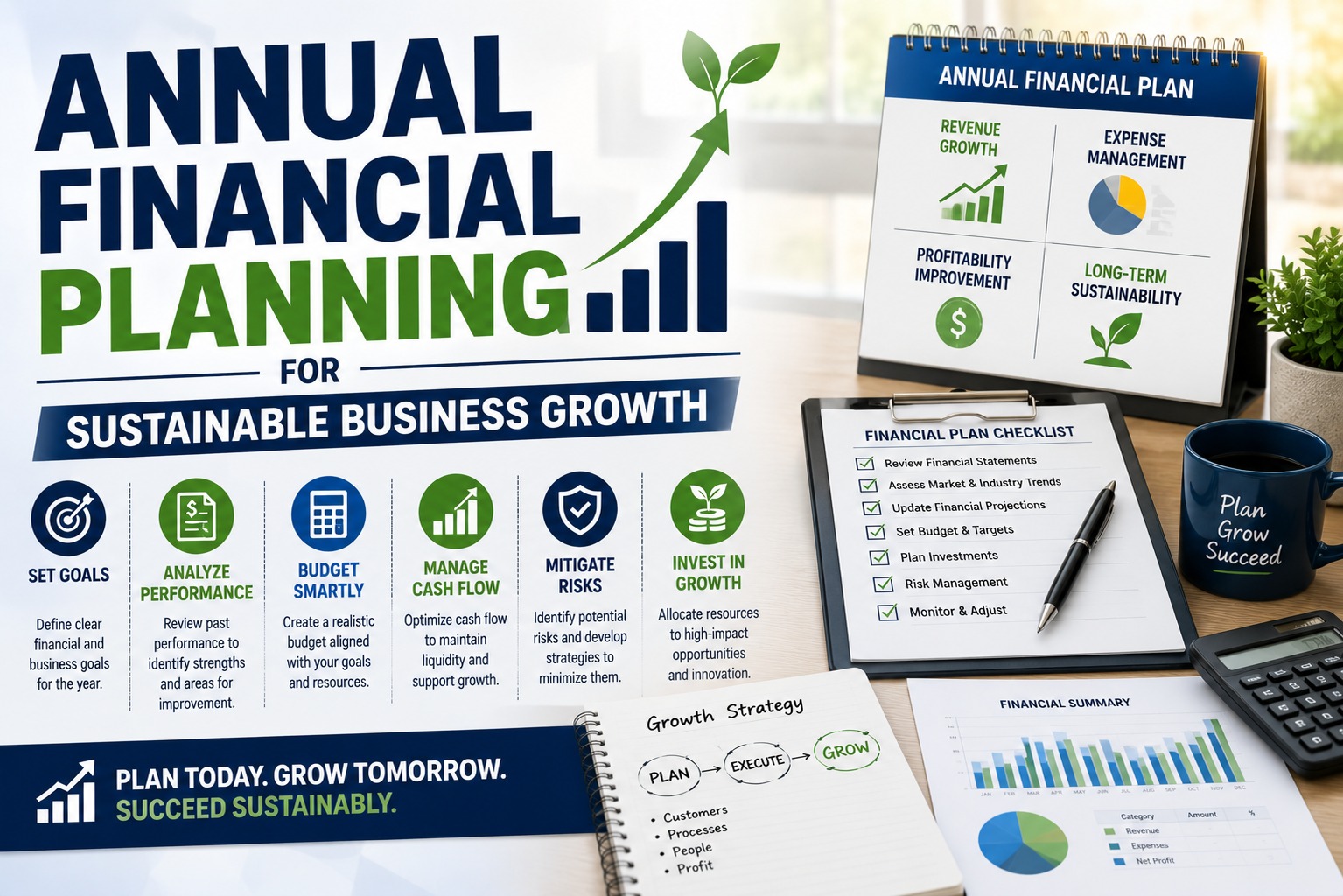
Financial planning is one of the most important foundations of long-term business success. Without a clear financial strategy, businesses may struggle with cash flow problems, uncontrolled expenses, and limited growth opportunities. Annual financial planning helps companies create structured goals, manage resources effectively, and prepare for future challenges.
A strong financial plan not only supports daily operations but also builds stability for sustainable business growth. By reviewing financial performance annually, businesses can make smarter decisions and improve overall profitability.
UNDERSTANDING ANNUAL FINANCIAL PLANNING
Annual financial planning is the process of creating a comprehensive strategy for managing a company’s finances over a one-year period. It involves forecasting revenue, estimating expenses, setting financial goals, and preparing budgets.
The primary purpose of financial planning is to ensure that business activities align with long-term objectives while maintaining financial stability.
A proper annual financial plan usually includes:
- Revenue projections
- Expense budgeting
- Cash flow forecasting
- Investment planning
- Risk management strategies
- Debt management
- Profitability targets
Businesses that conduct annual financial planning are often better prepared to adapt to economic changes and market competition.
SET CLEAR FINANCIAL GOALS
The first step in annual financial planning is establishing clear and measurable financial goals. These goals provide direction for business activities throughout the year.
Examples of financial goals include:
- Increasing annual revenue
- Improving profit margins
- Reducing operational expenses
- Expanding into new markets
- Paying off business debt
- Building emergency cash reserves
Clear goals help business owners evaluate performance and maintain focus on long-term growth.
ANALYZE PREVIOUS FINANCIAL PERFORMANCE
Reviewing previous financial data helps businesses understand their strengths and weaknesses before creating a new financial plan.
Important financial reports to analyze include:
- Income statements
- Balance sheets
- Cash flow statements
- Sales reports
- Expense records
This analysis helps identify trends, recurring problems, and profitable opportunities that can influence future planning decisions.
CREATE REALISTIC REVENUE FORECASTS
Revenue forecasting estimates how much income the business expects to generate during the upcoming year.
Accurate forecasting should consider factors such as:
- Historical sales performance
- Market demand
- Seasonal trends
- Economic conditions
- Competitor activity
Businesses should avoid overly optimistic projections because unrealistic expectations can lead to financial instability.
DEVELOP A DETAILED BUSINESS BUDGET
A business budget outlines expected expenses and helps control spending throughout the year.
Common budget categories include:
- Employee salaries
- Marketing expenses
- Operational costs
- Inventory purchases
- Equipment maintenance
- Technology investments
A detailed budget improves financial discipline and ensures that resources are allocated efficiently.
MONITOR CASH FLOW REGULARLY
Cash flow management is critical for maintaining business operations. Even profitable businesses can experience financial problems if cash flow is poorly managed.
Businesses should track:
- Incoming payments
- Monthly operating expenses
- Loan obligations
- Emergency reserves
Positive cash flow ensures that the business can continue operating smoothly while supporting future growth opportunities.
PREPARE FOR UNEXPECTED RISKS
Every business faces financial uncertainty. Economic downturns, market changes, supply chain disruptions, and emergencies can significantly impact financial stability.
Risk management strategies may include:
- Building emergency savings
- Purchasing business insurance
- Diversifying revenue streams
- Reducing unnecessary debt
Preparing for risks helps businesses remain resilient during difficult situations.
PLAN BUSINESS INVESTMENTS CAREFULLY
Annual financial planning should also include investment strategies that support long-term business development.
Potential investments may involve:
- Technology upgrades
- Employee training
- Product development
- Marketing expansion
- Infrastructure improvements
Businesses should evaluate the expected return and financial impact of each investment before making decisions.
MANAGE BUSINESS DEBT EFFECTIVELY
Debt can support business expansion, but excessive debt may create financial pressure.
Businesses should monitor:
- Loan repayment schedules
- Interest rates
- Debt-to-income ratios
- Financing costs
Effective debt management improves financial stability and protects profitability.
TRACK KEY FINANCIAL INDICATORS
Monitoring financial indicators helps businesses measure performance and identify potential issues early.
Important financial metrics include:
- Revenue growth
- Net profit margin
- Gross profit margin
- Current ratio
- Operating expenses
- Customer acquisition cost
Regular tracking allows businesses to make adjustments before problems become severe.
REVIEW AND UPDATE THE PLAN PERIODICALLY
Financial planning should remain flexible. Business conditions can change throughout the year, requiring adjustments to financial strategies.
Quarterly or monthly reviews help businesses:
- Compare actual performance with projections
- Adjust budgets when necessary
- Respond to market changes
- Improve financial accuracy
Continuous evaluation strengthens financial control and long-term sustainability.
BENEFITS OF ANNUAL FINANCIAL PLANNING
Businesses that implement structured financial planning often experience several advantages, including:
- Better financial control
- Improved profitability
- Stronger cash flow management
- Reduced financial risk
- Smarter investment decisions
- Increased business stability
Financial planning creates a clear roadmap that supports consistent and sustainable growth.
CONCLUSION
Annual financial planning is essential for businesses that want to achieve long-term success and financial stability. By setting clear goals, forecasting revenue, managing expenses, and preparing for risks, companies can strengthen their operations and improve profitability.
A well-structured financial plan helps businesses make informed decisions, maintain healthy cash flow, and adapt to changing market conditions. Consistent financial planning provides the foundation needed for sustainable business growth and long-term competitiveness.
About the Author
Gusti Ayu Tita P
Author — STEKOM University
An active author focused on academic issues, educational technology, and human resource development in the campus environment.