Are Digital Soft Skills Becoming More Important Than Technical Hard Skills?
Gusti Ayu Tita P
28 Agustus 2026
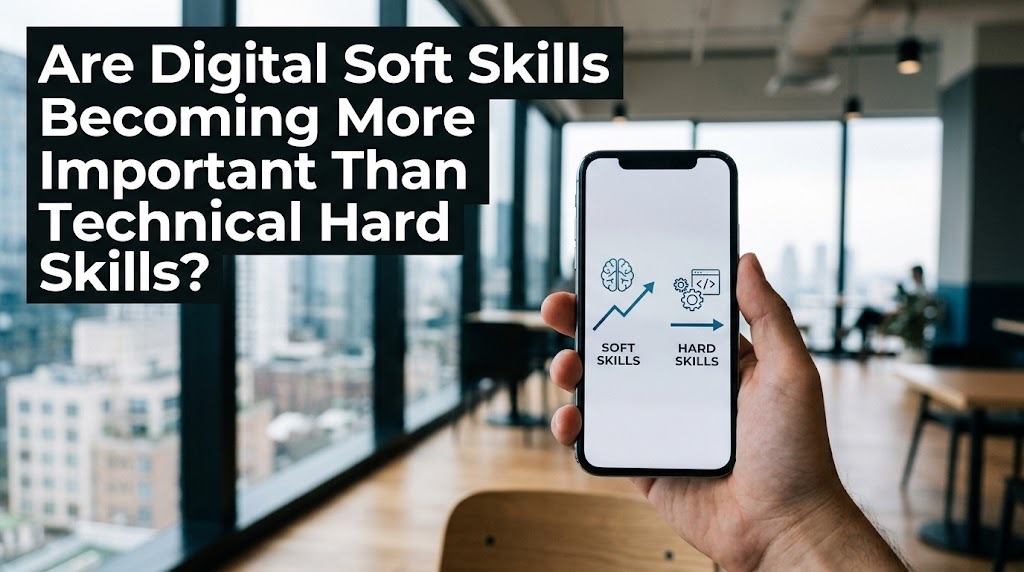
The modern workplace is changing quickly because of digital technology, automation, artificial intelligence, and remote collaboration. As companies adopt new technologies, employees need more than technical knowledge to perform their jobs effectively. They also need to communicate clearly, collaborate with others, solve problems, manage change, and use digital tools responsibly. These abilities are often described as digital soft skills. While technical hard skills remain essential, the growing importance of human-centered abilities raises an important question: are digital soft skills becoming more important than technical hard skills?
WHAT ARE DIGITAL SOFT SKILLS?
Digital soft skills are personal and interpersonal abilities that help people work effectively in technology-driven environments. They include digital communication, collaboration, adaptability, critical thinking, creativity, time management, and responsible technology use. These skills are different from technical abilities such as programming, accounting, data analysis, or operating specialized software. However, digital soft skills help employees use their technical knowledge more effectively. They are especially important when employees need to work with digital platforms and distributed teams.
Digital soft skills also involve understanding how to behave professionally in online environments. Employees may communicate through email, video meetings, messaging platforms, and project management systems. Clear digital communication can reduce misunderstandings and help teams work more efficiently. Therefore, these skills have become an important part of modern professional development.
WHY TECHNICAL HARD SKILLS STILL MATTER
Technical hard skills remain fundamental to many careers. A software developer needs programming knowledge, an accountant needs financial skills, and a graphic designer needs design capabilities. Without the necessary technical foundation, employees may not be able to complete specialized tasks effectively. Technical skills also provide the expertise required to create products, analyze information, and operate professional systems. Therefore, it would be inaccurate to say that soft skills have completely replaced technical skills.
The real change is that employers increasingly need people who can combine technical expertise with strong human skills. A technically skilled employee may struggle if they cannot explain their ideas, collaborate with colleagues, or adapt to changing requirements. Technical competence creates the foundation, while soft skills can determine how effectively that competence is applied.
THE ROLE OF DIGITAL COMMUNICATION
Digital communication has become a central part of modern work. Employees often communicate without meeting colleagues face to face, especially in remote and hybrid workplaces. This requires people to write clear messages, organize information, choose appropriate communication channels, and understand professional online etiquette. Effective digital communication can prevent confusion and reduce unnecessary delays. It also helps teams maintain stronger working relationships.
Communication skills become even more important when projects involve people from different departments or locations. Employees need to explain technical information in ways that others can understand. The ability to listen, ask questions, provide feedback, and communicate clearly can make collaboration much more effective.
WHY EMPLOYERS VALUE A BALANCED SKILL SET
Employers generally need employees who can contribute both technically and professionally. A worker may have excellent technical knowledge but still struggle to deliver results without communication or teamwork. Similarly, strong communication cannot replace the specialized knowledge required for technical roles. The most valuable combination is often technical competence supported by strong soft skills. This combination allows employees to solve problems and work effectively with others.
A balanced skill set can also support career growth. Employees who understand their technical field and communicate effectively may be better prepared for leadership responsibilities. Over time, adaptability, communication, and problem solving can become increasingly important as professionals take on broader responsibilities.
HOW STUDENTS CAN DEVELOP DIGITAL SOFT SKILLS
Students can begin developing digital soft skills before entering the workforce. Joining organizations, participating in group projects, presenting ideas, and working on collaborative assignments can improve communication and teamwork. Students can also practice using digital collaboration tools while completing academic or personal projects. Real experiences are often more effective than simply reading about soft skills. Each project can become an opportunity to evaluate strengths and areas for improvement.
Students should also develop technical skills related to their desired career. Learning software, data tools, programming, design, or other relevant technologies can provide a strong professional foundation. Combining technical learning with communication, adaptability, creativity, and critical thinking can make students better prepared for modern employment.
ARE DIGITAL SOFT SKILLS MORE IMPORTANT THAN HARD SKILLS?
Digital soft skills are becoming more important, but they should not be viewed as a replacement for technical hard skills. Their value depends on the job, industry, and responsibilities involved. A technical profession may require deep specialized knowledge, while a leadership role may place greater emphasis on communication and decision making. The strongest professionals are often those who can combine technical expertise with human-centered abilities. This balance allows them to remain effective as technology and workplace expectations change.
The future of work is therefore more likely to reward skill integration than competition between soft and hard skills. Technical knowledge helps employees understand what can be done, while soft skills help them communicate, collaborate, adapt, and decide how it should be done. Both areas can strengthen each other and support sustainable career development.
CONCLUSION
Digital soft skills are becoming increasingly valuable as technology transforms the modern workplace. Communication, adaptability, critical thinking, creativity, and collaboration help employees use technology effectively and respond to changing professional demands. However, technical hard skills remain essential, especially in specialized careers. Rather than choosing one over the other, professionals should develop a balanced combination of technical expertise and digital soft skills. This combination can improve employability, workplace performance, and long-term career growth in an increasingly digital world.
About the Author
Gusti Ayu Tita P
Author — STEKOM University
An active author focused on academic issues, educational technology, and human resource development in the campus environment.