
Are Employers Moving Away From The Bachelor’s Degree Requirement?
Gusti Ayu Tita P
11 September 2026
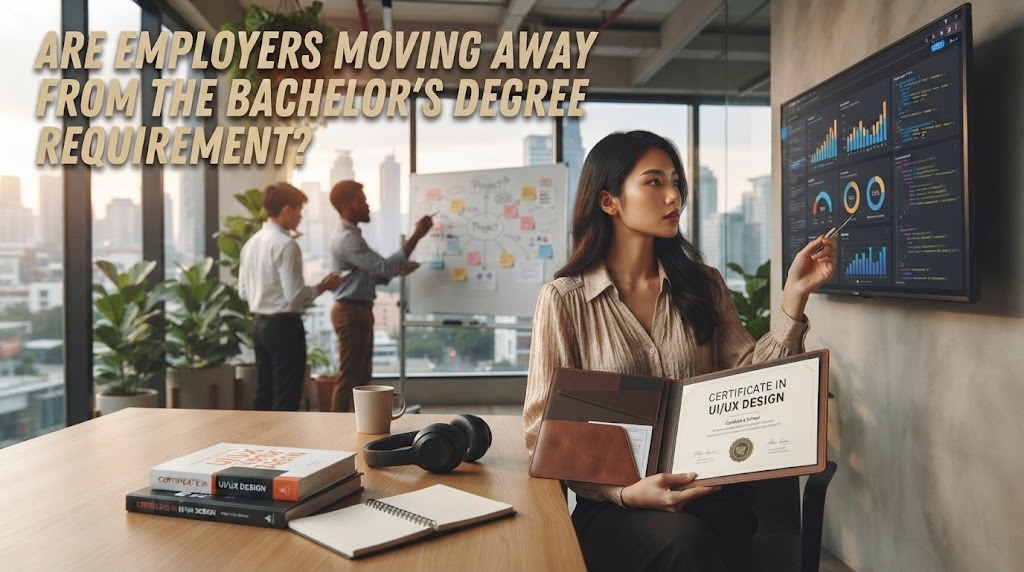
The bachelor’s degree requirement has long been a common standard in job recruitment. Many employers traditionally used a college degree as a simple way to identify candidates with formal education and specialized knowledge. However, changes in technology, skills-based hiring, and workforce demands have encouraged some companies to reconsider whether a degree should always be required.
This does not mean that college degrees are becoming irrelevant. Instead, some employers are placing greater emphasis on skills, experience, certifications, portfolios, and practical abilities when evaluating candidates. The importance of a degree now depends heavily on the industry, position, and employer.
WHY EMPLOYERS ARE RECONSIDERING DEGREE REQUIREMENTS
One reason employers are reconsidering degree requirements is the growing importance of job-specific skills. Technology has created many roles where practical knowledge can sometimes be demonstrated through projects, certifications, or previous work experience. Employers may therefore focus more on what applicants can actually do rather than only looking at their educational background.
Another factor is the desire to reach a larger talent pool. Requiring a bachelor's degree can exclude capable candidates who developed their skills through vocational education, professional training, online learning, or work experience. Removing unnecessary degree requirements can allow companies to consider applicants from more diverse educational and professional backgrounds.
THE RISE OF SKILLS BASED HIRING
Skills-based hiring focuses on a candidate's abilities rather than relying primarily on academic qualifications. Employers may assess technical skills, communication, problem solving, teamwork, and other competencies that are directly connected to the position. This approach can provide companies with a better understanding of whether an applicant can perform the actual responsibilities of a job.
Skills-based recruitment has become particularly relevant in areas such as technology, digital marketing, design, sales, and some business functions. Candidates can demonstrate their abilities through portfolios, practical tests, certifications, internships, and previous projects. As a result, professional capability can sometimes become more important than having a specific degree.
TECHNOLOGY IS CHANGING THE JOB MARKET
The rapid development of artificial intelligence, automation, cloud computing, and digital platforms is changing many occupations. New jobs can appear faster than traditional education programs can adapt their curricula. Employers therefore need workers who can learn new technologies and adjust to changing responsibilities.
This environment has increased demand for people who demonstrate continuous learning and adaptability. A degree may show that a person completed formal education, but it does not necessarily prove that the individual can keep up with new workplace technologies. Employers may increasingly combine educational qualifications with practical assessments and skill evaluations.
A DEGREE IS STILL IMPORTANT FOR MANY CAREERS
Despite these changes, employers are not universally abandoning bachelor’s degree requirements. Many professions still require formal education because they involve specialized knowledge, professional standards, or legal requirements. Fields such as medicine, engineering, teaching, and certain regulated occupations may continue to depend heavily on recognized qualifications.
A degree can also provide valuable benefits beyond meeting a job requirement. College can develop critical thinking, communication, research abilities, professional networks, and subject knowledge. For many careers, these benefits can make higher education a valuable long-term investment.
EXPERIENCE CAN BECOME A STRONG COMPETITIVE ADVANTAGE
Work experience can help candidates demonstrate their ability in ways that academic qualifications cannot always show. Someone with several years of relevant experience may understand workplace challenges and professional expectations better than a new graduate. This can make practical experience an important factor during recruitment.
Candidates without a bachelor's degree can strengthen their applications by developing evidence of their abilities. Freelance work, internships, apprenticeships, personal projects, certifications, and portfolios can demonstrate relevant skills. The more closely this evidence matches the employer's needs, the easier it can be for recruiters to evaluate the candidate's potential.
CERTIFICATIONS AND PORTFOLIOS ARE GAINING VALUE
Professional certifications can provide evidence that an individual has studied a particular skill or technology. They can be especially useful in industries where technical knowledge changes quickly. Certifications do not always replace a degree, but they can strengthen a candidate's profile when combined with practical experience.
A professional portfolio can be equally valuable for certain occupations. Designers, developers, writers, marketers, and other creative or technical professionals can show actual examples of their work. A strong portfolio gives employers direct evidence of what a candidate can produce instead of relying only on educational information.
WHAT THIS MEANS FOR JOB SEEKERS
Job seekers should not assume that a degree is either always necessary or completely unnecessary. The best approach is to examine the requirements of the specific industry and position. Applicants should identify the skills employers value and then build evidence that demonstrates those skills.
Candidates who already have a degree should continue developing practical abilities rather than relying entirely on their qualification. Meanwhile, people without a degree can focus on experience, certifications, portfolios, networking, and relevant technical skills. Both groups can benefit from continuous professional development.
ARE EMPLOYERS REALLY MOVING AWAY FROM DEGREES?
Some employers are clearly moving toward skills-based recruitment, but the change is not universal. Degree requirements remain common in many organizations and industries, while other companies have removed degrees from selected positions where they are not considered essential. The trend is therefore better understood as a shift in hiring practices rather than the complete disappearance of degree requirements.
The future of recruitment may involve a combination of education, skills, experience, and demonstrated performance. Employers want people who can contribute effectively, learn continuously, and adapt to changing business needs. As a result, what a candidate can do may increasingly matter alongside where they studied.
CONCLUSION
Employers are increasingly exploring alternatives to traditional bachelor’s degree requirements, particularly for positions where practical skills can be evaluated directly. Skills-based hiring, professional certifications, portfolios, and work experience can provide additional ways to identify qualified candidates.
However, this does not mean that college degrees have lost their value. A degree remains essential or highly useful in many careers and can provide important academic and professional foundations. In the changing job market, the strongest candidates are often those who combine relevant education, practical skills, experience, and a willingness to keep learning.
About the Author
Gusti Ayu Tita P
Author — STEKOM University
An active author focused on academic issues, educational technology, and human resource development in the campus environment.















