
Are Only Children Really Less Social? Here Is the Explanation
Gusti Ayu Tita P
7 September 2026
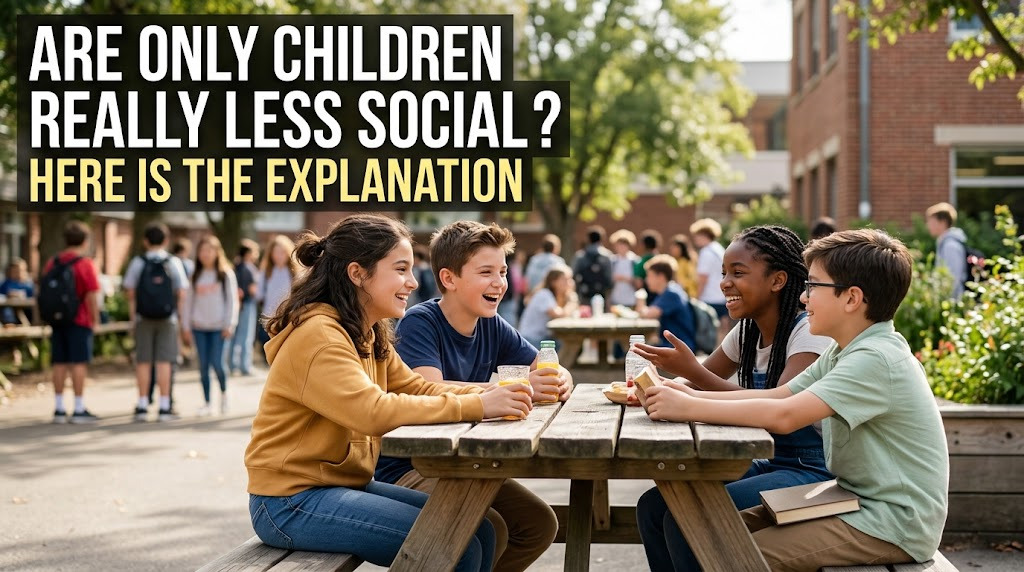
Only children are sometimes described as less social because they grow up without brothers or sisters at home. Some people assume that the absence of siblings makes it difficult for them to communicate, cooperate, or build friendships. However, this assumption is too simple because social development depends on many experiences beyond relationships between siblings.
An only child can interact with classmates, friends, cousins, teachers, neighbors, and members of the community. These relationships can provide plenty of opportunities to practice communication, cooperation, empathy, and conflict resolution. Therefore, being an only child does not automatically mean having weak social skills.
WHY DO PEOPLE THINK ONLY CHILDREN ARE LESS SOCIAL?
The stereotype may come from the idea that siblings provide a child's first regular opportunity to share, negotiate, argue, and cooperate. Since an only child does not experience these interactions at home, some people assume that important social skills may be missing. However, children can learn similar skills through many other relationships.
Parents may also influence how often an only child interacts with other children. If a child has limited opportunities to meet peers, they may have fewer chances to practice social behavior. This situation is related more to the child's social environment than to being an only child itself.
SOCIAL SKILLS CAN DEVELOP OUTSIDE THE FAMILY
Children learn social skills through everyday interactions with people around them. School is one of the most important environments because children regularly communicate, cooperate, and participate in group activities with their classmates. Friendships can also help children understand different personalities and learn how to handle disagreements.
Extracurricular activities provide additional opportunities for social development. Sports teams, music groups, clubs, and community activities encourage children to work toward shared goals. Through these experiences, an only child can develop teamwork, communication, empathy, patience, and cooperation.
ONLY CHILDREN CAN BUILD STRONG FRIENDSHIPS
Not having siblings does not prevent an only child from forming meaningful friendships. In some cases, friendships may become particularly important because peers provide opportunities for companionship and shared experiences. A child can develop close relationships with friends through regular communication and mutual support.
Parents can encourage healthy friendships by providing opportunities for their child to spend time with peers. Playdates, school activities, hobbies, and group projects can help children become more comfortable in social situations. These experiences allow an only child to learn important relationship-building skills naturally.
INDEPENDENCE DOES NOT MEAN BEING UNSOCIAL
Only children may become comfortable spending time alone, but this should not automatically be interpreted as being antisocial. Enjoying independent activities can be a normal part of personality and does not mean someone dislikes other people. A child can enjoy reading or playing alone while also having strong friendships.
Independence and social ability can exist together. An only child may be capable of entertaining themselves while still enjoying group activities and meaningful conversations. What matters is whether the child has healthy opportunities to interact with others and feels comfortable developing relationships.
THE ROLE OF PARENTS IN SOCIAL DEVELOPMENT
Parents can play an important role in helping an only child develop healthy social skills. They can encourage children to greet others politely, listen during conversations, share when appropriate, and consider other people's feelings. Parents can also model respectful communication through their own behavior.
It is helpful for parents to avoid labeling their child as shy, selfish, or socially awkward. Constantly repeating negative labels may influence how children see themselves. Instead, parents can provide positive encouragement and gradual social opportunities that allow children to become more confident at their own pace.
PERSONALITY MATTERS MORE THAN FAMILY SIZE
Every child has an individual personality, and some children naturally enjoy social interaction more than others. Some only children may be outgoing and highly social, while others may prefer smaller groups or quiet activities. These differences can exist among children from both small and large families.
Family size is therefore only one part of a much larger picture. Temperament, parenting, education, friendships, culture, and personal experiences can all influence social development. Judging a child's social ability simply because they have no siblings can lead to inaccurate stereotypes.
CONCLUSION
Are only children really less social? Not necessarily. Growing up without siblings does not automatically cause poor communication or social difficulties. Only children can develop strong social skills through friendships, school, extracurricular activities, extended family relationships, and community experiences.
Parents can support this development by providing opportunities for social interaction while respecting their child's individual personality. With appropriate support, an only child can become confident, empathetic, cooperative, and socially capable. Ultimately, social ability is shaped by experiences and relationships rather than family size alone.
About the Author
Gusti Ayu Tita P
Author — STEKOM University
An active author focused on academic issues, educational technology, and human resource development in the campus environment.