
Artificial Intelligence Facts and Myths Everyone Should Know
Gusti Ayu Tita P
7 Agustus 2026
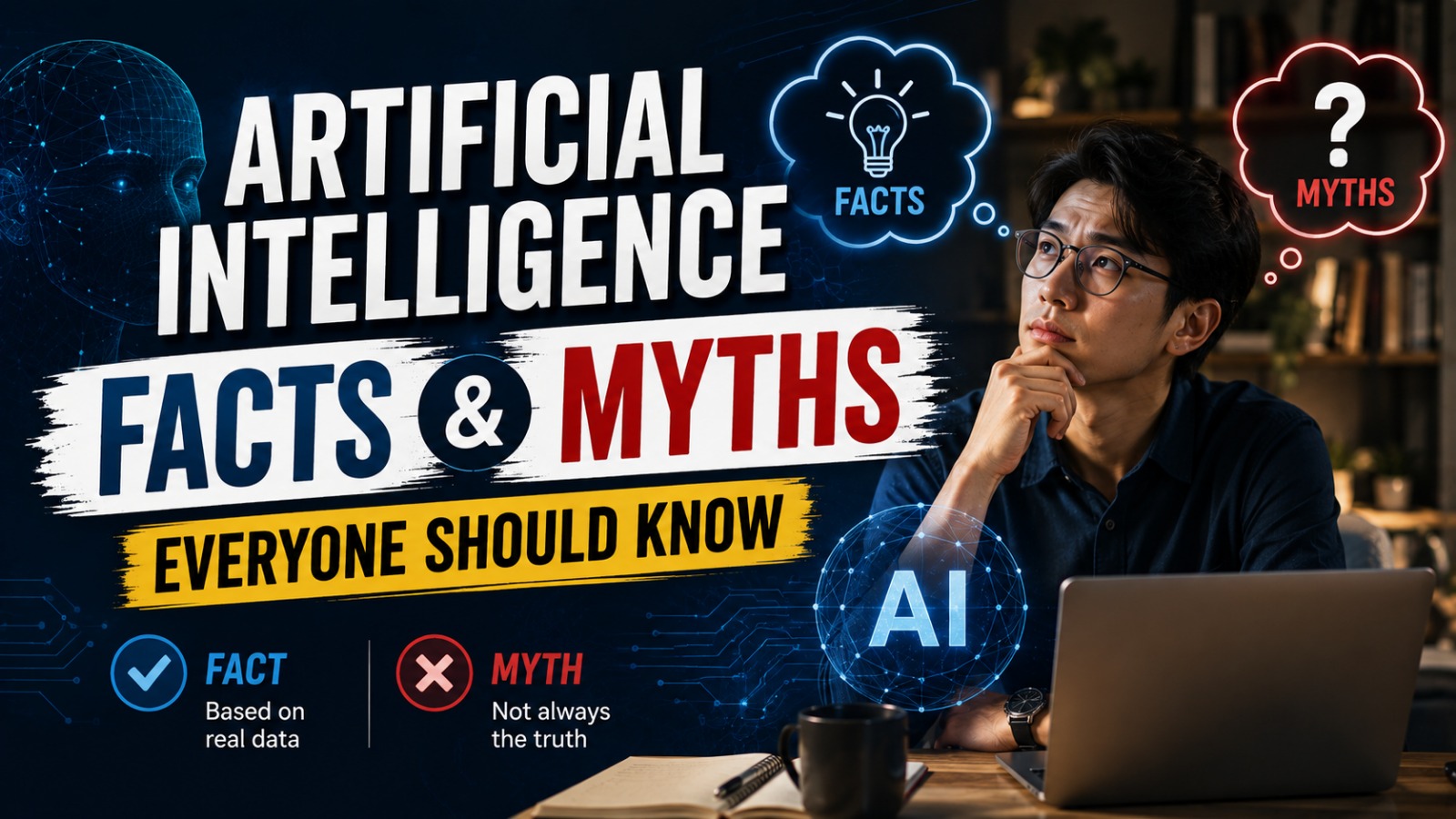
Artificial Intelligence (AI) has become one of the most influential technologies in the modern world. It is used in smartphones, healthcare, education, finance, transportation, and countless other industries. Despite its growing presence, many people still misunderstand what AI can and cannot do. Separating facts from myths helps individuals use this technology wisely while understanding its real potential and limitations.
Learning about AI is becoming increasingly important because it affects both personal and professional life. By understanding the truth behind common misconceptions, people can make better decisions, improve their digital literacy, and prepare for a future where AI continues to play a larger role.
WHAT IS ARTIFICIAL INTELLIGENCE?
Artificial Intelligence refers to computer systems that are designed to perform tasks that normally require human intelligence. These tasks include recognizing images, understanding language, solving problems, analyzing data, and making predictions. AI systems learn from large amounts of information and improve their performance over time through advanced algorithms. However, they still rely on human-created data and programming.
AI is not a single technology but a combination of different methods such as machine learning, natural language processing, and computer vision. Each technology has specific purposes and capabilities depending on the problem being solved. Understanding these basics helps eliminate many common misunderstandings about AI.
FACT AI MAKES DAILY LIFE MORE CONVENIENT
One undeniable fact is that AI technology already supports many everyday activities. Virtual assistants, navigation applications, recommendation systems, and spam filters all use AI to improve user experiences. These tools help people save time, make better decisions, and complete tasks more efficiently. Most users interact with AI every day without even realizing it.
Businesses also benefit from AI by improving customer service, analyzing market trends, and automating repetitive tasks. In healthcare, AI assists doctors in analyzing medical images and supporting early disease detection. These practical applications demonstrate how AI improves productivity rather than simply replacing human effort.
MYTH AI WILL COMPLETELY REPLACE HUMANS
One of the most common myths is that Artificial Intelligence will eventually replace every human job. While AI can automate repetitive and data-driven tasks, many professions still require creativity, emotional intelligence, leadership, and complex decision making. Human skills such as empathy, communication, and critical thinking remain difficult for AI to replicate. Therefore, AI is more accurately viewed as a tool that supports human work rather than replaces it entirely.
In many industries, AI actually creates new career opportunities. The demand for AI developers, data analysts, cybersecurity experts, and digital professionals continues to grow. People who learn to work alongside AI are likely to benefit from future technological advancements.
FACT AI HAS LIMITATIONS
Although AI is highly advanced, it is far from perfect. Machine learning systems depend heavily on the quality of the data used during training. If the information is incomplete, outdated, or biased, AI may produce inaccurate or unfair results. This is why human oversight remains essential when using AI in important fields such as healthcare, finance, and law.
AI also lacks genuine human understanding and emotions. It recognizes patterns and generates responses based on data, but it does not possess personal experiences, consciousness, or independent judgment. Understanding these limitations helps users apply AI responsibly.
MYTH AI ALWAYS PROVIDES CORRECT ANSWERS
Many people assume that AI always produces accurate information, but this is another misconception. AI ethics emphasizes that AI-generated content should be reviewed and verified before being accepted as factual. AI systems may occasionally generate outdated information, misunderstand context, or provide incorrect conclusions. Users should always compare important information with trusted and reliable sources.
Critical thinking remains important even when using advanced technology. AI should assist decision making, not replace human judgment. Combining AI capabilities with careful evaluation produces the most reliable outcomes.
HOW TO USE AI RESPONSIBLY?
Responsible use of AI technology begins with understanding both its strengths and limitations. Users should protect personal data, verify important information, and avoid relying entirely on automated systems for critical decisions. Learning basic AI concepts also helps individuals recognize misleading claims and unrealistic expectations. Digital education plays a significant role in encouraging responsible AI adoption.
Organizations also have responsibilities when implementing AI solutions. Transparency, fairness, privacy protection, and accountability should remain priorities throughout AI development and deployment. Ethical practices increase public trust while reducing potential risks.
THE FUTURE OF ARTIFICIAL INTELLIGENCE
The future of Artificial Intelligence offers exciting opportunities across education, healthcare, business, transportation, and scientific research. As AI technology continues to improve, it will likely become an even more valuable tool for solving complex problems and supporting innovation. However, responsible development will remain essential to ensure AI benefits society fairly and safely.
Preparing for the future means developing digital skills and maintaining a willingness to learn. Individuals who understand AI concepts will be better equipped to adapt to technological changes while taking advantage of new opportunities in education and employment.
CONCLUSION
Artificial Intelligence facts and myths everyone should know help people develop a realistic understanding of this rapidly evolving technology. While AI offers significant benefits in improving efficiency, productivity, and innovation, it also has limitations that require human oversight and responsible use. Separating facts from myths allows individuals to use AI more confidently and wisely.
As AI continues to shape the future, digital literacy, critical thinking, and ethical awareness will become increasingly valuable. By learning the truth about AI today, everyone can prepare for tomorrow's digital world with greater confidence.
About the Author
Gusti Ayu Tita P
Author — STEKOM University
An active author focused on academic issues, educational technology, and human resource development in the campus environment.















