
Balancing Economic Growth and Environmental Protection in Mining
Gusti Ayu Tita P
20 Agustus 2026
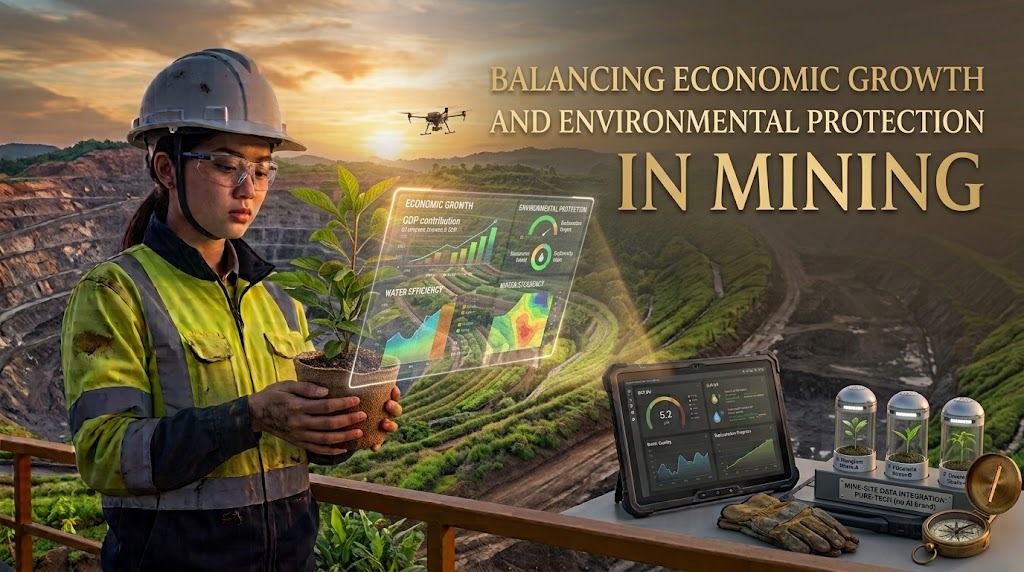
The mining industry has a significant role in supporting economic development by providing essential minerals for infrastructure, manufacturing, energy, and modern technology. Mining activities can create employment opportunities, increase investment, and contribute to regional development. However, mining operations may also create environmental challenges if resources are not managed carefully.
Achieving a balance between economic benefits and environmental protection is one of the biggest challenges in modern mining. Responsible mining practices require companies to consider not only production targets but also ecosystem protection, community welfare, worker safety, and long-term resource management. By combining innovation, regulation, and sustainability strategies, mining can continue contributing to economic growth while reducing environmental impacts.
THE IMPORTANCE OF MINING FOR ECONOMIC DEVELOPMENT
Mining contributes to economic growth through various channels, including employment, investment, exports, and industrial development. Mineral resources such as coal, nickel, copper, bauxite, and other materials support many industries that depend on reliable raw material supplies. Mining investment can also encourage the development of infrastructure and supporting businesses in mining regions.
Beyond direct production activities, mining can stimulate local economies through demand for transportation, equipment services, accommodation, food suppliers, and other businesses. Communities near mining areas may gain new economic opportunities when local companies and workers are involved in mining supply chains. However, these benefits need to be managed carefully to ensure they provide long-term value.
ENVIRONMENTAL CHALLENGES CAUSED BY MINING ACTIVITIES
Mining involves activities that can change natural landscapes and affect surrounding ecosystems. Land disturbance, water management issues, waste generation, and emissions are among the environmental concerns associated with mining operations. Without proper planning, these impacts may affect biodiversity and community livelihoods.
Modern mining companies are expected to apply stronger environmental management systems throughout the mining lifecycle. This includes environmental assessments before operations begin, continuous monitoring during production, and rehabilitation after mining activities end. A comprehensive approach helps reduce risks and supports more responsible resource extraction.
IMPLEMENTING SUSTAINABLE MINING PRACTICES
Sustainable mining focuses on balancing resource extraction with environmental and social responsibility. This approach encourages companies to use resources efficiently, reduce waste, protect ecosystems, and support surrounding communities. Sustainability is not only about minimizing damage but also about creating positive long-term impacts.
Companies can implement sustainable practices through responsible land use planning, improved waste management, water conservation, and energy efficiency programs. These efforts require commitment from management, workers, regulators, and local communities. When sustainability becomes part of operational strategy, mining activities can become more resilient and adaptable.
USING TECHNOLOGY TO REDUCE ENVIRONMENTAL IMPACTS
Technology has become an important tool for improving mining efficiency and reducing environmental pressure. Mining technology such as automation, digital monitoring, artificial intelligence, and remote sensing can help companies manage operations more accurately. These systems can provide real time information about equipment performance, energy use, and environmental conditions.
Advanced technology can also support better decision-making. For example, digital monitoring systems can detect changes in water quality, emissions, or land conditions more quickly. By identifying potential issues earlier, companies can take preventive actions and improve their environmental performance.
MANAGING WATER AND MINING WASTE RESPONSIBLY
Water and waste management are major factors in achieving environmentally responsible mining. Mining operations may require water for processing and dust control, making efficient water management essential. Companies need proper systems to monitor water quality, reduce unnecessary consumption, and treat water when required.
Mining waste also requires careful planning because improper handling can create environmental risks. Waste storage facilities, monitoring programs, and appropriate treatment methods are necessary to reduce potential impacts. Effective waste management supports safer operations and helps protect surrounding ecosystems.
SUPPORTING LOCAL COMMUNITIES THROUGH RESPONSIBLE MINING
Economic and environmental balance also involves considering the needs of communities near mining areas. Mining projects can create employment, business opportunities, infrastructure development, and social programs. However, companies need meaningful community engagement to understand concerns and build positive relationships.
Community participation allows local residents to contribute ideas and provide feedback about mining activities. Companies can support communities through education, training, entrepreneurship programs, and local supplier development. When communities benefit from mining activities, economic development becomes more inclusive and sustainable.
DEVELOPING A SKILLED AND RESPONSIBLE WORKFORCE
Achieving sustainable mining requires workers with the right knowledge and skills. Employees need to understand modern equipment, environmental procedures, safety standards, and efficient operational methods. Workforce development is therefore an important part of improving mining practices.
Training programs can help workers adapt to technological changes and understand sustainability goals. Skilled employees are better prepared to operate advanced systems, identify risks, and maintain responsible practices. A capable workforce supports both productivity improvements and environmental protection.
THE ROLE OF GOVERNMENT AND REGULATIONS
Government policies and regulations play an important role in maintaining the balance between economic growth and environmental protection. Regulations provide standards for environmental assessments, operational safety, land rehabilitation, and resource management. Effective supervision helps ensure that mining companies meet their responsibilities.
Strong cooperation between governments, companies, and communities is necessary to achieve sustainable outcomes. Transparent regulations and consistent enforcement encourage responsible practices while protecting public interests. Good governance creates conditions where mining can contribute to economic development without creating unacceptable environmental costs.
CREATING A SUSTAINABLE FUTURE FOR MINING
The future of mining depends on the ability to balance economic opportunities with environmental responsibility. Mineral resources will continue to be needed for industrial development, but extraction methods must continue improving. Responsible mining requires innovation, careful planning, and commitment from all stakeholders.
By adopting sustainable technologies, improving workforce skills, protecting ecosystems, and supporting communities, the mining sector can contribute to long-term economic growth. The goal is not only to produce minerals but also to create value that benefits society while preserving environmental quality for future generations.
About the Author
Gusti Ayu Tita P
Author — STEKOM University
An active author focused on academic issues, educational technology, and human resource development in the campus environment.















