
Balancing Work and Personal Health
Gusti Ayu Tita P
24 Agustus 2026
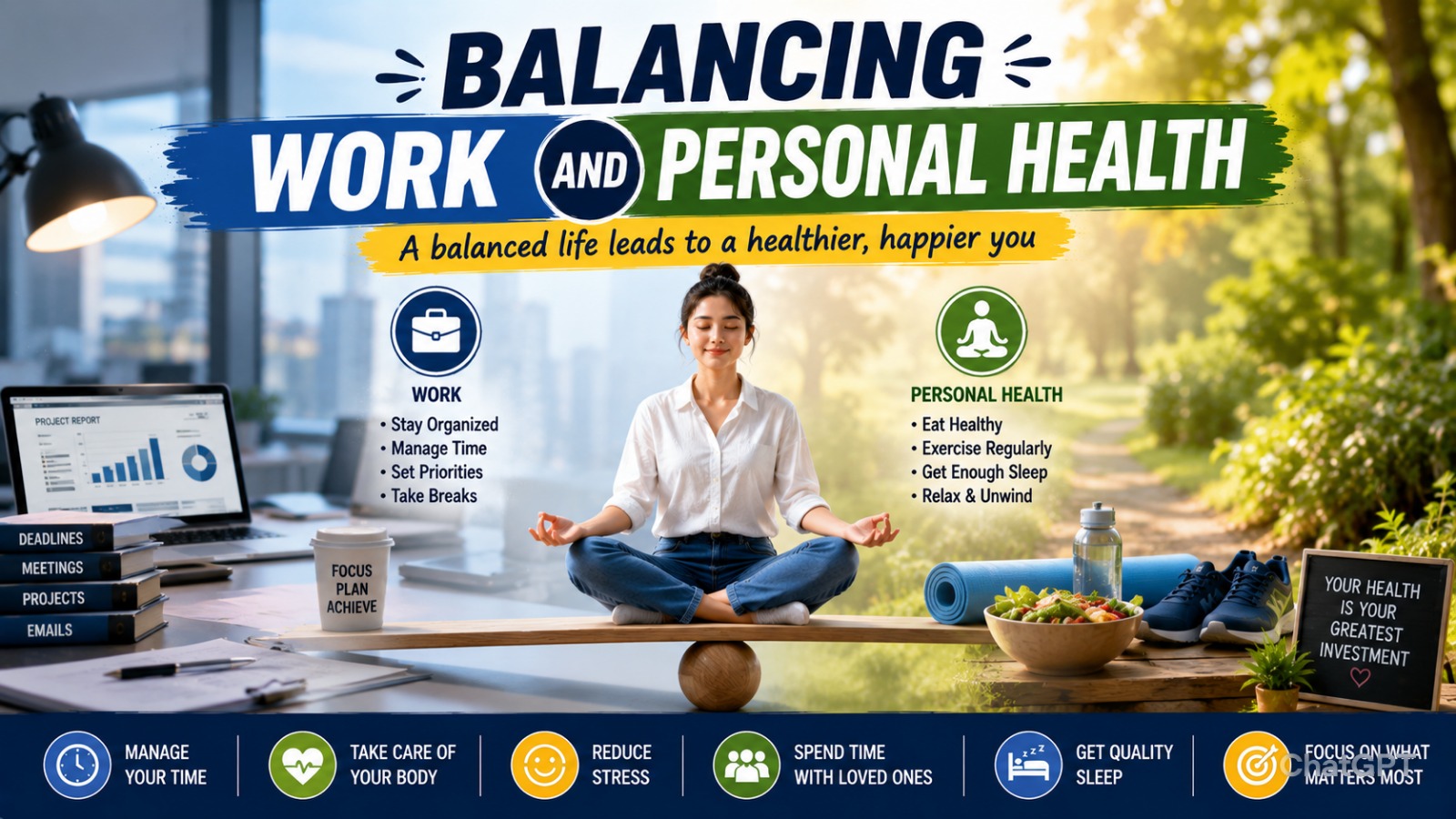
In today’s fast-paced world, many people focus heavily on work responsibilities while neglecting their personal health. Busy schedules, tight deadlines, and constant digital connectivity often make it difficult to maintain a healthy balance between professional life and personal well-being. Over time, this imbalance can lead to stress, fatigue, burnout, and various health problems.
Balancing work and personal health is essential for maintaining productivity, emotional stability, and overall quality of life. By creating healthier routines and managing time effectively, individuals can achieve success at work while still taking care of their physical and mental well-being.
THE IMPORTANCE OF WORK-LIFE BALANCE
Work-life balance refers to the ability to manage professional responsibilities while still making time for personal health, family, relaxation, and self-care. Maintaining this balance helps individuals stay motivated and prevents excessive stress.
People who successfully balance work and personal health are often more productive, focused, and emotionally stable. A healthy lifestyle also improves long-term career performance and overall happiness.
NEGATIVE EFFECTS OF AN UNBALANCED LIFESTYLE
1. Increased Stress Levels
Excessive workloads and lack of rest can lead to mental pressure and emotional exhaustion.
2. Physical Fatigue
Long working hours without proper rest may weaken the body and reduce energy levels.
3. Poor Mental Health
Constant pressure and lack of relaxation can contribute to anxiety, burnout, and mood instability.
4. Reduced Productivity
Overworking often decreases concentration and work performance over time.
5. Health Problems
Unhealthy habits such as poor sleep, lack of exercise, and unhealthy eating can increase the risk of illnesses.
EFFECTIVE WAYS TO BALANCE WORK AND HEALTH
Create a Healthy Daily Routine
Having a structured schedule helps individuals manage work, rest, exercise, and personal time more effectively.
Prioritize Quality Sleep
Getting enough sleep is essential for restoring energy, improving focus, and maintaining emotional balance.
Exercise Regularly
Physical activities such as walking, yoga, or stretching help reduce stress and improve overall fitness.
Maintain a Balanced Diet
Nutritious foods provide the energy needed for productivity and support long-term health.
Take Regular Breaks
Short breaks during work can refresh the mind and reduce mental fatigue.
Limit Excessive Screen Time
Reducing unnecessary digital exposure helps improve concentration and supports mental well-being.
Learn to Manage Stress
Relaxation techniques, hobbies, and positive social interactions can help individuals cope with pressure more effectively.
THE ROLE OF MENTAL HEALTH IN PRODUCTIVITY
Mental health plays a major role in work performance and daily life. People with good emotional well-being often communicate better, solve problems more effectively, and maintain higher motivation.
Ignoring mental health can negatively affect both personal and professional life. Therefore, taking time for self-care and relaxation is essential for long-term success.
THE BENEFITS OF A HEALTHY WORK-LIFE BALANCE
Better Physical Health
Balanced lifestyles help individuals maintain stronger bodies and healthier habits.
Improved Emotional Stability
Managing work pressure effectively reduces stress and supports positive thinking.
Increased Productivity
Healthy individuals often work more efficiently and maintain better focus.
Stronger Relationships
Spending quality time with family and friends improves emotional connections and overall happiness.
CHALLENGES OF MAINTAINING BALANCE
Modern technology has blurred the boundaries between work and personal life. Many people continue checking emails and working outside office hours, making it difficult to relax properly.
In addition, high expectations and busy schedules often encourage people to prioritize work over health. However, long-term success depends not only on professional achievements but also on maintaining personal well-being.
CONCLUSION
Balancing work and personal health is essential for creating a productive, healthy, and fulfilling life. While professional responsibilities are important, personal well-being should never be ignored.
By practicing healthy habits such as regular exercise, proper rest, balanced nutrition, and stress management, individuals can maintain both career success and personal wellness. A balanced lifestyle allows people to stay energetic, focused, and emotionally healthy in today’s demanding modern world.
About the Author
Gusti Ayu Tita P
Author — STEKOM University
An active author focused on academic issues, educational technology, and human resource development in the campus environment.















