
Becoming Professional Through Functional Positions
Gusti Ayu Tita P
12 Agustus 2026
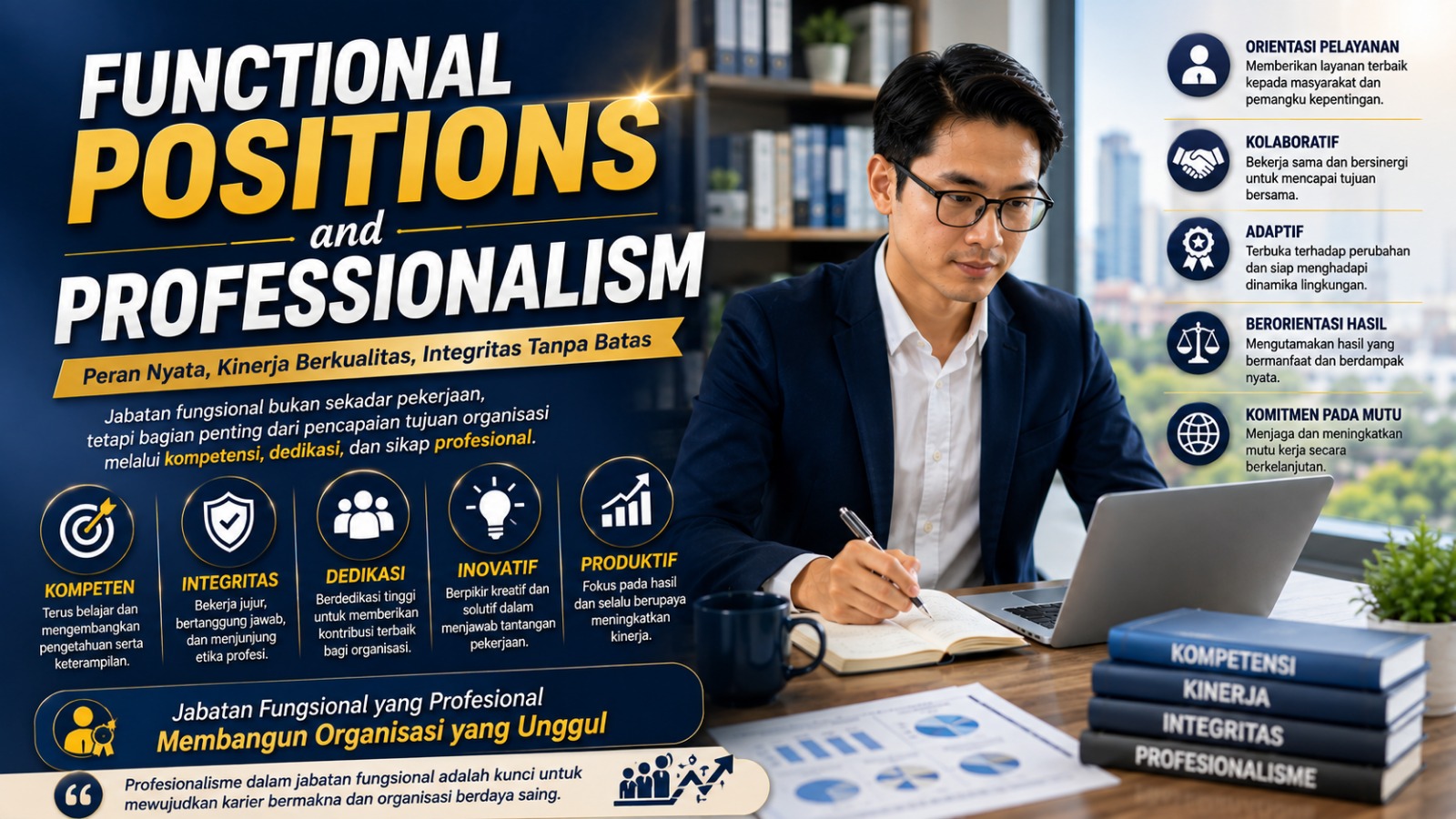
Building a professional career requires more than having a job or completing daily tasks. It involves developing knowledge, skills, responsibility, discipline, and professional values over time. Functional positions can provide a strong environment for this development because they allow individuals to focus on specific areas of expertise. Through consistent learning and experience, employees can gradually strengthen their professional abilities.
A functional career also encourages individuals to understand the standards and expectations of their profession. As workplace demands change, professionals need to improve their competencies and adapt to new methods. Combining technical expertise with professional behavior can help individuals perform their responsibilities more effectively and prepare for long-term career growth.
UNDERSTANDING PROFESSIONAL DEVELOPMENT
Professional development is a continuous process of improving knowledge, skills, and work behavior. In functional positions, employees have opportunities to develop their expertise through daily responsibilities and practical experience. Each task can provide valuable lessons when approached with attention and willingness to learn. Over time, these experiences can contribute to stronger professional competence.
Professional development should not depend only on formal training. Employees can also learn through feedback, collaboration, problem solving, and independent study. By actively looking for opportunities to improve, professionals can become more confident and capable in their field.
BUILDING SPECIALIZED EXPERTISE
Functional positions allow employees to develop specialized knowledge in a particular professional area. Focusing on a specific field can help individuals understand its procedures, standards, challenges, and best practices more deeply. This expertise can become an important foundation for professional credibility. The stronger the understanding of a field, the better an employee can respond to complex responsibilities.
Expertise should continue to develop as professional requirements change. New technologies, regulations, and methods may require employees to update their knowledge. Continuous learning helps professionals maintain relevant and reliable expertise throughout their careers.
DEVELOPING PROFESSIONAL RESPONSIBILITY
Responsibility is an essential part of becoming a professional. Employees need to understand their duties and take ownership of the results they produce. Completing tasks accurately, meeting agreed deadlines, and following applicable standards demonstrate professional responsibility. These behaviors can strengthen trust between employees and their organizations.
Responsibility also means being willing to recognize and correct mistakes. Professionals should use errors as opportunities to understand what went wrong and prevent similar problems in the future. A responsible attitude can gradually build professional credibility and reliability.
IMPROVING WORK PERFORMANCE
Professionalism can be seen through the quality of an individual's performance. Employees should aim to produce work that is accurate, efficient, consistent, and aligned with established expectations. Work performance provides an important indication of how effectively someone applies their knowledge and skills.
Performance can improve through regular evaluation and constructive feedback. Professionals can identify areas that need improvement and develop practical strategies to address them. This process encourages continuous improvement and helps employees become more effective in their functional roles.
STRENGTHENING COMMUNICATION SKILLS
Technical expertise becomes more valuable when professionals can communicate it clearly. Functional employees may need to explain information, prepare reports, discuss problems, or coordinate responsibilities with colleagues. Effective communication helps reduce misunderstandings and supports better collaboration.
Good communication also involves listening carefully and responding to feedback. Professionals who can communicate respectfully are better prepared to work with people who have different responsibilities or perspectives. Strong communication skills can therefore support both professional relationships and career development.
ADAPTING TO WORKPLACE CHANGES
The workplace continues to change through technology, new systems, and evolving organizational priorities. Professionals need to remain open to new approaches while maintaining the standards of their field. Adaptability allows employees to respond to changing responsibilities without losing focus on their professional objectives.
Adapting to change also requires continuous learning. Employees can evaluate new technologies, procedures, and methods to determine how they can improve their work. By combining flexibility with professional judgment, individuals can remain effective in a changing workplace.
BUILDING PROFESSIONAL INTEGRITY
Professional integrity is an important foundation for a sustainable career. It involves acting honestly, respecting responsibilities, protecting appropriate information, and making decisions according to professional standards. Integrity builds trust, which is essential in almost every professional environment.
Professional integrity should remain consistent even when employees face pressure or difficult situations. A strong reputation is built gradually through responsible decisions and reliable behavior. When expertise is combined with integrity, individuals can develop lasting professional credibility.
CONCLUSION
Becoming professional through functional positions is a continuous process that involves developing expertise, responsibility, communication, adaptability, and integrity. Functional positions provide opportunities to gain practical experience while strengthening specialized competencies. Professionals who consistently evaluate their performance and continue learning can become more capable and confident in their fields. By combining professional competence with strong work values, individuals can build a sustainable and meaningful career.
About the Author
Gusti Ayu Tita P
Author — STEKOM University
An active author focused on academic issues, educational technology, and human resource development in the campus environment.















