
Benefits of Joining a Waste Bank Program for Local Communities
Gusti Ayu Tita P
20 Agustus 2026
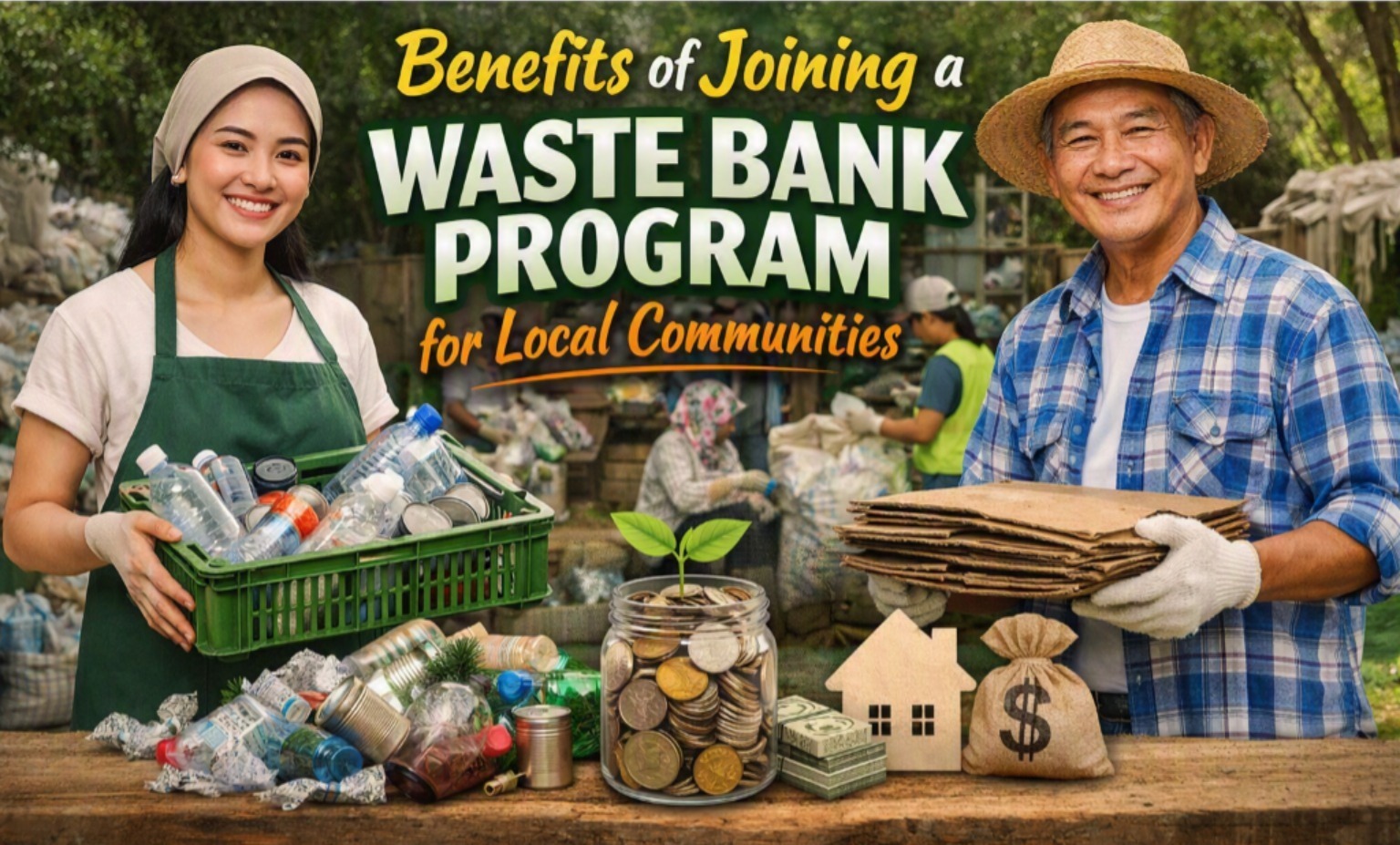
Waste management is an important issue for communities because household waste can increase rapidly when it is not handled properly. One practical solution is a waste bank program, which encourages residents to sort recyclable waste and manage it in a more organized way. Instead of treating all waste as something that must be thrown away, a waste bank gives certain recyclable materials an economic value. This approach can support cleaner neighborhoods while encouraging people to develop better waste management habits. For local communities, joining a waste bank can provide environmental, social, and economic benefits at the same time.
UNDERSTANDING THE WASTE BANK PROGRAM
A waste bank is a community-based waste management system where residents collect and sort recyclable materials before submitting them to a waste bank. Common materials may include plastic bottles, cardboard, paper, metal cans, and other recyclable items, depending on the program's collection system. These materials are usually weighed, recorded, and stored before being sold or transferred to recycling partners. In some programs, residents can receive money, savings, or other forms of value based on the recyclable materials they deposit. The system combines waste reduction with community participation, making waste management more structured and practical.
A waste bank does not mean that every type of waste can be recycled or accepted. Materials that cannot be processed may still need to be handled through appropriate waste disposal systems. Therefore, residents should understand the rules of their local waste bank before making a deposit. Proper sorting at home can also improve the quality and value of recyclable materials. Through this simple process, households become more actively involved in responsible waste management.
REDUCING WASTE IN THE COMMUNITY
One of the biggest benefits of joining a waste bank is its potential to reduce the amount of waste sent to disposal facilities. When recyclable materials are separated from other household waste, they can enter recycling or reuse processes instead of being discarded immediately. This can help reduce the volume of mixed waste that communities need to manage. It also makes waste collection and sorting more organized. When many households participate, small individual actions can create a larger community impact.
Waste reduction also encourages residents to think more carefully about what they buy, use, reuse, and discard. People may become more aware of unnecessary packaging and the importance of separating waste from the beginning. Over time, these habits can become part of everyday household routines. A consistent sorting system can make neighborhoods cleaner and easier to manage. As a result, waste banks can contribute to a more sustainable local environment.
CREATING ADDITIONAL ECONOMIC VALUE
A waste bank can turn some recyclable materials into economic value for participating residents. Materials that might otherwise be considered useless can sometimes be collected, weighed, and sold through the waste bank's network. The financial return depends on the type, quantity, quality, and market price of recyclable materials. Although the amount earned by an individual household may be modest, regular participation can make the activity more meaningful. This provides an additional reason for residents to sort and collect recyclable waste.
The economic benefit is not limited to individual participants. Well-managed waste bank activities can support local recycling businesses, collectors, and community organizations. Some programs may also use their proceeds to support communal activities or environmental initiatives. However, residents should understand that waste banks are generally not a replacement for regular income. Their greater value comes from combining environmental responsibility with practical economic incentives.
BUILDING ENVIRONMENTAL AWARENESS
Waste bank programs can help improve environmental awareness among residents because participants learn that waste management begins at home. Sorting waste requires people to identify different types of materials and understand how they should be handled. This simple activity can introduce important concepts such as recycling, reuse, waste reduction, and responsible consumption. Families can also discuss these practices with children, helping environmental habits develop at an early age. Over time, repeated participation can strengthen a community's environmental culture.
Environmental education becomes more effective when people can practice it directly rather than only receiving information. A waste bank provides a practical system where residents can see the results of separating recyclable materials. Community meetings, campaigns, and collection activities can further improve understanding. When residents share experiences, they can learn better ways to reduce household waste. This makes the program not only a waste collection system but also a platform for environmental education.
STRENGTHENING COMMUNITY PARTICIPATION
Waste bank programs can bring residents together through shared environmental activities. Regular collection schedules, educational campaigns, and community discussions create opportunities for people to cooperate. Residents can exchange information about sorting methods, recycling practices, and ways to reduce household waste. This interaction can strengthen communication and encourage a greater sense of responsibility toward the neighborhood. A successful waste bank therefore depends not only on facilities but also on active community participation.
Community involvement can also make environmental programs more sustainable. When residents feel that they have a role in the system, they may be more willing to follow collection rules and encourage others to participate. Local leaders, schools, community groups, and businesses can contribute by providing education or supporting collection activities. Cooperation among these groups can expand the program's reach. Strong participation helps create a shared commitment to a cleaner community.
IMPROVING CLEANLINESS AND WASTE MANAGEMENT
Proper waste sorting can contribute to cleaner residential areas by reducing the amount of recyclable material mixed with general waste. When useful materials are collected separately, households can manage their waste more systematically. This can also reduce the chance of recyclable materials being scattered in public spaces when waste handling is poor. Cleaner surroundings can make neighborhoods more pleasant for residents and visitors. However, a waste bank must work together with proper collection, sanitation, and disposal systems to achieve the best results.
It is also important to understand that a waste bank alone cannot solve every waste management problem. Communities still need adequate waste collection services and appropriate treatment for organic, hazardous, and non-recyclable waste. Residents should avoid burning waste or disposing of it carelessly simply because a waste bank accepts recyclable materials. A comprehensive approach should prioritize waste reduction, reuse, recycling, and safe disposal according to the type of waste. This makes community waste management more effective and responsible.
SUPPORTING A MORE SUSTAINABLE COMMUNITY
Joining a waste bank can help communities move toward a more sustainable lifestyle by connecting environmental responsibility with everyday actions. Residents can start with simple habits such as separating recyclable materials, reducing unnecessary consumption, and reusing items whenever possible. These actions may seem small, but participation from many households can produce meaningful results. The program can also encourage communities to view waste as a resource when materials can still be recovered or recycled. This change in perspective is important for developing better long-term waste management habits.
For the program to remain effective, it needs consistent participation, transparent management, reliable collection systems, and strong partnerships with recycling stakeholders. Residents should also receive clear information about accepted materials, deposit procedures, and how the collected materials are handled. Local authorities and community organizations can strengthen the program through education, infrastructure, and appropriate support. When these elements work together, a waste bank can become a practical part of the community's environmental strategy. Ultimately, joining a waste bank is a simple step that can help residents contribute to cleaner surroundings, better waste habits, and a more sustainable future.
CONCLUSION
The benefits of a waste bank extend beyond the act of collecting recyclable materials. Residents can gain better waste management habits, environmental knowledge, community connections, and potential economic value from their participation. The program also creates an opportunity for households to contribute directly to local environmental improvement. Even people who have never participated in recycling can begin with a small amount of recyclable waste at home. The most important factor is consistent participation rather than the amount contributed at one time.
A successful waste bank should be viewed as a community partnership, not simply a place to sell recyclable waste. Its long-term impact depends on residents, managers, local organizations, recycling partners, and supporting institutions working together. With proper management and public participation, the program can help reduce recyclable waste while strengthening environmental responsibility. Communities that adopt these habits can gradually build a cleaner and more organized local environment. Therefore, joining a waste bank is a practical way for individuals and families to become part of sustainable community waste management.
About the Author
Gusti Ayu Tita P
Author — STEKOM University
An active author focused on academic issues, educational technology, and human resource development in the campus environment.















