Benefits of MRT Jakarta for People and the Environment
Gusti Ayu Tita P
11 Agustus 2026
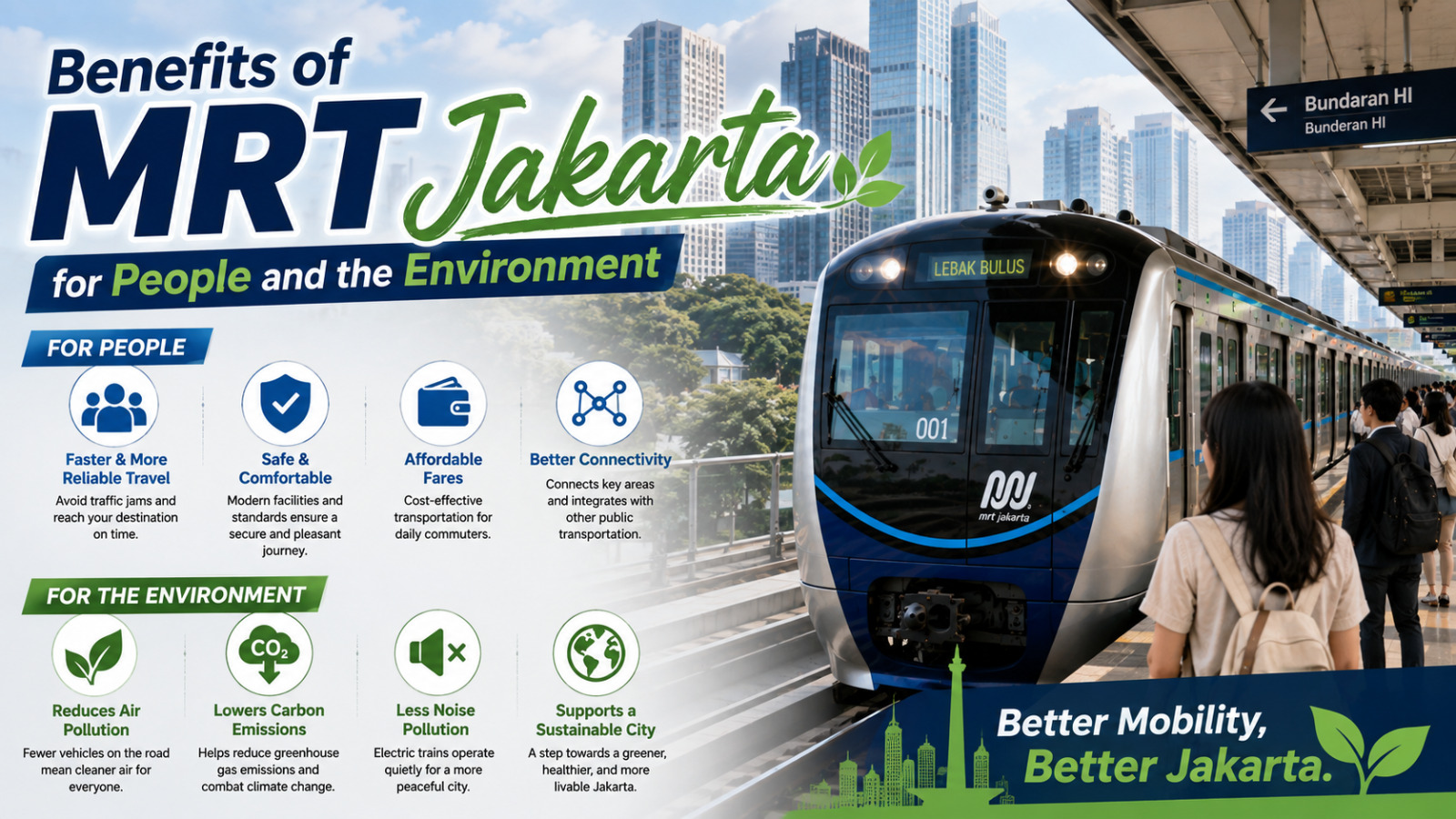
MRT Jakarta is an important part of Indonesia’s modern public transportation system, especially for people who travel regularly in Jakarta. The service provides an alternative to private cars and motorcycles while supporting more organized urban mobility. Because MRT trains operate on dedicated railway tracks, passengers can travel without being directly affected by road traffic along the rail corridor. This makes MRT a useful option for daily activities such as working, studying, and visiting different areas of the city.
Beyond mobility, MRT Jakarta also has potential benefits for the urban environment. A mass transit system can carry many passengers in a single train, which may reduce the need for individual vehicle trips when people choose public transportation instead. MRT uses electric trains and is therefore different from conventional road vehicles that burn fuel directly during operation. However, the overall environmental benefit depends on factors such as passenger numbers, electricity sources, and changes in travel behavior.
BENEFITS FOR DAILY MOBILITY
One of the main benefits of MRT Jakarta is providing organized urban transportation for a large number of passengers. Trains operate on dedicated tracks, allowing journeys to be less directly affected by traffic congestion on ordinary roads. This can make travel times more predictable along the MRT corridor. For people with regular schedules, such predictability can be valuable when planning daily activities.
MRT also provides access to important areas through its network of stations. Passengers can combine MRT with buses, feeder services, walking, or other transportation modes to complete their journeys. Transportation integration makes the MRT network more useful because passengers do not need to live or work directly beside a station. This creates more options for people who want to use public transportation instead of private vehicles.
REDUCING DEPENDENCE ON PRIVATE VEHICLES
Private vehicles offer flexibility, but high numbers of cars and motorcycles can increase pressure on urban roads. MRT Jakarta provides an alternative that allows people to travel without using their own vehicles for suitable journeys. If more people switch from private vehicles to mass public transportation, the number of individual vehicle trips may decrease. This can help reduce pressure on some busy transportation corridors.
The impact of MRT on traffic depends on how many people actually change their travel habits. MRT cannot solve congestion by itself because traffic is influenced by many factors, including road capacity, travel demand, and other transportation services. However, reducing private vehicle dependence is an important part of a broader strategy for improving urban mobility. Strong connections between MRT and other public transportation can make this shift easier.
ENVIRONMENTAL BENEFITS OF MRT
MRT Jakarta uses electric trains, which do not produce direct tailpipe emissions along their operating routes. This is different from conventional gasoline or diesel vehicles that release exhaust emissions during operation. If passengers move from private vehicles to MRT, the overall emissions associated with their journeys may decrease. The actual environmental impact depends on the electricity generation mix and the extent to which MRT replaces private vehicle trips.
Mass transit can also make more efficient use of transportation infrastructure by carrying many people in one system. This can support a city where fewer people need to depend on individual vehicles for every trip. Sustainable transportation requires more than electric trains, however. It also depends on integrated services, walkable access, efficient operations, and continued public use of mass transit.
SUPPORTING A MORE SUSTAINABLE CITY
MRT Jakarta contributes to the development of a more sustainable urban transportation system. When public transportation is convenient and reliable, people have more opportunities to choose shared mobility for their daily journeys. This can support more efficient use of energy and transportation infrastructure. It can also encourage a gradual change in how residents think about traveling around the city.
The benefits can become stronger when MRT is integrated with other transportation services. Good pedestrian access, feeder buses, clear information, and convenient connections can make public transportation easier to use from the beginning to the end of a journey. Integrated mobility allows MRT to function as part of a larger transportation system rather than as an isolated railway service. This broader approach is important for achieving long-term sustainability.
THE ROLE OF THE COMMUNITY
The benefits of MRT Jakarta depend partly on how people use the service. Choosing public transportation for suitable journeys can help maximize the value of the MRT network. Passengers can also contribute by following rules, keeping stations and trains clean, and respecting other users. Responsible behavior helps maintain the quality of the service for everyone.
People can also combine MRT with walking and other public transportation modes when appropriate. This can reduce the need to use private vehicles for every part of a journey. Government, operators, and passengers all have roles in creating a sustainable transportation system. Continued improvements in infrastructure and services, combined with regular public use, can strengthen the long-term benefits of MRT Jakarta.
CONCLUSION
MRT Jakarta provides important benefits for both people and the environment. It supports organized urban mobility, carries many passengers, and offers an alternative to private vehicles. Its electric rail system can also contribute to more sustainable transportation when it helps shift journeys away from individual gasoline or diesel vehicles.
However, the benefits of MRT depend on more than the railway itself. Transportation integration, accessibility, service quality, and passenger behavior all influence its effectiveness. With continued development and wider public use, MRT Jakarta can play an important role in creating a more efficient and sustainable transportation system for the city.
About the Author
Gusti Ayu Tita P
Author — STEKOM University
An active author focused on academic issues, educational technology, and human resource development in the campus environment.