
Benefits of Ports for Trade and Industrial Development
Gusti Ayu Tita P
10 Agustus 2026
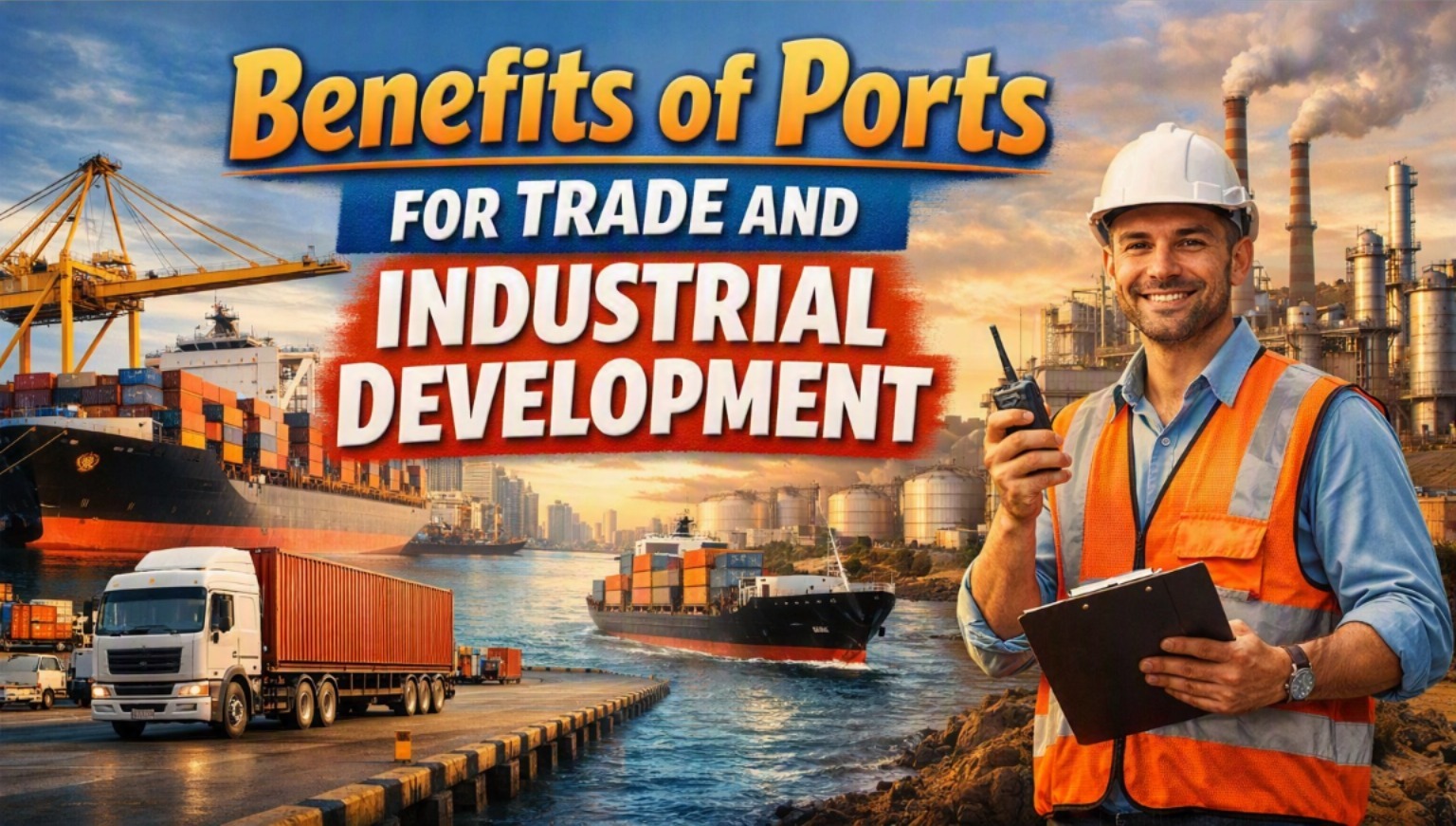
Ports are essential infrastructure for supporting international trade, industrial activity, and economic growth. They connect producers, businesses, and consumers through efficient sea transportation, allowing goods to move between regions and countries. Because most international merchandise trade by volume is transported by sea, efficient ports can significantly influence the reliability and cost of supply chains.
Beyond handling cargo, modern ports support logistics networks, industrial zones, employment, investment, and regional development. Their benefits become even greater when port infrastructure is supported by efficient customs services, reliable transportation networks, digital systems, and well-planned industrial facilities.
SUPPORTING INTERNATIONAL TRADE
One of the main benefits of ports is their ability to facilitate international trade. Ports provide locations where imported and exported goods can be loaded, unloaded, stored, inspected, and transferred between different modes of transportation. Efficient cargo handling helps businesses receive raw materials and deliver finished products according to market demand. This can make international supply chains more reliable and competitive.
Ports also connect domestic producers with global markets. Manufacturers can use ports to export products to customers overseas, while businesses can import machinery, components, energy resources, and other materials needed for production. When port services are efficient, businesses can reduce unnecessary delays and improve their ability to compete in international markets.
REDUCING LOGISTICS COSTS AND DELAYS
Efficient ports can help reduce logistics costs by improving cargo handling and transportation processes. Modern terminals use specialized equipment, digital information systems, and organized operating procedures to move cargo more efficiently. Faster vessel turnaround and smoother cargo transfers can reduce waiting time and other operational expenses. These improvements can eventually contribute to more competitive prices for businesses and consumers.
Port efficiency is also closely connected to the quality of the wider transportation network. Roads, railways, warehouses, inland terminals, customs services, and digital systems need to work together so that cargo can move smoothly beyond the port. A well-connected port can reduce bottlenecks and improve supply chain reliability, especially for industries that depend on regular deliveries.
SUPPORTING INDUSTRIAL DEVELOPMENT
Ports can encourage industrial development by providing businesses with easier access to imported raw materials and international markets. Industries such as manufacturing, energy, agriculture, mining, chemicals, and food processing often depend on reliable transportation for their inputs and products. Locating industrial activities near major ports can reduce transportation distances and improve supply chain coordination. This can make certain locations more attractive for industrial investment.
Port areas can also develop into industrial and logistics clusters. Companies may establish factories, warehouses, distribution centers, processing facilities, and other businesses around strategic port locations. The concentration of related activities can create business networks and improve access to suppliers, transportation services, and supporting industries. As these clusters grow, they can contribute to broader regional economic development.
CREATING JOBS AND BUSINESS OPPORTUNITIES
Ports generate direct and indirect employment across many sectors. Direct jobs can include port operations, cargo handling, vessel services, maintenance, administration, and security. Indirect employment can arise in trucking, rail transportation, warehousing, freight forwarding, customs services, manufacturing, retail, and other supporting activities. This makes ports important sources of economic opportunities for communities around them.
The growth of port-related activities can also create opportunities for small and medium-sized businesses. Local companies may provide transportation, equipment maintenance, catering, logistics, construction, information technology, and other services. As demand for these services increases, local businesses can expand their operations and develop new capabilities. Therefore, the economic impact of ports can extend well beyond the port itself.
ATTRACTING INVESTMENT AND STRENGTHENING COMPETITIVENESS
Reliable port infrastructure can increase a region's attractiveness to domestic and foreign investors. Companies consider transportation access when deciding where to establish factories, distribution centers, and logistics operations. A port with adequate capacity, efficient services, and strong connections to inland markets can provide businesses with better access to suppliers and customers. This can strengthen the investment environment and support long-term economic activity.
Ports can also improve national competitiveness. Countries with efficient logistics systems can make it easier for businesses to participate in regional and global supply chains. Better port performance can reduce trade-related friction and improve the movement of goods across borders. However, infrastructure investment should be combined with efficient regulations, skilled workers, transparent procedures, and reliable supporting transportation.
IMPROVING SUPPLY CHAIN RESILIENCE
Ports play an important role in maintaining supply chain resilience. Businesses depend on ports to receive essential materials and distribute products to different markets. When port operations are supported by good planning, digital monitoring, adequate capacity, and alternative transportation connections, supply chains can respond better to disruptions. This is especially important when businesses face changes in demand, transportation problems, or unexpected global events.
Modern ports increasingly use digital technologies to improve visibility and coordination. Electronic documentation, cargo tracking, automated systems, and data sharing can help different stakeholders obtain information more quickly. Better information can support faster decision making and reduce administrative errors. These technologies can make port operations more transparent, predictable, and efficient.
SUPPORTING REGIONAL AND NATIONAL ECONOMIC GROWTH
The development of ports can stimulate regional economic growth by improving connectivity and encouraging new economic activities. Areas surrounding efficient ports may attract logistics companies, manufacturers, warehouses, service providers, and other businesses. Increased commercial activity can generate employment and expand the local tax and business base. Over time, these effects can contribute to the development of surrounding communities.
At the national level, ports help connect domestic production with international markets. They support the movement of essential commodities, industrial inputs, consumer goods, and export products. Strong port infrastructure can therefore become an important part of a country's broader economic strategy. To maximize these benefits, port development should be planned together with environmental protection, urban development, transportation infrastructure, and community interests.
CONCLUSION
The benefits of ports for trade and industrial development extend far beyond the movement of ships and cargo. Efficient ports support international trade, reduce logistics barriers, strengthen industries, create employment, attract investment, and improve supply chain resilience. Their economic contribution becomes stronger when ports are integrated with roads, railways, warehouses, digital systems, customs services, and industrial areas.
For long-term development, port investment should focus not only on expanding physical capacity but also on operational efficiency, technology, sustainability, safety, and connectivity. A well-managed port can become a strategic economic gateway that connects businesses with national and international markets. As global trade continues to evolve, efficient and resilient ports will remain an important foundation for competitive trade and sustainable industrial development.
About the Author
Gusti Ayu Tita P
Author — STEKOM University
An active author focused on academic issues, educational technology, and human resource development in the campus environment.















