
Benefits of Waste Banks for the Environment and Communities
Gusti Ayu Tita P
20 Agustus 2026
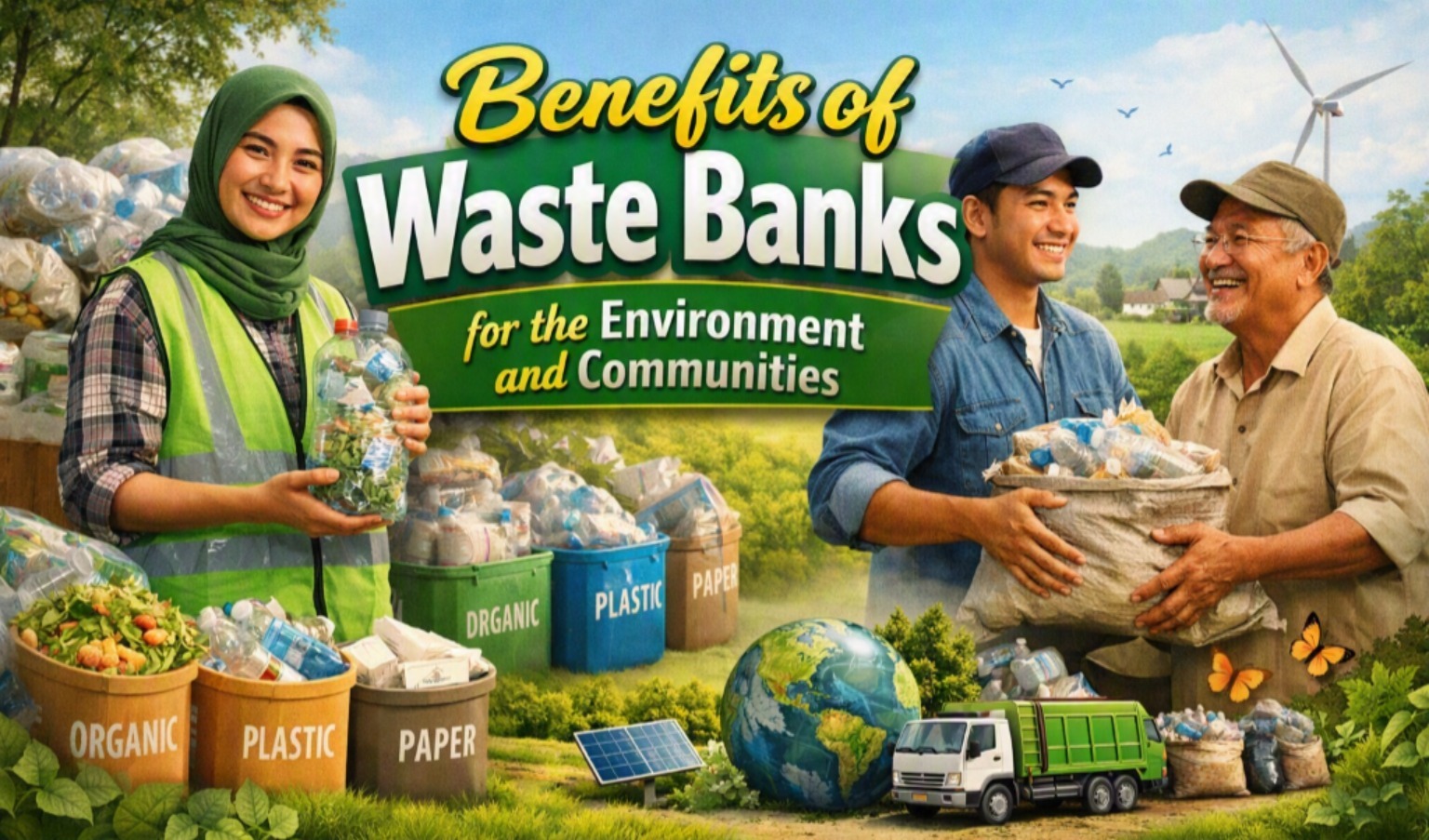
Waste management is one of the major environmental challenges faced by communities around the world. Growing populations, consumption patterns, and the increasing use of disposable products can lead to larger amounts of waste every day. When waste is not managed properly, it can cause pollution, unpleasant odors, clogged drainage systems, and environmental damage. One practical approach that can help address this issue is the development of waste banks. Waste banks encourage people to sort and collect recyclable materials while creating potential economic and social benefits for the community.
WHAT IS A WASTE BANK?
A waste bank is a community-based waste management system where residents collect and sort recyclable waste before bringing it to a designated collection point. Materials such as plastic bottles, cardboard, paper, metal, and other recyclable items can be separated according to their type and condition. Instead of being immediately thrown away, these materials are collected and transferred for recycling or further processing. In many systems, residents can receive financial value or savings based on the recyclable waste they deposit. This approach makes waste management more organized while encouraging people to view certain types of waste as resources.
Waste banks can be managed by community groups, schools, local organizations, or other institutions. Their activities commonly include waste sorting, collection, recording, temporary storage, and delivery to recycling partners. The exact operating system can differ depending on local conditions and available facilities. However, the main goal remains the same: reduce waste sent to disposal sites and increase public participation in responsible waste management.
REDUCING ENVIRONMENTAL POLLUTION
One of the most important benefits of waste banks is their contribution to reducing environmental pollution. When recyclable materials are separated from general waste, less material needs to be transported to final disposal facilities. Proper sorting can also prevent recyclable materials from being mixed with organic and contaminated waste, making them easier to recover. This can help reduce the amount of waste that ends up in streets, rivers, open areas, and other inappropriate locations. As a result, communities can become cleaner and more environmentally responsible.
Waste banks can also support better resource management by helping recyclable materials return to production systems. Recycling reduces the need for some new raw materials, although the environmental benefit depends on the material, recycling process, transportation, and local conditions. By increasing the recovery of valuable materials, waste banks can become one part of a broader circular economy approach. They do not replace waste reduction or proper disposal, but they can strengthen the overall waste management system.
REDUCING WASTE SENT TO LANDFILLS
Landfills receive large quantities of household and commercial waste, and their capacity can become limited when waste generation continues to increase. Waste banks can help reduce this pressure by collecting materials that have recycling or recovery value. Paper, cardboard, certain plastics, metals, and other suitable materials can be separated before they reach the final disposal stage. This allows communities to recover useful materials instead of treating everything as waste. Although waste banks cannot eliminate the need for landfills, they can help reduce the volume of recyclable waste sent there.
Effective waste reduction requires more than simply collecting recyclable materials. Residents also need to understand waste separation at the source, while collection and recycling systems need to operate consistently. Waste banks can provide a practical structure for these activities by connecting households with collection and recycling networks. When these systems work well, recyclable materials have a better chance of being recovered and processed appropriately.
CREATING ECONOMIC OPPORTUNITIES
Waste banks can provide economic value from recyclable materials that households might otherwise discard. Depending on the local system and market conditions, residents may receive payment, savings credits, or other forms of value for materials they deposit. The amount earned from household waste is generally not large enough to replace regular income, but it can provide an additional financial benefit. More importantly, the system can change the perception of waste from something with no value into a material that can potentially be recovered.
Waste banks can also create economic activity through collection, sorting, transportation, and recycling partnerships. Community members may become involved in managing operations or supplying recyclable materials to recycling businesses. The economic benefits depend heavily on material prices, operational costs, management quality, and access to reliable recycling markets. Therefore, strong partnerships and transparent financial management are important for maintaining a sustainable waste bank.
BUILDING COMMUNITY PARTICIPATION
Waste banks are not only about collecting recyclable materials but also about encouraging community participation. Residents need to take an active role by separating waste at home and following collection procedures. Regular participation can gradually turn responsible waste disposal into a daily habit. Community activities related to waste banks can also create opportunities for residents to work together toward a shared environmental goal. This cooperation can strengthen social awareness and a sense of responsibility.
Community participation is especially important because waste management begins at the point where waste is generated. Households, schools, businesses, and local organizations can all contribute by reducing unnecessary waste and separating recyclable materials. Waste banks can serve as a practical platform for coordinating these efforts. With consistent education and clear procedures, more people may understand how their individual actions affect the wider environment.
INCREASING ENVIRONMENTAL AWARENESS
Another major benefit of waste banks is their role in environmental education. People who participate in waste bank activities can learn about different types of waste, recycling, waste separation, and responsible consumption. This knowledge can help residents make better decisions about how they use and dispose of products. Children and students can also learn these habits through school-based waste bank programs. Early environmental education can contribute to more sustainable behavior in the future.
Waste banks can make environmental education more practical because people can directly see the results of separating waste. Instead of learning only through theory, residents can participate in sorting, collecting, weighing, and recording recyclable materials. This hands-on experience can make environmental issues easier to understand. Over time, these activities can encourage a stronger culture of cleanliness and environmental responsibility.
SUPPORTING A CIRCULAR ECONOMY
Waste banks can contribute to the concept of a circular economy, where materials are kept in use for as long as possible instead of being discarded after one use. Recyclable materials collected through waste banks may enter recycling processes and become raw materials for new products. This can help reduce the demand for some virgin resources and minimize material losses. However, recycling is only one part of the circular economy, which also emphasizes reducing consumption, reusing products, repairing items, and designing products for longer use.
The role of waste banks is therefore best understood as part of a larger waste management strategy. A successful system should encourage people to reduce waste before recycling it. Materials that cannot be safely or economically recycled still need appropriate handling and disposal. When waste banks operate alongside waste reduction, reuse, recycling infrastructure, and responsible disposal, their environmental contribution can become more meaningful.
IMPROVING CLEANLINESS AND PUBLIC HEALTH CONDITIONS
Proper waste management can contribute to cleaner public spaces and healthier community environments. Uncollected waste can attract pests, create unpleasant odors, and contribute to blocked drainage when it accumulates in inappropriate places. By encouraging residents to separate and collect recyclable waste, waste banks can help reduce some forms of uncontrolled waste disposal. Cleaner surroundings can improve the comfort and appearance of neighborhoods. However, waste banks should complement, rather than replace, regular sanitation services and safe waste disposal systems.
Good waste management also requires attention to worker and community safety. Recyclable materials should be handled with appropriate procedures, particularly when waste may contain sharp objects, contaminated materials, or hazardous substances. Waste banks should establish clear rules about which materials they accept and how materials are stored and transported. Proper hygiene and safety practices can reduce unnecessary risks for workers and participants.
HOW COMMUNITIES CAN MAKE WASTE BANKS MORE EFFECTIVE?
The success of a waste bank depends on consistent participation, effective management, and reliable recycling channels. Communities should provide clear information about accepted materials, collection schedules, sorting methods, and recording procedures. Waste should ideally be separated at the household level before being delivered to the waste bank. Regular education can help residents understand why proper sorting is important. Transparent administration can also increase trust among participants.
Partnerships are another important factor in maintaining a sustainable waste bank. Local governments, schools, businesses, recycling companies, and community organizations can support waste banks through education, facilities, training, transportation, or market access. Managers should also monitor operational costs and the changing value of recyclable materials. A realistic business and management model can help ensure that the waste bank continues operating over the long term.
CONCLUSION
Waste banks offer several benefits for both the environment and local communities. They can help reduce recyclable waste entering final disposal facilities, encourage better waste separation, increase environmental awareness, and create potential economic value from recyclable materials. They can also strengthen community cooperation and support the development of more responsible waste management habits. However, waste banks are most effective when they operate as part of an integrated system that includes waste reduction, reuse, recycling, and safe disposal.
The success of a waste bank ultimately depends on active community participation and consistent management. Small actions such as separating bottles, paper, cardboard, and metal at home can contribute to a larger environmental effort when practiced by many people. With proper education, reliable collection systems, and strong partnerships, waste banks can become useful tools for building cleaner and more sustainable communities.
About the Author
Gusti Ayu Tita P
Author — STEKOM University
An active author focused on academic issues, educational technology, and human resource development in the campus environment.















