BETWEEN LEARNING APPS AND SOCIAL MEDIA, DOES TECHNOLOGY HELP STUDENTS CONQUER SNBT OR TRAP THEM IN PROCRASTINATION?
Gusti Ayu Tita P
15 Juni 2026
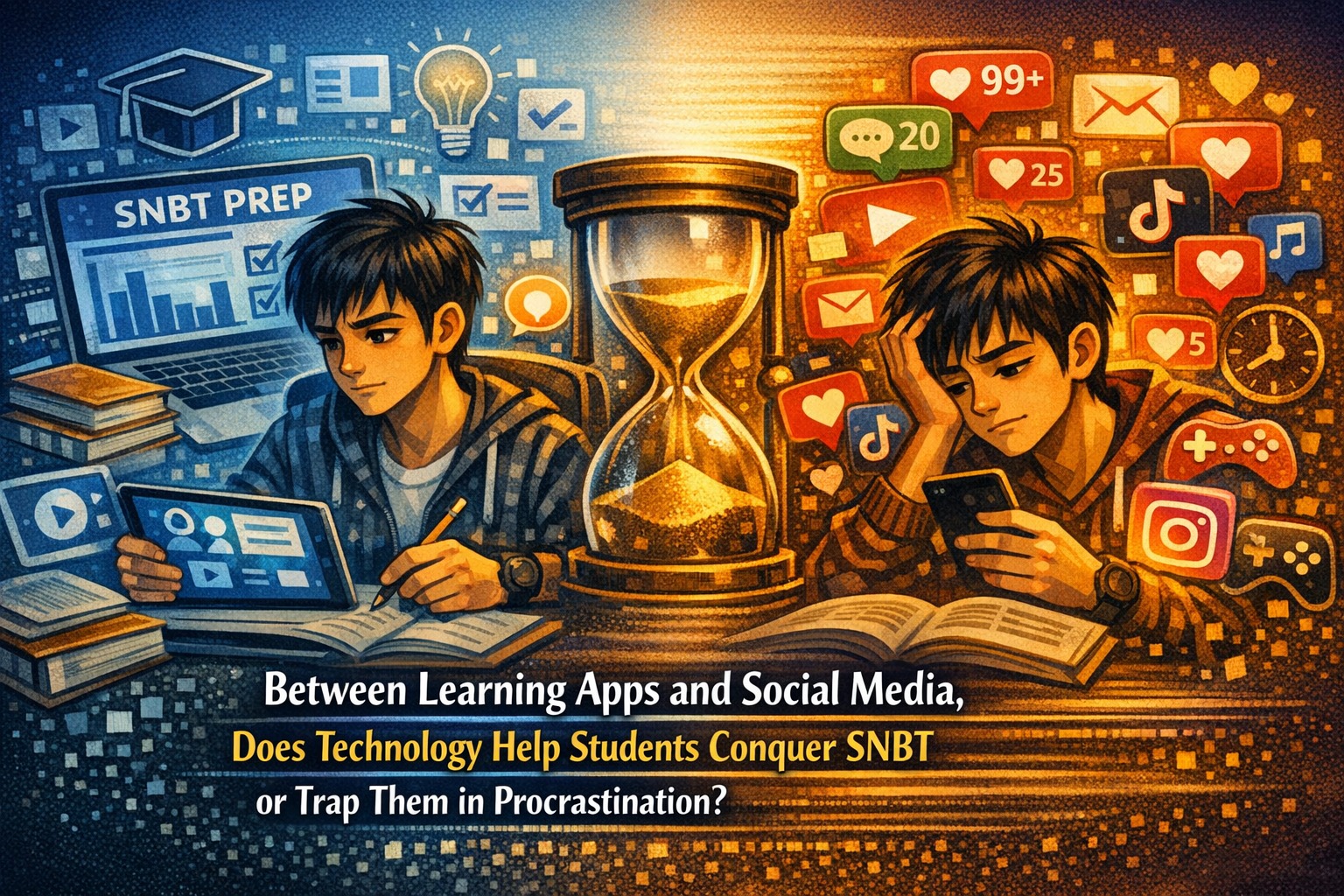
Preparing for SNBT (Seleksi Nasional Based on Test) in the digital era has become both easier and more complicated. Students today live in a world where educational platforms, learning applications, and academic resources are available at their fingertips. With just one smartphone, they can access online tryouts, video lessons, digital modules, and discussion forums that were once difficult to find.
At the same time, the same device that helps them study also becomes the center of distraction. Social media platforms, short videos, online entertainment, and endless notifications are always present beside their academic goals. A student may open a learning app with the intention of reviewing mathematics, but within minutes, they may be scrolling through unrelated content for hours.
This creates a serious question for students preparing for one of Indonesia’s most competitive entrance exams: does technology truly help students conquer SNBT, or does it quietly trap them in procrastination?
The answer is not as simple as blaming smartphones or praising digital education. Technology itself is neutral. What matters is how students manage attention, discipline, and decision-making. Learning apps can become powerful academic tools, while social media can either inspire productivity or destroy focus depending on how they are used.
Understanding this balance is essential because success in SNBT is not only about intelligence. It is also about consistency, concentration, and the ability to resist delay in a world designed to distract.
THE RISE OF DIGITAL LEARNING FOR SNBT PREPARATION
The educational landscape has changed dramatically in recent years. Traditional preparation methods such as printed books, private tutoring, and classroom discussions are now combined with digital systems that offer faster access and greater flexibility.
Students preparing for SNBT often rely on online tryout platforms to practice exam patterns and manage time pressure. Video explanations on YouTube and educational applications help simplify difficult concepts like quantitative reasoning, literacy analysis, and logical problem solving.
This digital transformation is especially helpful for students who live far from major tutoring centers. They can now receive high-quality learning support without geographical limitations.
Learning apps also allow students to personalize their preparation. They can repeat lessons, track progress, and focus on specific weaknesses more efficiently than traditional study systems.
Technology has made learning more accessible and independent.
However, access to information alone does not guarantee success. Students still need discipline to turn opportunity into results.
WHY SOCIAL MEDIA OFTEN WINS THE ATTENTION BATTLE
While learning apps are designed to support academic goals, social media is designed to capture attention for as long as possible.
This difference is important. Educational platforms require effort, concentration, and delayed rewards. Social media offers instant entertainment, emotional stimulation, and quick satisfaction.
The human brain naturally prefers immediate rewards. Watching a short entertaining video feels easier than solving a difficult reasoning problem. This is why students often choose scrolling over studying even when they know their priorities.
Notifications make this worse. Every message or alert interrupts focus and creates curiosity. Even small interruptions reduce the brain’s ability to return to deep concentration.
Many students underestimate how much time disappears through “just five minutes” of checking social media. Repeated distractions slowly turn into academic procrastination.
The problem is not only lost time, but the habit of choosing comfort over challenge.
HOW LEARNING APPS CAN IMPROVE STUDY EFFICIENCY
When used intentionally, learning applications can significantly improve study quality.
First, they help students study based on performance data. Instead of reviewing all subjects equally, students can focus on weak areas identified through tryout results and progress tracking.
Second, flexible access allows students to learn anytime. Even short periods such as commuting time or breaks between classes can be used productively.
Third, interactive features such as quizzes, ranking systems, and timed simulations make studying more engaging. This helps students stay motivated during long preparation periods.
Fourth, online communities provide emotional support. Students can share struggles, discuss questions, and feel less alone during stressful exam preparation.
These advantages make digital learning smarter and more strategic.
Technology becomes powerful when students use it to simplify decisions, not increase distraction.
THE DANGEROUS COMFORT OF PROCRASTINATION
Procrastination rarely feels dangerous in the beginning.
Students often delay studying with thoughts like “I will start tonight” or “I still have time tomorrow.” Because SNBT preparation happens over months, small delays feel harmless.
But procrastination grows quietly. One delayed chapter becomes one unfinished week. One skipped tryout becomes a habit of avoidance.
Technology makes this easier because distractions are always available. Students do not need to leave their desk to escape difficult work. Entertainment is already in their hand.
Procrastination is often emotional, not intellectual. Students delay tasks because they feel overwhelmed, anxious, or afraid of failure. Social media becomes a comfortable escape from academic pressure.
Unfortunately, temporary relief creates bigger stress later.
The more students delay, the heavier the task feels. Breaking this cycle requires action before motivation appears.
PASSIVE STUDYING AND THE ILLUSION OF PRODUCTIVITY
Another hidden trap of technology is passive studying.
Students may spend hours watching educational videos, saving PDF files, or reading motivational content and believe they are making strong progress. While these activities can support learning, they do not automatically create mastery.
SNBT requires active problem-solving. Students must practice answering questions independently, review mistakes, and train speed under time pressure.
Passive learning creates familiarity, but active learning builds competence.
Many students confuse being busy with being effective. They feel productive because they are surrounded by study content, but real understanding remains shallow.
This illusion is dangerous because it delays honest self-evaluation.
Technology should be used to strengthen active practice, not replace it with endless consumption.
BUILDING FOCUS IN A DISTRACTION-FILLED ENVIRONMENT
Focus has become one of the most valuable academic skills in the digital era.
Students preparing for SNBT need strong concentration because many exam sections demand deep reasoning, careful reading, and quick decision-making.
This level of focus cannot survive constant interruption.
Creating focused study sessions without notifications is one effective strategy. Even one uninterrupted hour often produces better results than several distracted hours.
Students can also separate study spaces from entertainment habits. Using specific applications only for learning helps reduce mental confusion between work and leisure.
Clear daily goals improve discipline as well. Instead of saying “I will study later,” students should define exact tasks and deadlines.
Focus is easier to protect when the study process becomes structured and intentional.
Success often depends less on studying longer and more on studying with full attention.
THE ROLE OF SELF-DISCIPLINE IN DIGITAL SUCCESS
Technology offers tools, but discipline determines outcomes.
Many students search for the best application, the most famous tutor, or the perfect study strategy. Yet without consistency, even the best system fails.
Self-discipline means choosing important tasks before enjoyable distractions. It means continuing revision even when motivation feels low.
This does not require perfection. Every student experiences distraction and procrastination. The key is returning quickly to productive habits instead of allowing one bad day to become a bad month.
Discipline also includes realistic planning. Extreme study schedules often lead to burnout, while balanced routines create sustainable progress.
Students do not need to study every minute. They need honest consistency.
SNBT success is usually built through repeated ordinary effort, not dramatic last-minute panic.
HOW PARENTS AND TEACHERS CAN SUPPORT BETTER DIGITAL HABITS
Students manage technology better when they receive support from their environment.
Parents often see smartphones only as distractions, but digital devices can also be powerful educational tools. The goal should be guidance, not total restriction.
Healthy conversations about routines, priorities, and stress management are more effective than constant control without understanding.
Teachers can help by recommending reliable learning platforms and realistic preparation strategies. This reduces confusion caused by too many choices online.
Schools should also teach digital literacy, helping students understand attention management, responsible screen use, and healthy study boundaries.
Academic success becomes stronger when support systems encourage discipline without creating excessive pressure.
Students perform better when they feel guided rather than constantly judged.
FINDING BALANCE BETWEEN TECHNOLOGY AND TRUE PROGRESS
The goal is not to reject technology or blame social media completely. The real challenge is balance.
Students need learning apps because modern education demands flexibility and digital access. They also need entertainment and social connection because mental health matters during stressful preparation.
The problem begins when distraction controls direction.
Technology helps students conquer SNBT only when they remain in control of how it is used. If the screen decides their priorities, procrastination becomes stronger than ambition.
Real progress comes from conscious choices. Choosing practice over passive watching, focus over endless scrolling, and long-term goals over short-term comfort.
Passing SNBT is not about having the newest device or the most study applications. It is about managing attention with maturity.
In the end, technology is only a tool. Whether it becomes a bridge to success or a trap of procrastination depends entirely on the student using it.
About the Author
Gusti Ayu Tita P
Author — STEKOM University
An active author focused on academic issues, educational technology, and human resource development in the campus environment.