Bhinneka Tunggal Ika and the Challenges of Unity in the Digital Era
Gusti Ayu Tita P
4 Agustus 2026
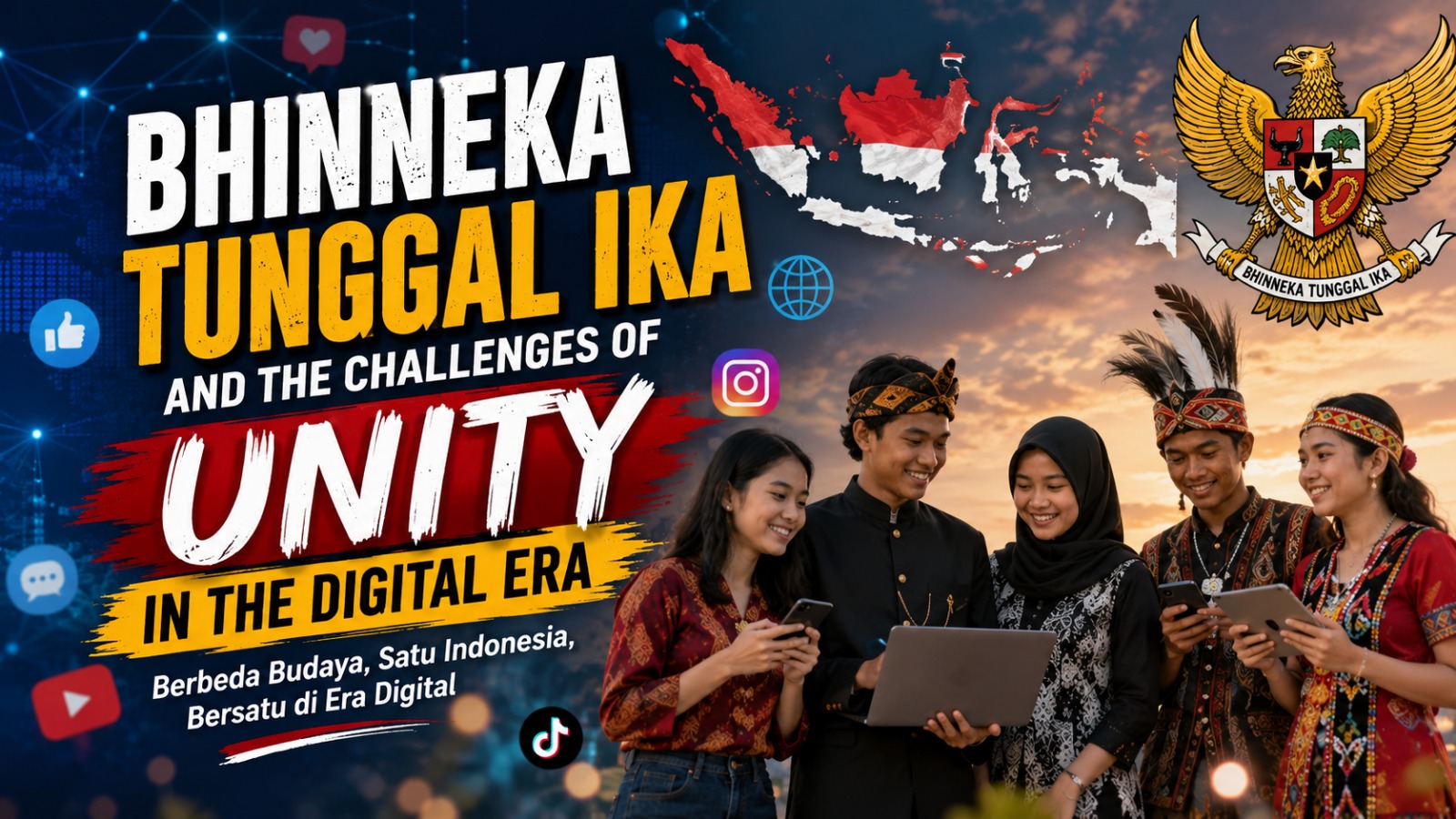
Indonesia is one of the world's most diverse countries, with many ethnic groups, religions, languages, cultures, and traditions. This diversity is an important part of Indonesian society and national identity. Bhinneka Tunggal Ika, which means Unity in Diversity, provides an important principle for maintaining unity amid these differences. However, the rapid growth of digital technology has created new opportunities as well as challenges for social harmony. Understanding the relationship between Bhinneka Tunggal Ika and the digital era is therefore increasingly important.
Digital platforms have changed how Indonesians communicate, obtain information, and express opinions. Social media allows people from different regions and backgrounds to interact without geographical limitations. This can strengthen cultural understanding and create new opportunities for collaboration. However, digital spaces can also spread misinformation, hate speech, intolerance, and divisive content. These challenges require Indonesian society to apply the values of Bhinneka Tunggal Ika responsibly both online and offline.
THE MEANING OF BHINNEKA TUNGGAL IKA
Bhinneka Tunggal Ika is Indonesia's national motto and is generally translated as Unity in Diversity. The phrase comes from the Old Javanese language and is associated with the Kakawin Sutasoma, a work attributed to Mpu Tantular during the Majapahit era. Its historical meaning relates to the idea that differences in beliefs do not have to prevent peaceful coexistence. Over time, the principle developed into a broader expression of unity within Indonesia's diverse society. It emphasizes that differences can exist while people remain part of one nation.
The motto is displayed on the national emblem, Garuda Pancasila, showing its importance to Indonesian national identity. Bhinneka Tunggal Ika does not demand that citizens abandon their cultural or religious identities. Instead, it encourages them to respect differences and maintain cooperation. This principle is particularly important in a country where diversity is a fundamental part of everyday life. In the digital era, its values can help guide how people communicate and interact online.
DIGITAL TECHNOLOGY AND INDONESIAN SOCIETY
Digital technology has transformed the way Indonesian people communicate with each other. Social media, messaging applications, websites, and online communities allow information to move quickly across regions. People can communicate with individuals from different cultural and social backgrounds without meeting in person. This creates opportunities for cultural exchange and broader social interaction. Digital platforms can therefore support the values of unity in diversity when used responsibly.
The digital environment also gives individuals greater opportunities to express their identities. Local communities can introduce traditional arts, regional languages, food, music, and cultural celebrations to wider audiences. Young Indonesians can use digital platforms to promote their local heritage while learning about cultures from other regions. This exchange can increase appreciation for Indonesia's cultural richness. However, digital communication must be accompanied by awareness of its potential risks.
MISINFORMATION AS A THREAT TO UNITY
Misinformation is one of the major challenges facing Indonesian society in the digital era. False or misleading information can spread rapidly through social media and messaging platforms. When people share information without checking its accuracy, misunderstandings can affect individuals and communities. Misinformation can become particularly harmful when it involves sensitive issues such as religion, ethnicity, politics, or social conflicts. Such situations can weaken trust and create unnecessary divisions.
Applying Bhinneka Tunggal Ika requires citizens to become more careful digital users. People should check information against reliable sources before sharing it with others. They should also avoid immediately believing content that is designed to provoke anger or fear. Critical thinking and digital literacy can help people distinguish credible information from misleading content. These habits are important for protecting social harmony in a highly connected society.
HATE SPEECH AND ONLINE INTOLERANCE
Hate speech can create serious challenges for unity because it attacks individuals or groups based on identity. In digital spaces, harmful comments can reach large audiences within a short period of time. Statements targeting ethnicity, religion, race, or other identities can increase prejudice and social tension. Repeated exposure to such content can also normalize discriminatory behavior. This contradicts the spirit of Bhinneka Tunggal Ika, which emphasizes respect for diversity.
Online discussions can remain healthy when users communicate respectfully, even when they disagree. People should focus on ideas and arguments instead of attacking someone's identity. Reporting harmful content and avoiding the spread of discriminatory messages can also contribute to a safer digital environment. Parents, educators, communities, and digital platforms all have roles in encouraging responsible online behavior. These efforts can help ensure that technology strengthens rather than weakens social unity.
THE RISK OF SOCIAL POLARIZATION
Digital platforms can contribute to social polarization when users interact mainly with people who share similar views. Algorithms may repeatedly recommend content based on previous interests and interactions. As a result, users may encounter fewer perspectives that challenge their existing beliefs. Over time, this can create social divisions and make people less willing to understand different viewpoints. Polarization becomes more concerning when differences are treated as reasons for hostility.
Bhinneka Tunggal Ika provides an important reminder that disagreement does not have to destroy social relationships. Indonesians can hold different opinions while continuing to respect one another as fellow citizens. People should be willing to listen to perspectives that differ from their own and evaluate arguments fairly. Constructive dialogue can help reduce misunderstandings and encourage mutual understanding. Maintaining open communication is essential for protecting unity in a diverse digital society.
DIGITAL LITERACY AS A KEY TO UNITY
Digital literacy is an important skill for applying Bhinneka Tunggal Ika in online environments. It involves more than simply knowing how to use digital devices and social media. People also need to understand how information is created, distributed, and interpreted online. They should be able to evaluate sources, identify misleading content, and consider the consequences of sharing information. These skills can help users become more responsible participants in digital society.
Digital literacy should be developed from an early age through families, schools, universities, and communities. Students can learn how to verify information and communicate respectfully online. Educational institutions can also teach students to recognize manipulation, cyberbullying, and discriminatory content. With stronger digital literacy, people can use technology without easily becoming involved in harmful online conflicts. This can support a healthier and more united society.
THE ROLE OF YOUNG PEOPLE IN THE DIGITAL ERA
Young people are among the most active users of digital technology in Indonesia. Their behavior on social media can influence how diversity and national unity are represented online. They can use digital platforms to share cultural knowledge, promote tolerance, and introduce traditions from different regions. Creative content can help younger audiences appreciate the richness of Indonesian society. Through positive digital participation, young people can become important supporters of Bhinneka Tunggal Ika.
Young people also need to recognize their responsibility when creating and sharing content. They should avoid spreading unverified information, insulting other groups, or participating in online conflicts. Before sharing a post, they can consider whether the information is accurate and whether it could unnecessarily harm others. Respectful communication is especially important when discussing sensitive social issues. Responsible digital behavior can help young Indonesians protect unity while making the online environment more positive.
HOW TO APPLY BHINNEKA TUNGGAL IKA ONLINE
Applying Bhinneka Tunggal Ika online can begin with simple and responsible communication. Users can respect differences in religion, culture, ethnicity, opinions, and regional identity. They can also avoid discriminatory jokes, provocative content, and comments that deliberately attack other groups. When disagreements occur, users should focus on constructive discussion rather than personal attacks. These behaviors help create digital spaces where differences can be discussed peacefully.
Another important step is using digital platforms to promote positive interaction. People can share educational content about Indonesian cultures and highlight stories of cooperation between different communities. Online communities can organize discussions and activities that encourage cultural understanding. Users can also support content that promotes tolerance and mutual respect. Through consistent actions, digital spaces can become an extension of the values represented by Bhinneka Tunggal Ika.
THE ROLE OF EDUCATION AND FAMILIES
Education has an important role in preparing young people to face the challenges of digital diversity. Schools and universities can teach students about Bhinneka Tunggal Ika alongside digital literacy and responsible communication. Students can learn to evaluate information, understand different perspectives, and participate in respectful discussions. Group projects involving students from different backgrounds can also strengthen cooperation. These experiences can prepare students to become responsible digital citizens.
Families also play an important role in shaping online behavior. Parents can encourage children to think critically about information and discuss the consequences of online actions. Open communication at home can help young people understand why respect and tolerance are important. Guidance should focus not only on limiting technology use but also on developing responsible digital habits. Cooperation between families and educational institutions can strengthen efforts to protect unity in the digital era.
CONCLUSION
Bhinneka Tunggal Ika remains highly relevant as Indonesia faces new challenges created by digital technology. Misinformation, hate speech, intolerance, polarization, and irresponsible communication can threaten social unity when they spread widely online. At the same time, digital platforms can create valuable opportunities for cultural exchange, education, and cooperation. The difference lies in how people use technology and whether they apply the principles of mutual respect and tolerance.
Maintaining unity in the digital era requires cooperation from all parts of society. Indonesian citizens can contribute by improving digital literacy, verifying information, respecting differences, and communicating responsibly. Young people have an especially important role because of their strong presence in digital spaces. When technology is used to promote understanding rather than division, Bhinneka Tunggal Ika can remain a strong foundation for Indonesian unity. In this way, diversity can continue to be a source of strength in both the real and digital worlds.
About the Author
Gusti Ayu Tita P
Author — STEKOM University
An active author focused on academic issues, educational technology, and human resource development in the campus environment.