
Bhinneka Tunggal Ika as Indonesia's Strength Amid Diversity
Gusti Ayu Tita P
4 Agustus 2026
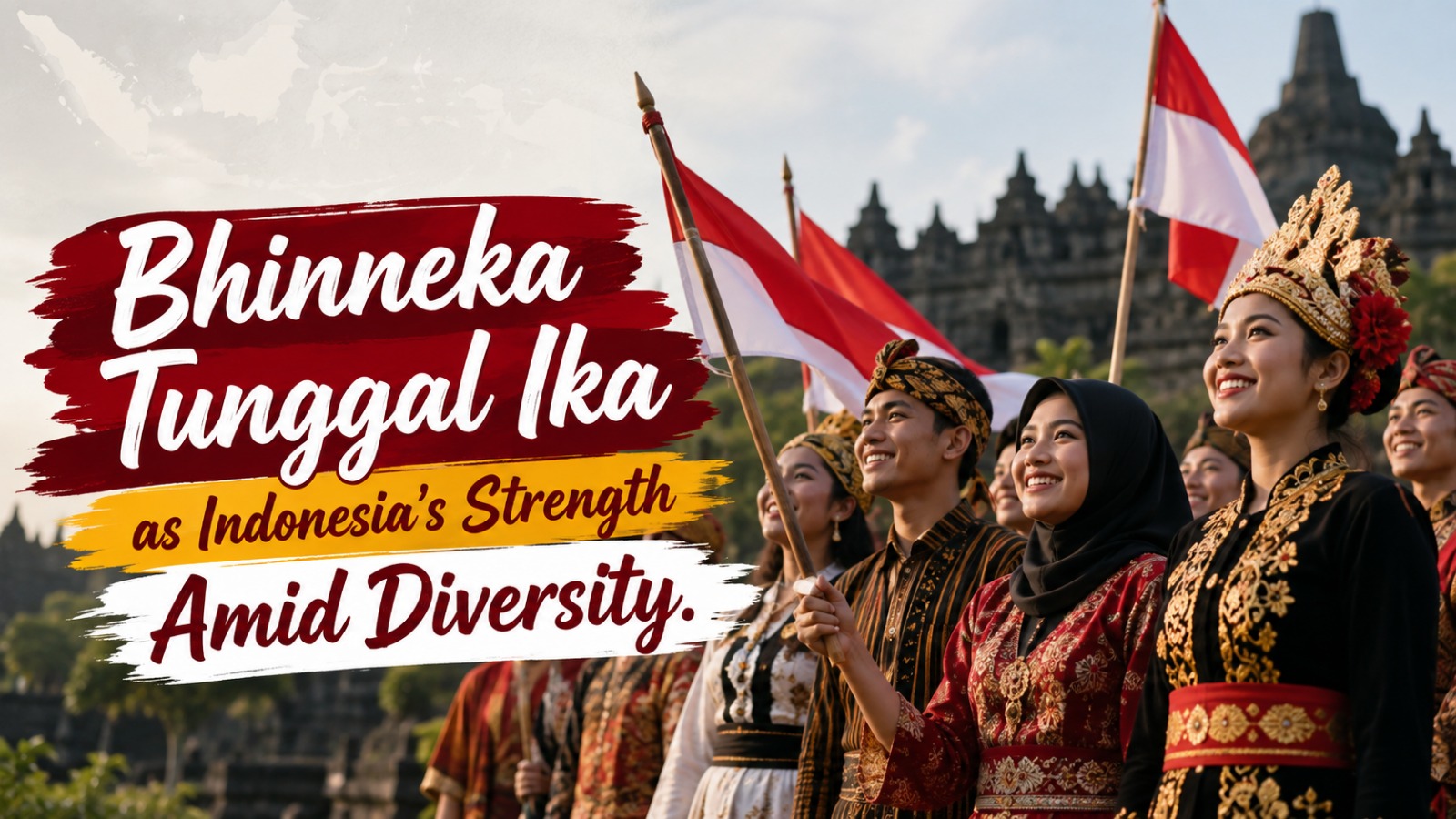
Indonesia is widely known for its extraordinary diversity. The country is home to many ethnic groups, religions, languages, traditions, and cultural expressions spread across thousands of islands. This diversity is a valuable national asset, but it also requires a strong commitment to unity. Bhinneka Tunggal Ika, meaning “Unity in Diversity,” provides an important foundation for maintaining Indonesia’s strength amid its differences.
Bhinneka Tunggal Ika teaches that diversity and unity can exist together. People do not need to have the same culture, beliefs, or traditions to work together as one nation. By respecting differences and focusing on shared interests, Indonesian society can turn diversity into a source of strength and social progress.
UNDERSTANDING BHINNEKA TUNGGAL IKA
Bhinneka Tunggal Ika is Indonesia’s national motto and expresses the principle that people with different identities can remain united. The phrase is associated with the Kakawin Sutasoma, a 14th-century Javanese literary work attributed to Mpu Tantular. Its message is especially relevant to Indonesia because the country has developed through interactions among many communities and cultural traditions.
The principle does not mean that differences should be removed. Instead, it encourages people to accept diversity while maintaining a shared identity as Indonesians. This understanding allows citizens to preserve their unique traditions while contributing to a common national purpose.
DIVERSITY AS A NATIONAL STRENGTH
Indonesia’s diversity provides many opportunities for cultural and social development. Different communities contribute unique traditions, knowledge, arts, languages, and perspectives to the country. When these differences are respected, they can enrich Indonesian society and create opportunities for learning between communities.
Diversity can also encourage creativity and innovation because people with different experiences may approach problems in different ways. Cooperation among diverse communities can produce new ideas and solutions. Therefore, diversity should not be viewed only as a challenge but also as a valuable resource for Indonesia’s development.
STRENGTHENING UNITY THROUGH TOLERANCE
Tolerance is essential for maintaining unity in a diverse country. Bhinneka Tunggal Ika encourages Indonesians to respect differences in religion, ethnicity, culture, language, and opinion. This attitude helps people interact peacefully without requiring everyone to share the same identity.
Tolerance can be practiced through simple actions in everyday life. People can listen to different perspectives, respect religious practices, avoid discrimination, and cooperate with individuals from different backgrounds. When these habits become part of daily life, social relationships become stronger and more harmonious.
PRESERVING INDONESIA'S CULTURAL HERITAGE
Indonesia’s cultural heritage is one of the clearest examples of the country’s diversity. Traditional dances, music, clothing, languages, crafts, foods, and ceremonies represent the identities of different communities. Preserving these traditions helps ensure that Indonesia’s cultural wealth remains available to future generations.
Young people have a particularly important role in cultural preservation. They can learn local traditions, participate in cultural activities, and introduce Indonesian heritage through digital platforms. Modern technology can therefore become a useful tool for keeping traditional culture relevant in a changing society.
ENCOURAGING COOPERATION ACROSS DIFFERENCES
Unity becomes stronger when people are willing to work together despite their differences. Bhinneka Tunggal Ika encourages citizens to focus on shared goals rather than allowing differences to create unnecessary divisions. Cooperation can take place in schools, workplaces, neighborhoods, community organizations, and national development programs.
Working together also creates opportunities for people to understand one another. Through collaboration, individuals can discover shared interests and learn to appreciate different perspectives. This can reduce stereotypes and strengthen social trust across communities.
BHINNEKA TUNGGAL IKA IN THE DIGITAL ERA
The digital era has changed how Indonesians communicate and interact. Social media allows people from different regions to share ideas and cultural experiences more easily. However, digital platforms can also spread misinformation, hate speech, and discriminatory content that may threaten social harmony.
Bhinneka Tunggal Ika can provide guidance for responsible digital behavior. Users should verify information before sharing it, avoid content that attacks certain groups, and communicate respectfully when disagreements occur. Digital platforms can also be used to promote cultural diversity and positive stories about cooperation across communities.
THE ROLE OF YOUNG PEOPLE IN PROTECTING UNITY
Young people are an important part of Indonesia’s future. Their attitudes toward diversity can influence how society develops in the coming decades. By learning about different cultures, practicing tolerance, and rejecting discrimination, young people can help strengthen national unity.
They can also become positive voices in digital spaces. Sharing educational content about Indonesian cultures, supporting local creative communities, and encouraging respectful discussions are examples of meaningful contributions. These actions allow young people to preserve the values of Bhinneka Tunggal Ika while adapting them to modern life.
BUILDING AN INCLUSIVE AND HARMONIOUS SOCIETY
An inclusive society gives people opportunities to participate regardless of their cultural or social background. Bhinneka Tunggal Ika encourages Indonesians to recognize that every community is part of the larger national identity. Respecting differences can help create an environment where people feel valued and accepted.
A harmonious society does not require the elimination of disagreement. Instead, it requires the ability to manage differences through dialogue, cooperation, and mutual respect. When citizens can disagree without hostility, diversity becomes easier to manage and national unity becomes stronger.
CONCLUSION
Bhinneka Tunggal Ika is one of Indonesia’s important strengths because it provides a principle for maintaining unity amid extraordinary diversity. It encourages tolerance, cultural appreciation, cooperation, and respect for different identities. These values allow Indonesia to protect its diversity while strengthening its shared national identity.
Maintaining this strength requires participation from all generations. By respecting differences, preserving cultural heritage, using technology responsibly, and cooperating across communities, Indonesians can ensure that diversity remains an advantage rather than a source of division. Bhinneka Tunggal Ika can therefore continue to guide Indonesia toward a more united, inclusive, and resilient future.
About the Author
Gusti Ayu Tita P
Author — STEKOM University
An active author focused on academic issues, educational technology, and human resource development in the campus environment.















