
Bhinneka Tunggal Ika in Embracing Ethnic and Cultural Diversity
Gusti Ayu Tita P
4 Agustus 2026
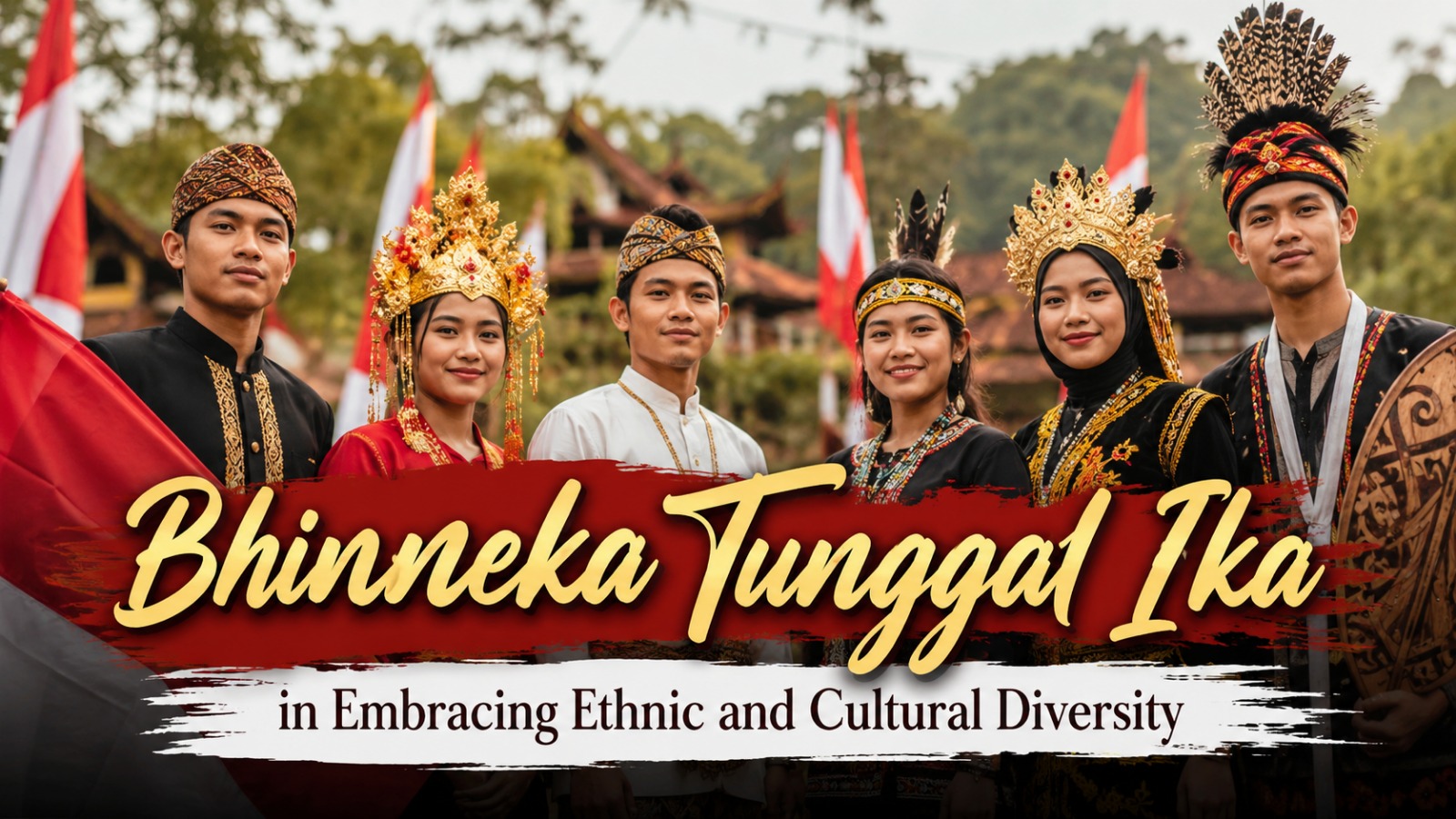
Indonesia is a country rich in ethnic and cultural diversity. People from different ethnic groups live across thousands of islands, each bringing unique traditions, languages, customs, arts, and ways of life. This diversity is one of Indonesia's greatest cultural assets and an important part of its national identity. However, maintaining harmony in such a diverse society requires tolerance, respect, and cooperation. Bhinneka Tunggal Ika provides an important principle for embracing differences while maintaining national unity.
Bhinneka Tunggal Ika is commonly translated as Unity in Diversity. It teaches Indonesians that differences in ethnicity and culture should not become reasons for separation or discrimination. Instead, diversity can become a source of strength when people recognize and respect the value of different communities. The principle allows people to preserve their cultural identities while sharing a common identity as Indonesians. This makes Bhinneka Tunggal Ika highly relevant to the way ethnic and cultural diversity is managed in Indonesia.
THE MEANING OF BHINNEKA TUNGGAL IKA
The phrase Bhinneka Tunggal Ika originates from Old Javanese and is associated with the Kakawin Sutasoma, a literary work attributed to Mpu Tantular during the Majapahit era. In its historical context, the phrase expressed an idea of coexistence between different religious traditions. Its message emphasized that differences did not necessarily have to create conflict. Over time, the principle developed into a broader expression of unity within Indonesia's diverse society. It eventually became the national motto of the Republic of Indonesia.
Bhinneka Tunggal Ika is displayed on the scroll held by Garuda Pancasila, Indonesia's national emblem. Its position reflects the importance of unity within the country's diverse population. The motto does not demand that citizens abandon their ethnic or cultural identities. Instead, it encourages people to respect different identities while maintaining a shared commitment to Indonesia. This makes it an important foundation for embracing diversity in everyday life.
INDONESIA'S ETHNIC AND CULTURAL DIVERSITY
Indonesia has a wide range of ethnic communities with their own languages, traditions, customs, arts, and social practices. From the Acehnese and Batak in western Indonesia to Javanese, Sundanese, Balinese, Dayak, Bugis, Papuan, and many other communities, each contributes to the country's cultural richness. These identities have developed through long histories and interactions between communities. Their diversity makes Indonesian culture complex and unique. Protecting this diversity is therefore important for preserving the nation's cultural heritage.
Cultural diversity can be seen in traditional dances, music, clothing, architecture, food, ceremonies, crafts, and local knowledge. These cultural expressions provide communities with a strong sense of identity and belonging. When people learn about traditions outside their own communities, they can develop greater appreciation for Indonesia's cultural richness. Cultural exchange can also encourage cooperation and mutual understanding. Bhinneka Tunggal Ika provides a foundation for ensuring that these differences are respected rather than treated as barriers.
RESPECTING ETHNIC DIFFERENCES
Respect is essential when embracing ethnic diversity. Every ethnic community has its own history, customs, values, and traditions that deserve recognition. Respecting differences does not mean agreeing with every cultural practice, but it requires people to avoid prejudice and unfair treatment. Individuals should not judge someone solely because of their ethnic background. By promoting equal treatment, society can create stronger relationships between different communities.
Respect can begin with everyday interactions. People can learn how to pronounce names correctly, avoid ethnic stereotypes, and listen to others' experiences. Schools and workplaces can create inclusive environments where people from different backgrounds have equal opportunities to participate. Communities can also organize activities that encourage interaction between ethnic groups. These simple practices can help reduce prejudice and strengthen social trust.
PRESERVING CULTURAL HERITAGE
Cultural heritage is an important part of ethnic identity and Indonesian national identity. Traditional languages, dances, music, clothing, crafts, stories, ceremonies, and local knowledge represent the history of different communities. Without proper preservation, some traditions may become less familiar to younger generations. Globalization and changing lifestyles can also influence how traditional culture is practiced. Therefore, cultural preservation requires active participation from communities and younger generations.
Young people can play an important role in preserving cultural heritage through modern approaches. They can learn traditional arts from older generations and introduce them through digital platforms. Videos, educational articles, podcasts, and social media campaigns can help make cultural traditions more accessible. However, cultural content should be presented accurately and respectfully. Combining traditional knowledge with modern technology can help cultural heritage remain relevant without losing its original value.
THE ROLE OF TOLERANCE IN CULTURAL DIVERSITY
Tolerance allows people from different ethnic and cultural backgrounds to live together peacefully. It means accepting the existence of differences and respecting the rights of others. In a diverse society, tolerance can prevent cultural differences from becoming sources of conflict. It also encourages people to communicate openly when misunderstandings occur. Bhinneka Tunggal Ika supports this approach by emphasizing unity without requiring cultural uniformity.
Tolerance can be practiced through cultural exchange and cooperation. People can attend cultural events, learn about traditional food, listen to regional music, or participate in community activities from different backgrounds. These experiences can help people understand that differences are not necessarily threatening. Instead, they can provide opportunities to learn and develop broader perspectives. Stronger cultural understanding can ultimately support a more harmonious society.
BHINNEKA TUNGGAL IKA IN EDUCATION
Education is one of the most effective ways to introduce the values of Bhinneka Tunggal Ika to younger generations. Schools and universities can teach students about Indonesia's ethnic groups, cultural traditions, history, and national values. Learning about diversity can help students recognize and challenge stereotypes. Classroom discussions and cultural activities can also encourage respectful interaction between students from different backgrounds. Education therefore plays an important role in building an inclusive generation.
Teachers can integrate diversity into learning through group projects, cultural exhibitions, discussions, and community activities. Students can work with classmates who have different cultural experiences and perspectives. This helps them develop communication, empathy, and teamwork skills. These abilities are valuable not only for academic success but also for future professional and social life. Through education, Bhinneka Tunggal Ika can become a practical value rather than merely a national motto.
EMBRACING DIVERSITY IN THE DIGITAL ERA
The digital era has created new opportunities to celebrate Indonesia's ethnic and cultural diversity. Social media and other digital platforms allow communities to introduce local traditions to audiences across the country. Young people can share stories about traditional ceremonies, regional languages, local food, music, crafts, and cultural celebrations. This can help lesser-known traditions gain greater visibility. Digital technology can therefore support cultural preservation and appreciation.
However, digital spaces can also create problems when users spread stereotypes, misinformation, or discriminatory content. Cultural information can be misunderstood when presented without sufficient context. Online arguments can also become more intense when people communicate without considering the feelings of others. Digital literacy is therefore essential when discussing ethnic and cultural differences. Users should verify information, avoid harmful stereotypes, and communicate respectfully online.
THE ROLE OF YOUNG PEOPLE IN EMBRACING DIVERSITY
Young people have a major role in shaping how ethnic and cultural diversity is understood in the future. They can start by developing friendships and cooperation with people from different backgrounds. Participation in student organizations, cultural communities, volunteer programs, and social activities can provide opportunities to interact across differences. These experiences can help young people understand diversity through direct interaction rather than assumptions. They can also develop empathy and stronger social awareness.
Young people can use their creativity to promote cultural diversity through digital content. They can introduce local traditions, support cultural creators, and share educational information about Indonesian heritage. At the same time, they should avoid content that stereotypes or insults particular ethnic communities. Responsible content creation can encourage appreciation rather than division. Through these actions, young Indonesians can help ensure that ethnic and cultural diversity remains a strength of the nation.
CHALLENGES IN EMBRACING ETHNIC AND CULTURAL DIVERSITY
Although Indonesia has a strong tradition of diversity, several challenges can still affect social harmony. Ethnic stereotypes, discrimination, intolerance, cultural misunderstanding, and unequal access to opportunities can create tensions between communities. Rapid social change can also make some traditional practices less visible among younger generations. These challenges show why embracing diversity requires continuous effort. Bhinneka Tunggal Ika can provide a shared framework for addressing these issues.
Solving these challenges requires cooperation among individuals, families, schools, communities, and public institutions. People need opportunities to communicate and learn from one another rather than relying on stereotypes. Cultural education can strengthen awareness of Indonesia's heritage, while inclusive social policies can support equal participation. Digital literacy can also help reduce harmful ethnic narratives online. With these efforts, Indonesia can strengthen unity while preserving the identities of its diverse communities.
CONCLUSION
Bhinneka Tunggal Ika provides an important foundation for embracing Indonesia's ethnic and cultural diversity. It teaches that differences should not become reasons for discrimination or division. Instead, ethnic and cultural diversity can enrich national identity when people practice tolerance, respect, cooperation, and mutual understanding. Preserving cultural heritage also ensures that the country's traditions can continue to be appreciated by future generations.
Embracing diversity is a responsibility shared by all Indonesians. Young people can contribute by learning about different cultures, building inclusive relationships, preserving traditions, and using digital platforms responsibly. Schools, families, communities, and other institutions can support these efforts by creating spaces where differences are respected. When Bhinneka Tunggal Ika is practiced in everyday life, Indonesia can remain united while celebrating the ethnic and cultural diversity that makes the nation unique.
About the Author
Gusti Ayu Tita P
Author — STEKOM University
An active author focused on academic issues, educational technology, and human resource development in the campus environment.















