Black Magic in Popular Culture From Ancient Tales to Modern Stories
Gusti Ayu Tita P
10 September 2026
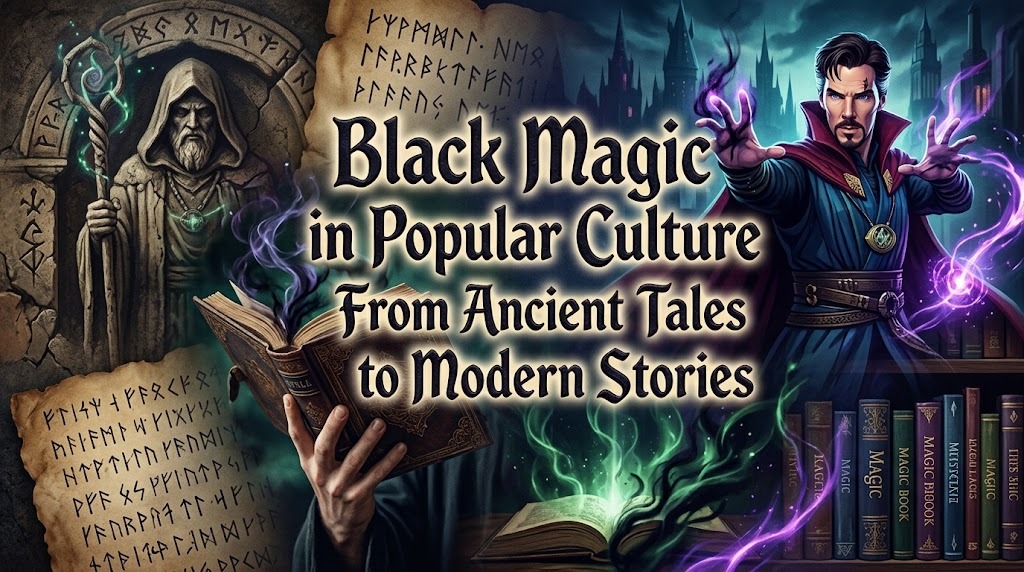
Stories about black magic have existed for centuries and continue to appear in modern books, movies, television shows, games, and other forms of entertainment. The idea often refers to mysterious or supernatural practices believed to involve harmful, forbidden, or dangerous powers. Although the meaning of black magic differs across cultures, it has become a familiar theme in stories about witches, curses, spirits, and supernatural conflicts. Ancient communities often used magical stories to explain events they could not understand, while modern creators use similar ideas to entertain audiences. As a result, black magic has developed from traditional beliefs into a powerful element of popular culture.
BLACK MAGIC IN ANCIENT TALES
Long before modern entertainment existed, stories about magic were already present in myths, legends, religious traditions, and oral storytelling. Ancient societies often described supernatural powers through stories about sorcerers, magical objects, curses, spirits, and mysterious rituals. These stories did not always use the modern term black magic, and practices considered magical could have different meanings depending on the society. Some forms of magic were associated with healing or protection, while others were viewed as dangerous or unacceptable. This difference shows that the concept of black magic has never had exactly the same meaning everywhere.
Ancient tales also used supernatural powers to explain human fears and unexplained events. A curse in a story could represent punishment, jealousy, revenge, or the consequences of breaking social rules. Magical characters were sometimes presented as villains because their powers threatened the community or challenged accepted traditions. Folklore became an important way to preserve these stories, allowing them to pass from one generation to another. Over time, many of these traditional ideas became the foundation for later supernatural storytelling.
BLACK MAGIC AND TRADITIONAL FOLKLORE
Traditional folklore played an important role in shaping the way people imagine black magic today. Different regions developed their own stories about witches, magical practitioners, curses, spirits, and supernatural creatures. These stories were influenced by local beliefs, religious traditions, historical experiences, and social values. A magical practice viewed as frightening in one community could have a different interpretation somewhere else. Therefore, black magic in folklore should be understood within its cultural and historical context.
Oral traditions helped supernatural stories survive even when written records were limited. Parents, elders, storytellers, and community members passed stories to younger generations through spoken narratives and cultural traditions. Some stories changed over time as they moved between communities or were adapted to new social conditions. The flexibility of folklore helped magical stories remain relevant across different periods. Modern entertainment continues to borrow characters, themes, and supernatural concepts from these older traditions.
BLACK MAGIC IN LITERATURE AND MODERN STORIES
The development of literature gave writers new opportunities to transform traditional magical beliefs into fictional stories. Novels, short stories, plays, and poems often used witchcraft, curses, forbidden knowledge, and supernatural powers to create mystery and conflict. In fictional works, black magic can represent evil, temptation, ambition, fear, or the desire for power. Writers can also use magical elements to explore human behavior and difficult moral choices. This makes black magic more than simply a supernatural concept because it can become a symbol for real human problems.
Modern fantasy and horror literature have expanded these ideas even further. Some authors create fictional magical systems with their own rules, while others combine traditional folklore with completely new ideas. The distinction between historical belief and fictional storytelling is important, because entertainment does not necessarily represent actual cultural practices accurately. Readers may encounter magical concepts that are inspired by folklore but have been significantly changed for dramatic purposes. This creative process has helped black magic become a recognizable theme in contemporary storytelling.
BLACK MAGIC IN MOVIES, TELEVISION, AND GAMES
Film and television have made black magic even more visible to global audiences. Visual media can turn abstract ideas about supernatural power into memorable images involving dark rituals, mysterious symbols, haunted locations, witches, and supernatural battles. Horror movies frequently use black magic as a source of danger, while fantasy productions may present it as one part of a larger magical world. Popular media often exaggerates supernatural practices to create suspense and emotional impact. Because of this, fictional representations should not automatically be treated as accurate descriptions of real cultural traditions.
Video games have also introduced black magic to new generations through fantasy worlds and interactive storytelling. Players may encounter characters who use magical abilities, ancient curses, forbidden spells, or supernatural forces as part of a game's fictional setting. In many games, black magic functions as a gameplay mechanic rather than a representation of real-world belief. Entertainment gives creators freedom to reinterpret traditional concepts according to the needs of their stories. This has allowed black magic to remain popular even as audiences and technology continue to change.
WHY BLACK MAGIC REMAINS POPULAR TODAY
Black magic continues to attract attention because it combines mystery, fear, imagination, and the unknown. People have long been interested in subjects that are difficult to explain, and supernatural stories provide a way to explore those interests through fiction and folklore. The theme can also create strong emotional experiences because characters often face danger, uncertainty, or moral conflict. Modern audiences may enjoy these stories without believing that the supernatural events shown in them are real. In this sense, black magic remains relevant as a storytelling concept rather than simply as a traditional belief.
Another reason for its popularity is the ability of modern creators to constantly reinvent old ideas. A story can combine ancient folklore with modern settings, technology, social issues, or fantasy elements. Black magic can therefore change while retaining its mysterious identity. Social media, streaming platforms, games, and online communities have also made supernatural stories easier to share with audiences around the world. This continuous adaptation helps explain why themes that originated in ancient storytelling can still appear in modern entertainment.
CONCLUSION
Black magic has traveled a long way from ancient tales and traditional folklore to modern books, movies, television programs, and video games. Its meaning has changed across cultures and historical periods, so it should not be viewed as a single universal tradition. Many modern portrayals are fictional interpretations inspired by older beliefs and folklore rather than accurate representations of historical practices. The enduring popularity of black magic comes from its ability to create mystery, suspense, fear, and imaginative possibilities. From ancient stories to modern entertainment, black magic continues to demonstrate how old supernatural themes can be transformed for new generations.
About the Author
Gusti Ayu Tita P
Author — STEKOM University
An active author focused on academic issues, educational technology, and human resource development in the campus environment.