
Building Careers Through Functional Paths
Gusti Ayu Tita P
12 Agustus 2026
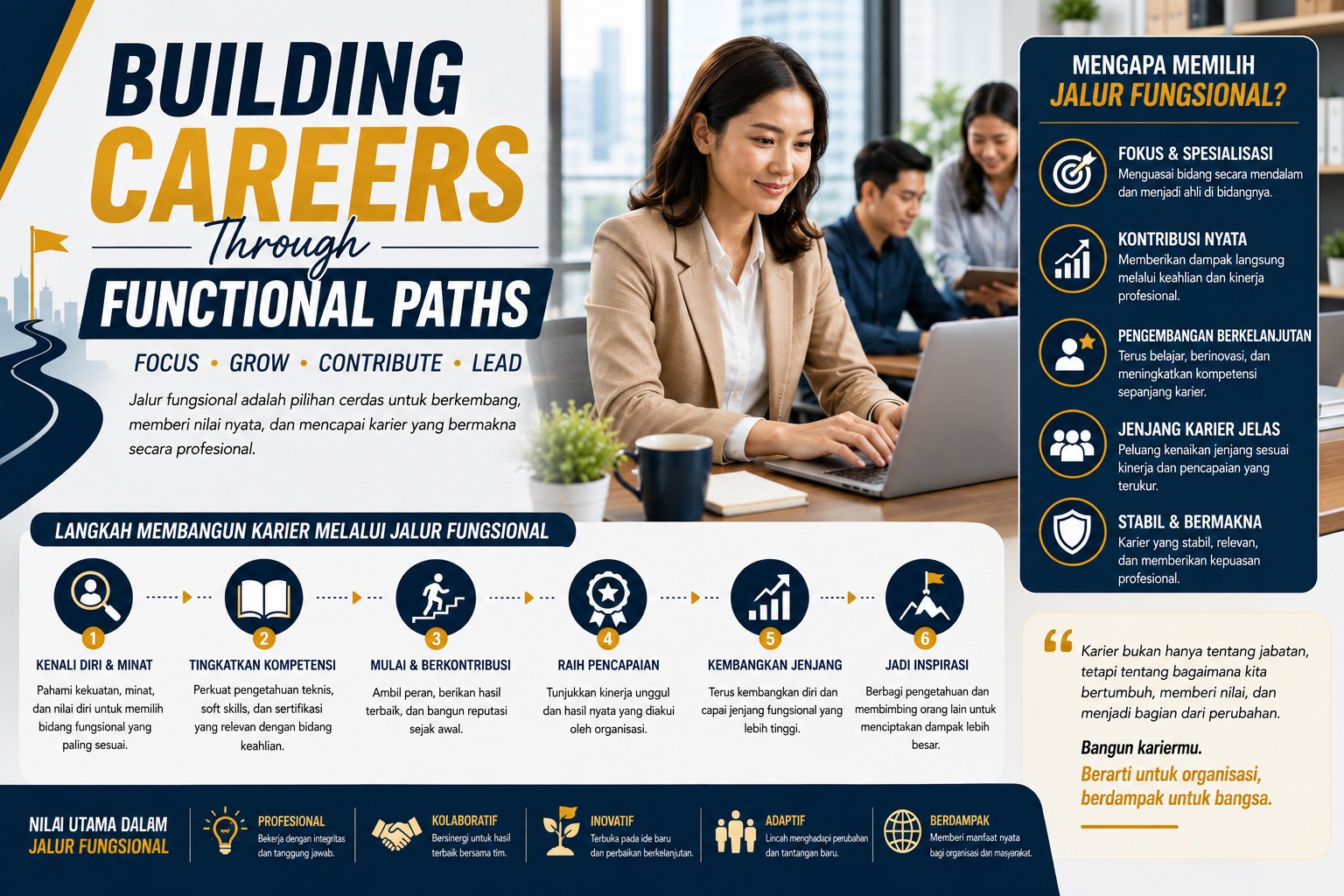
Building a successful career requires a clear direction, relevant expertise, and consistent professional development. Functional career paths provide an opportunity for individuals to grow by developing specialized knowledge within a particular field. Instead of focusing only on managerial advancement, professionals can build their careers through deeper expertise and stronger performance. This approach can be valuable for individuals who want to establish a long-term career based on their professional capabilities.
Modern workplaces continue to evolve through technology, changing organizational needs, and new professional standards. These developments require professionals to remain adaptable while strengthening their existing skills. By combining specialization, continuous learning, practical experience, and career planning, individuals can create a functional career path that remains relevant over time.
UNDERSTANDING FUNCTIONAL CAREER PATHS
A functional career path focuses on developing expertise within a specific professional area. Individuals can gradually increase their knowledge and responsibilities as they gain experience. This pathway allows professionals to become highly capable in a particular field rather than relying solely on movement into management. Specialized expertise can therefore become an important foundation for career advancement.
The exact path depends on the profession and organization. Some individuals may begin with basic responsibilities before progressing toward more complex assignments and higher levels of expertise. Understanding the requirements of each stage can help professionals prepare for long-term career development.
CHOOSING THE RIGHT PROFESSIONAL FIELD
The first step in building a functional career is identifying a field that matches personal abilities and professional interests. Individuals should consider their existing skills, educational background, interests, and potential opportunities. Choosing a field that aligns with these factors can make professional development more focused. Career alignment can also increase motivation to continue learning.
Professionals should also examine the competencies required within their desired field. Understanding these requirements helps identify skills that are already strong and areas that still need improvement. This information can become the foundation for creating a realistic career development plan.
DEVELOPING SPECIALIZED COMPETENCIES
Specialized competencies are essential for professionals who want to grow through functional paths. Employees need to understand the technical knowledge, procedures, and standards associated with their field. Strong technical competence allows professionals to handle responsibilities accurately and solve problems more effectively.
Competencies should be updated as professional requirements change. Training, education, practical experience, mentoring, and independent learning can all support development. Consistent improvement helps professionals maintain relevant expertise and prepare for increasingly complex responsibilities.
BUILDING EXPERIENCE THROUGH PRACTICAL WORK
Practical experience provides an important connection between knowledge and professional ability. Employees can learn how to apply concepts, manage unexpected situations, and make decisions through real workplace experiences. Each assignment can become an opportunity to develop professional judgment and practical skills.
Professionals should also reflect on their experiences and identify lessons from successful and unsuccessful tasks. Feedback from supervisors and colleagues can provide additional insights into areas that need improvement. Over time, meaningful work experience can strengthen professional confidence and career readiness.
IMPROVING PERFORMANCE AND PROFESSIONAL VALUE
Career growth is strongly influenced by the quality of an individual's work. Professionals should aim to produce results that are accurate, efficient, timely, and aligned with organizational expectations. Consistent work performance can strengthen professional credibility and demonstrate readiness for greater responsibilities.
Professional value can also increase when employees contribute beyond routine tasks. Identifying opportunities to improve processes, solve problems, or support colleagues can demonstrate initiative. These contributions can help professionals become valuable specialists within their organizations.
USING TECHNOLOGY FOR CAREER DEVELOPMENT
Technology is increasingly connected to functional work across different professional fields. Digital systems can support data management, communication, documentation, analysis, and workflow processes. Developing appropriate digital skills can help professionals improve efficiency and remain competitive.
However, technology should complement rather than replace professional expertise. Employees still need critical thinking and professional judgment when using digital tools. Combining specialized knowledge with relevant technology can create stronger professional capabilities.
ADAPTING TO CAREER CHANGES
Functional career paths are not always linear. Changes in technology, organizational priorities, or professional interests may require individuals to adjust their development plans. Career adaptability allows professionals to respond to new opportunities without losing sight of their broader goals.
Adaptability also involves maintaining a willingness to learn. Professionals who regularly evaluate their competencies can identify when new knowledge or skills are needed. By remaining flexible while maintaining a clear professional foundation, individuals can build a resilient career path.
PLANNING LONG TERM PROFESSIONAL GROWTH
Long-term career growth requires clear and measurable objectives. Professionals can divide larger ambitions into smaller goals related to skills, experience, performance, and professional development. This approach makes progress easier to monitor and creates a more structured career pathway.
Career plans should be reviewed periodically because professional environments can change. New opportunities may require different competencies, while changing interests may influence future goals. A combination of clear planning and adaptability can help professionals maintain meaningful career progress.
CONCLUSION
Building careers through functional paths allows professionals to grow through specialized expertise, practical experience, strong performance, and continuous learning. A successful functional career requires individuals to understand their professional direction and consistently develop relevant competencies. Technology and workplace changes also make adaptability increasingly important. With clear goals and a commitment to improvement, functional paths can provide a strong and sustainable foundation for long-term career development.
About the Author
Gusti Ayu Tita P
Author — STEKOM University
An active author focused on academic issues, educational technology, and human resource development in the campus environment.















