
Building Careers Through Functional Positions
Gusti Ayu Tita P
12 Agustus 2026
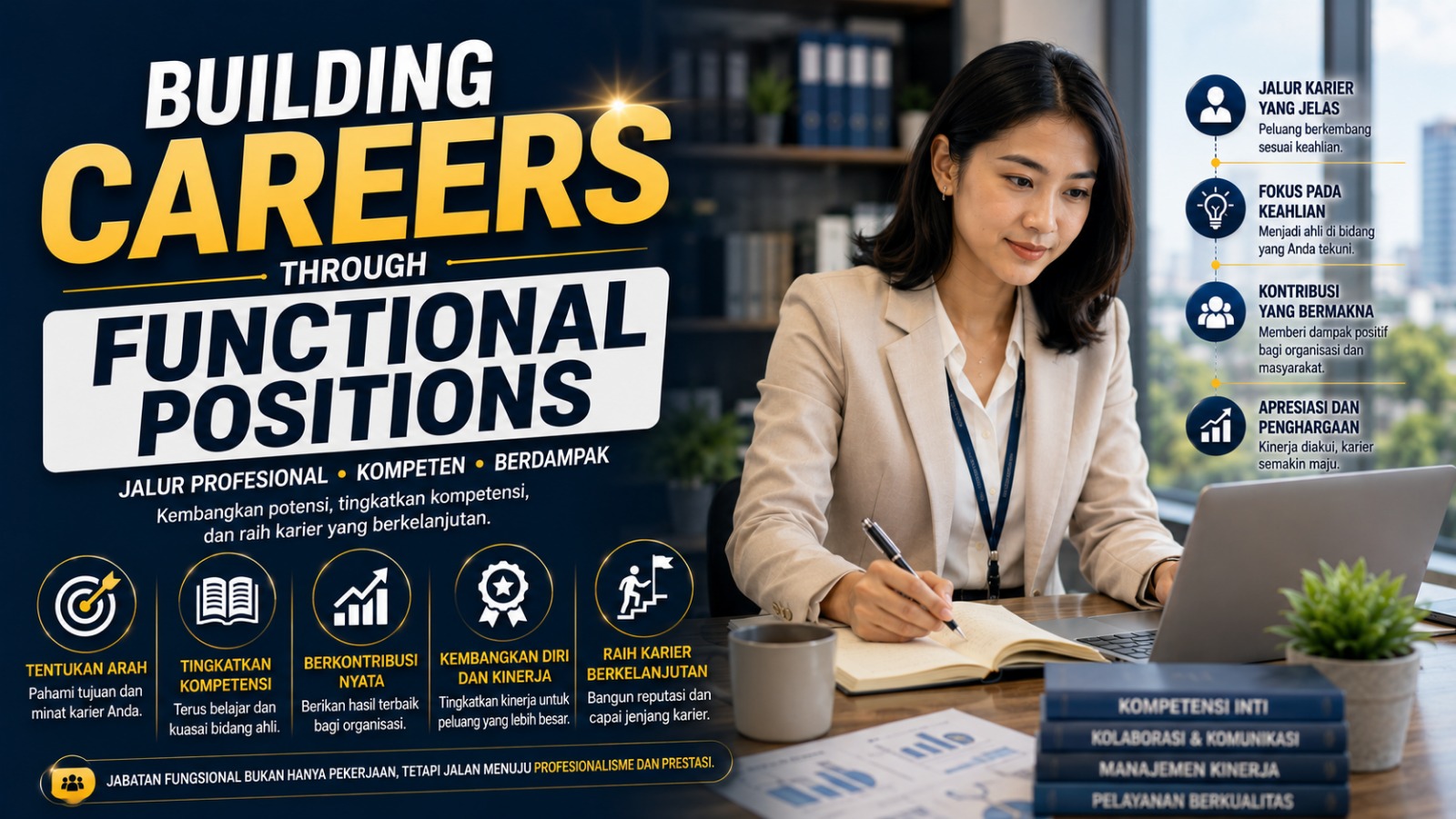
Building a successful career requires more than finding a suitable job. Professionals need to understand their strengths, develop relevant skills, and choose a career path that supports long-term growth. Functional positions can provide an opportunity for individuals to build careers based on specialized knowledge and professional expertise. This path allows employees to focus on specific areas while contributing directly to organizational goals.
The modern workplace continues to change because of technology, evolving business needs, and new professional standards. These changes require employees to continuously improve their capabilities. By combining professional competence, work experience, adaptability, and continuous learning, individuals can build a stronger career through functional positions.
UNDERSTANDING FUNCTIONAL CAREER PATHS
A functional position focuses on specific expertise, skills, and professional responsibilities. Employees in these roles are expected to apply their knowledge to complete tasks and solve problems within their area of specialization. The responsibilities can vary depending on the organization, industry, and professional field. Understanding these responsibilities is an important first step in planning a functional career.
A functional career can be suitable for people who prefer developing deep expertise in a particular field. Career growth does not always require moving into management or leadership roles. Professionals can also grow by improving their knowledge, performance, and level of expertise within their chosen area.
IDENTIFYING THE RIGHT AREA OF EXPERTISE
Choosing an appropriate functional field requires an understanding of personal strengths, interests, and professional goals. Individuals should consider which skills they already possess and which areas they are willing to develop further. A good career choice should also consider the needs and opportunities within the relevant field. This approach can create a stronger foundation for long-term career development.
Understanding job requirements is equally important. Professionals can identify the knowledge, technical skills, and supporting abilities required for their desired position. This information can then be used to create a personal development plan. With a clear direction, individuals can focus their efforts on building relevant professional competencies.
DEVELOPING PROFESSIONAL COMPETENCE
Competence is one of the most important foundations of a functional career. Professionals need to understand the technical aspects of their work and apply them accurately in real situations. However, technical knowledge alone may not be enough. Communication, analytical thinking, problem solving, and teamwork can also influence professional effectiveness.
Competence should be developed continuously because workplace requirements can change. Training, education, practical experience, mentoring, and independent learning can help professionals strengthen their abilities. Consistent learning allows employees to remain relevant and competitive as their field develops.
BUILDING STRONG WORK PERFORMANCE
Career development is closely connected to work performance. Professionals need to demonstrate that they can complete responsibilities accurately, efficiently, and consistently. Quality performance can strengthen professional credibility and show that an employee is capable of handling greater responsibilities. Performance should therefore be treated as an important part of career development.
Regular evaluation can help professionals understand their strengths and identify areas for improvement. Feedback from supervisors, colleagues, or professional peers can provide useful perspectives on performance. By responding positively to feedback and making improvements, employees can develop stronger professional performance over time.
USING TECHNOLOGY TO SUPPORT CAREER GROWTH
Technology has become an important part of many functional positions. Digital tools can help professionals manage information, communicate, analyze data, and complete routine tasks more efficiently. Developing digital skills can therefore provide an advantage for employees who want to remain effective in a changing workplace.
Technology should be viewed as a tool that supports professional expertise rather than a replacement for it. Employees still need critical thinking and professional judgment when using digital systems. Combining specialized knowledge and digital competence can help professionals improve productivity and prepare for future workplace demands.
ADAPTING TO CHANGING WORKPLACE NEEDS
Workplace requirements can change because of technology, organizational priorities, regulations, and customer expectations. Professionals who are unwilling to adapt may find it difficult to maintain their effectiveness. Adaptability allows employees to learn new methods and respond more confidently to changing responsibilities.
Adaptation should be supported by continuous learning and a willingness to accept constructive feedback. Professionals can review their existing skills and identify which areas need improvement. By developing a flexible approach to work, employees can remain prepared for new career opportunities.
PLANNING LONG TERM CAREER DEVELOPMENT
A functional career becomes more meaningful when it is supported by clear goals. Professionals can establish short-term objectives while gradually working toward broader career ambitions. These goals may involve improving specific skills, gaining experience, completing relevant training, or taking on more complex responsibilities. Career planning provides direction and makes professional development easier to evaluate.
Career plans should remain flexible because workplace conditions can change. Professionals may need to adjust their goals when new technologies, opportunities, or professional requirements emerge. A combination of clear goals and adaptability can help individuals build careers that remain relevant over the long term.
CONCLUSION
Building careers through functional positions requires a combination of expertise, strong performance, continuous learning, and adaptability. Functional positions allow professionals to develop specialized skills while making meaningful contributions to their organizations. Technology and changing workplace demands make continuous competency development increasingly important. With clear career planning and a commitment to professional growth, individuals can build a stable and sustainable functional career.
About the Author
Gusti Ayu Tita P
Author — STEKOM University
An active author focused on academic issues, educational technology, and human resource development in the campus environment.















