
Building Confidence Without Following Every Social Demand
Gusti Ayu Tita P
8 September 2026
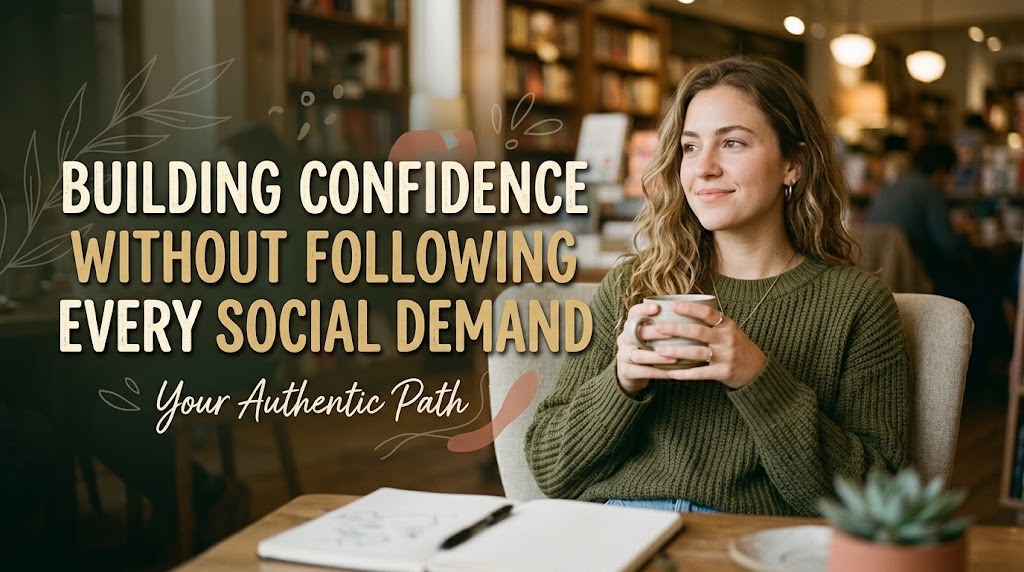
Self confidence helps people make decisions, express opinions, and handle challenges without constantly depending on other people's approval. However, social environments often create expectations about appearance, education, career, relationships, lifestyle, and personal behavior. Following these expectations may sometimes be useful, but trying to satisfy every demand can make people lose touch with their own values. Building confidence means learning to respect other people's opinions without allowing them to control every personal decision.
Confidence does not mean ignoring everyone or refusing all advice. Instead, it involves understanding personal strengths, accepting weaknesses, and making thoughtful choices. People can maintain healthy relationships while still having different goals and preferences. The ability to remain authentic while responding respectfully to social expectations is an important part of personal growth.
UNDERSTAND THE SOURCE OF SOCIAL PRESSURE
Social pressure can come from many directions. Family members may have expectations about education and careers, while friends may influence lifestyle, appearance, or social activities. Social media can add another layer by constantly showing other people's achievements and opinions. Identifying where pressure comes from makes it easier to decide how much influence it should have.
Not every expectation is harmful. Some suggestions can provide useful guidance or encourage responsible behavior. The important question is whether the expectation supports personal development or simply demands conformity. Healthy confidence begins with the ability to evaluate social influence rather than automatically accepting it.
KNOW YOUR PERSONAL VALUES
Personal values help guide decisions when social expectations become confusing. Values may include honesty, independence, education, family, creativity, responsibility, stability, or personal growth. Knowing what matters most can make it easier to reject demands that do not support long-term priorities.
Take time to identify the principles that influence important choices. Ask whether a decision reflects what you genuinely believe or whether it is mainly intended to gain approval. Personal values can change as people gain experience, but they provide a useful foundation for decision-making. A strong sense of values can make confidence less dependent on external opinions.
ACCEPT THAT YOU CANNOT PLEASE EVERYONE
Trying to satisfy everyone can create constant emotional pressure. Different people have different expectations, and those expectations may even conflict with one another. It is impossible to receive universal approval while making independent choices.
Someone may disagree with your education, career, lifestyle, or personal priorities. Their disagreement does not automatically mean that your decision is wrong. What matters is whether the choice has been considered carefully and is consistent with your circumstances and values. Accepting disagreement is an important part of developing emotional confidence.
LEARN TO SAY NO
Saying no is an essential skill for protecting personal boundaries. People may hesitate to refuse because they fear disappointing friends, family members, or coworkers. However, a respectful refusal does not make someone selfish or unfriendly.
A clear response is usually more effective than creating complicated excuses. Explain your position calmly and avoid making commitments that you do not genuinely want to make. If someone continues applying pressure, repeat your boundary without becoming aggressive. Confidence grows when people learn that they can say no while still treating others respectfully.
STOP USING COMPARISON AS A MEASURE OF WORTH
Social comparison can make confidence difficult to maintain. People may compare their grades, careers, appearance, relationships, finances, or achievements with those of others. Another person's success should not become evidence that you are unsuccessful.
Instead of asking whether you are ahead or behind, examine your own progress. Think about skills you have developed, challenges you have overcome, and goals you have reached. This creates a more realistic measure of development. Personal progress is a healthier foundation for confidence than constant competition.
USE SOCIAL MEDIA MORE CAREFULLY
Social media can make social demands feel stronger because trends and opinions are constantly visible. Users may feel pressure to look a certain way, own specific products, or present an impressive lifestyle. Online popularity and appearance do not provide a complete measure of personal value.
Choose online content that supports learning, creativity, realistic expectations, or genuine interests. Limit accounts that repeatedly create insecurity or unhealthy comparison. Taking breaks from social media can also provide space to reflect on personal priorities. Digital boundaries can help protect confidence from unnecessary online pressure.
DEVELOP CONFIDENCE THROUGH SMALL ACTIONS
Confidence develops through experience rather than appearing instantly. Start by making small decisions independently and accepting responsibility for the results. Each successful experience can strengthen trust in your own judgment.
Small actions may include expressing an opinion, trying a new activity, declining an unnecessary request, or completing a personal goal. These experiences show that you can handle situations without always relying on approval. Over time, independent choices become more comfortable. Confidence grows through repeated evidence that you are capable of managing challenges.
ACCEPT MISTAKES AS PART OF GROWTH
Fear of making mistakes can make people more dependent on social approval. They may avoid taking risks because they are worried about criticism. Mistakes do not automatically prove that a person lacks ability.
Review what went wrong and identify what can be improved. This approach turns mistakes into useful information rather than permanent judgments about personal ability. Everyone makes imperfect decisions, including people who appear highly confident. A confident person is not someone who never fails, but someone who can learn and continue after failure.
SET HEALTHY PERSONAL BOUNDARIES
Boundaries communicate what you are comfortable accepting from other people. They can involve time, privacy, communication, money, responsibilities, education, relationships, and personal choices. Clear boundaries allow individuals to protect their needs without unnecessarily rejecting others.
Boundaries should be communicated calmly and consistently. If someone disagrees, listen to their perspective without immediately abandoning your position. A reasonable boundary can remain valid even when another person does not like it. Respect should work in both directions.
CHOOSE SUPPORTIVE RELATIONSHIPS
The people around you can strongly influence your confidence. Supportive relationships provide encouragement and constructive feedback without demanding complete conformity. Healthy relationships make room for different opinions, goals, and personalities.
If someone repeatedly uses criticism, guilt, humiliation, or manipulation to control your decisions, their influence should be evaluated carefully. Creating distance may sometimes be necessary when boundaries are consistently ignored. Spending more time with supportive people can provide a healthier environment for personal development. Confidence becomes easier to build when individuality is respected.
LISTEN TO ADVICE WITHOUT LOSING INDEPENDENCE
Advice from experienced people can be extremely valuable. Parents, teachers, mentors, and friends may provide perspectives that help identify risks or opportunities. However, listening to advice does not mean giving someone else complete control over your decisions.
Consider the reasons behind the advice and compare them with your own circumstances. Ask whether the recommendation fits your abilities, goals, resources, and values. You can appreciate someone's concern while still choosing a different path. Independent thinking allows people to benefit from guidance without becoming controlled by it.
CREATE YOUR OWN DEFINITION OF SUCCESS
Social expectations often create narrow ideas about what success should look like. High income, prestigious careers, academic achievements, popularity, or material possessions may receive significant attention. However, success can have different meanings depending on personal values and circumstances.
For one person, success may mean building a stable career. For another, it may involve meaningful work, family time, creativity, education, or financial independence. Defining success personally can reduce pressure to follow paths that do not feel meaningful. A personal definition of success provides a stronger direction for long-term growth.
PRACTICE SELF ACCEPTANCE
Confidence becomes stronger when people accept themselves realistically. Self acceptance does not mean ignoring weaknesses or refusing to improve. It means recognizing strengths and limitations without allowing either one to completely define personal worth.
Everyone has areas that need development. Instead of using weaknesses as reasons for self criticism, treat them as opportunities to learn. At the same time, recognize abilities that may be overlooked because of constant comparison. A balanced self image creates a healthier foundation for confidence.
TAKE RESPONSIBILITY FOR YOUR CHOICES
Independence requires responsibility. If you choose a path because it matches your values and circumstances, you also need to accept its possible consequences. Confidence becomes stronger when people understand that they can make choices and learn from the results.
This does not mean handling every problem alone. Seeking advice and support is still valuable. The important point is that the final decision should be made thoughtfully rather than simply transferred to someone else. Personal responsibility and supportive guidance can work together.
CONCLUSION
Building confidence without following every social demand requires more than simply ignoring other people's opinions. It involves understanding social pressure, knowing personal values, setting boundaries, reducing unhealthy comparison, and learning to make independent decisions. People can listen to advice and maintain relationships without automatically accepting every expectation.
True confidence develops gradually through self acceptance, personal responsibility, healthy relationships, and consistent action. Not every trend needs to be followed, and not every opinion needs to determine personal choices. When people learn to value their own progress and make decisions based on thoughtful judgment, they can become more confident without losing their connection with others.
About the Author
Gusti Ayu Tita P
Author — STEKOM University
An active author focused on academic issues, educational technology, and human resource development in the campus environment.