
Building More Environmentally Responsible Mining Practices
Gusti Ayu Tita P
20 Agustus 2026
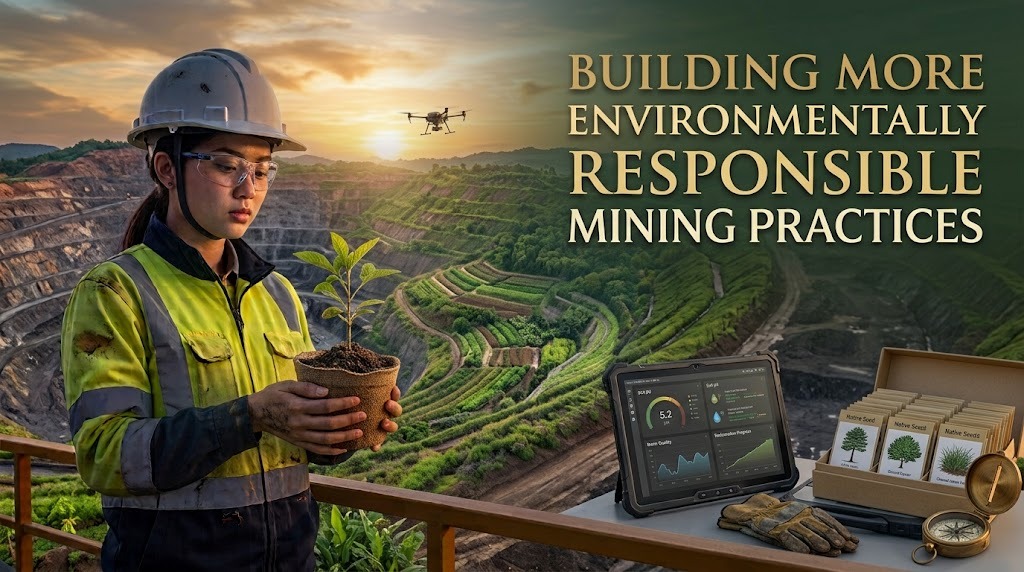
The mining industry plays an important role in supplying minerals and raw materials for construction, manufacturing, energy, transportation, and modern technology. However, mining activities can affect land, water, air, and ecosystems if they are not properly planned and managed. As environmental awareness increases, companies are expected to adopt more responsible approaches throughout the mining process.
Environmentally responsible mining focuses on reducing negative impacts while maintaining safe and productive operations. This requires more than a single environmental program. Companies need to combine efficient technology, careful resource management, proper waste handling, land rehabilitation, and community participation. With a long-term approach, mining can provide economic benefits while reducing unnecessary environmental pressure.
USING TECHNOLOGY TO REDUCE ENVIRONMENTAL IMPACTS
Modern technology provides opportunities to make mining operations more efficient and environmentally responsible. Digital monitoring systems can collect information about water quality, air conditions, energy consumption, equipment performance, and changes in mining areas. Accurate data helps companies identify potential problems and respond before impacts become more difficult to manage.
Automation and advanced equipment can also improve resource efficiency. Better control of machinery may reduce unnecessary fuel consumption, material losses, and idle operating time. When technology is combined with effective environmental planning, companies can improve productivity while reducing avoidable environmental impacts.
MANAGING WATER RESOURCES RESPONSIBLY
Water management is an important part of responsible mining because water may be required for processing, dust control, and other operational activities. Mining companies need to understand local water conditions and establish systems for water management that are appropriate for the site. Regular monitoring can help identify changes in water quality and quantity.
Water used during mining activities may need to be treated before being released or reused, depending on its characteristics and applicable requirements. Recycling and efficient water use can also reduce demand for fresh water. A well-designed water management system helps protect surrounding water resources and supports more sustainable mining operations.
IMPROVING MINING WASTE MANAGEMENT
Mining generates different types of waste, including waste rock, tailings, and other materials associated with extraction and processing. Each type requires appropriate management based on its physical and chemical characteristics. Mining waste management is therefore essential for reducing environmental risks.
Companies need suitable facilities, monitoring systems, and procedures for handling and storing mining waste. Regular inspections can help identify structural or environmental concerns at waste management facilities. Responsible management should also consider long-term conditions rather than focusing only on the active production period.
REDUCING ENERGY USE AND EMISSIONS
Mining equipment and processing facilities can consume significant amounts of energy. Heavy vehicles, crushers, pumps, and other machinery may require substantial fuel or electricity during operations. Improving energy efficiency can therefore reduce operating costs while supporting environmental objectives.
Companies can optimize equipment schedules, transportation routes, maintenance activities, and energy consumption through digital systems and improved operational planning. Where appropriate, mining operations can also consider lower-emission energy sources. The most effective strategy depends on the location, technology, infrastructure, and characteristics of each mining project.
RESTORING LAND AFTER MINING ACTIVITIES
Mining changes the physical characteristics of the land, making land rehabilitation an essential part of responsible mine management. Rehabilitation can involve reshaping land, replacing suitable soil, controlling erosion, and establishing vegetation. The specific approach should reflect the original conditions and planned future use of the area.
Rehabilitation should be considered from the planning stage rather than being treated only as an activity at the end of mining. Progressive rehabilitation, where appropriate, can allow suitable areas to be restored while other parts of a mine remain operational. Continuous monitoring helps determine whether rehabilitation measures are achieving the desired results.
PROTECTING BIODIVERSITY AND LOCAL ECOSYSTEMS
Mining areas may contain ecosystems that support plants, animals, and other forms of life. Responsible companies need to assess biodiversity risks and identify ways to avoid or reduce unnecessary disturbance. Environmental planning can help determine which areas require special protection and how mining activities should be organized.
Where impacts cannot be completely avoided, companies may implement measures to minimize disturbance and support ecological recovery. Monitoring can provide information about changes in habitats and species over time. Effective biodiversity management should be based on local environmental conditions and relevant scientific information.
INVOLVING LOCAL COMMUNITIES
Environmental responsibility also includes understanding how mining activities affect people living near operational areas. Communities may have concerns about water, land, employment, infrastructure, and changes to local livelihoods. Community participation can help companies understand these concerns and improve communication.
Companies can support communities through appropriate training, local business development, education, and other programs based on local needs. Open communication is important throughout the life of a mining project, not only when problems arise. Strong relationships can support better cooperation between companies and communities.
DEVELOPING A LONG TERM ENVIRONMENTAL STRATEGY
Building responsible mining practices requires continuous evaluation rather than relying on one-time actions. Companies need to establish environmental targets, monitor performance, review results, and improve practices when necessary. Environmental management should be integrated into operational planning and decision-making.
Government oversight, industry standards, scientific research, and technological development can also support better mining practices. When companies combine responsible resource use with strong environmental controls and community engagement, they can reduce risks while maintaining economic activity. This approach can help create a mining sector that is more resilient, efficient, and prepared for long-term sustainability.
About the Author
Gusti Ayu Tita P
Author — STEKOM University
An active author focused on academic issues, educational technology, and human resource development in the campus environment.















