
Building The Spirit Of Love For The Homeland Among Students
Gusti Ayu Tita P
5 Agustus 2026
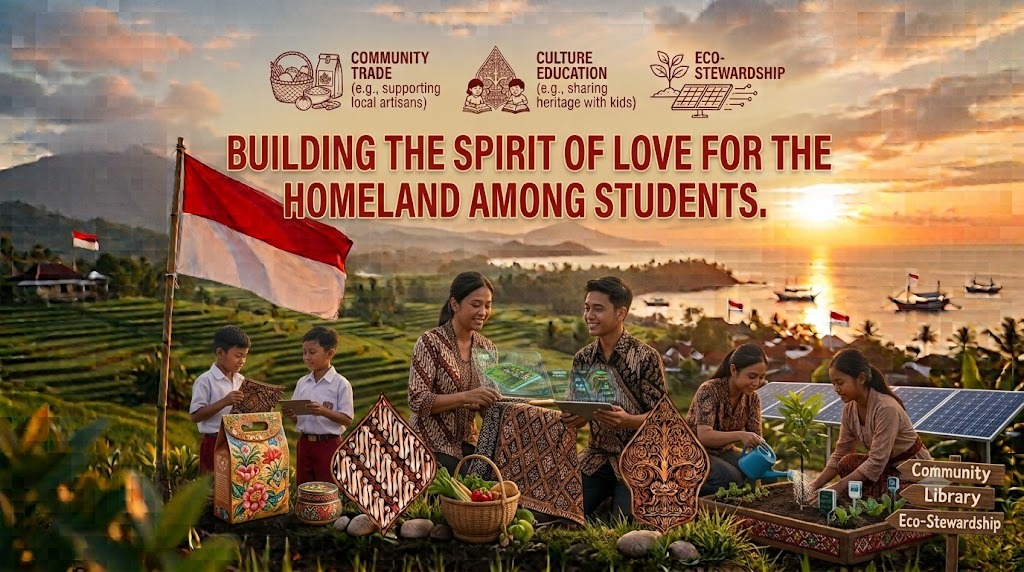
Building the spirit of love for the homeland among students is important for Indonesia's future. Students are part of the younger generation who will eventually become leaders, professionals, entrepreneurs, educators, and community members. Their attitudes and habits today can influence the development of society in the future. Therefore, schools and families need to help students understand that love for the homeland can be practiced through everyday actions.
Love for the homeland does not only mean participating in national ceremonies or memorizing historical facts. It also involves respecting diversity, preserving Indonesian culture, studying seriously, helping others, protecting the environment, and using technology responsibly. These values can be introduced through education and practical activities. When students understand and practice them consistently, national pride can grow naturally.
UNDERSTANDING LOVE FOR THE HOMELAND AMONG STUDENTS
Love for the homeland means having pride, care, respect, and responsibility toward one's country. For students, this attitude can be developed by learning about Indonesia's history, culture, national values, and diversity. It also encourages students to contribute positively to their schools and communities. National pride should be reflected in behavior rather than only expressed through words.
Students can demonstrate their love for Indonesia through discipline, honesty, cooperation, tolerance, and responsibility. They can follow school rules, respect teachers and classmates, and take care of school facilities. These simple behaviors help students understand the meaning of being responsible citizens. Over time, such habits can become part of their character.
THE ROLE OF SCHOOLS IN DEVELOPING NATIONAL PRIDE
Schools have an important role in developing national character and love for the homeland. Teachers can introduce national values through lessons, discussions, projects, and extracurricular activities. Students can learn about Indonesian history and culture while developing critical thinking and social awareness. Education should help students understand why national unity and diversity are important.
Schools can also organize activities that encourage teamwork, discipline, tolerance, and social responsibility. Cultural events, community service, environmental programs, student organizations, and group projects can provide valuable experiences. These activities allow students to practice national values instead of simply learning them theoretically. A supportive school environment can make students more motivated to contribute positively.
LEARNING INDONESIAN HISTORY
Learning history helps students understand the struggles and experiences that shaped Indonesia. Knowledge of history can create appreciation for the efforts of previous generations. It also helps students understand why independence, unity, and national identity are important. Historical knowledge can provide lessons that remain relevant to modern society.
Students can learn history through books, museums, historical sites, documentaries, classroom lessons, and reliable digital resources. Teachers can make history more interesting by connecting historical events with current issues. Students should also develop the ability to evaluate historical information critically. Understanding the past can help students become more responsible citizens in the present.
PRESERVING INDONESIAN CULTURE
Indonesia has a diverse cultural heritage that includes traditional dances, music, languages, clothing, food, crafts, and customs. Students can show love for their homeland by learning about and appreciating these traditions. Schools can introduce cultural activities through performances, exhibitions, workshops, and local studies. Such activities help students understand the importance of cultural identity.
Students can also use technology to promote Indonesian culture. They can create videos, articles, illustrations, photographs, and educational social media content about local traditions. Digital creativity can make cultural information more attractive to younger audiences. Responsible cultural promotion can help ensure that Indonesian heritage remains appreciated in the modern era.
DEVELOPING TOLERANCE AND RESPECT FOR DIVERSITY
Indonesia is a diverse country with people from different religious, ethnic, linguistic, and cultural backgrounds. Students need to learn that these differences are part of Indonesia's national identity. Respecting diversity can prevent discrimination and strengthen relationships among students. Tolerance is therefore an important part of developing love for the homeland.
Students can practice tolerance by listening to different opinions, respecting religious practices, avoiding discrimination, and cooperating with classmates from different backgrounds. Disagreements should be resolved through respectful communication. Group activities can also teach students how to work with people who have different perspectives. These experiences can strengthen social harmony and national unity.
BUILDING GOTONG ROYONG AND TEAMWORK
Gotong royong, or mutual cooperation, is an important social value in Indonesia. Students can practice it through group projects, school clean-ups, social activities, and community programs. Working together teaches students that individual actions can contribute to shared goals. It also helps develop responsibility and empathy.
Teamwork can strengthen relationships between students. Sharing tasks, helping classmates, listening to others, and respecting different abilities can create a supportive environment. Students can learn that success does not always depend on individual achievement. Cooperation can become an important foundation for a united society.
DEVELOPING DISCIPLINE AND RESPONSIBILITY
Discipline and responsibility are important characteristics of responsible citizens. Students can develop these qualities by arriving at school on time, completing assignments, following school rules, and taking care of their belongings. These habits may appear simple, but they help students develop a strong sense of responsibility. Good discipline can also support academic and personal development.
Students should understand that responsibility extends beyond schoolwork. They should also be responsible for their words, actions, relationships, and use of technology. Accepting mistakes and learning from them are important parts of personal growth. Responsible students are better prepared to contribute positively to their communities.
USING TECHNOLOGY TO PROMOTE POSITIVE VALUES
Technology is closely connected to students' daily lives. It can be used to learn, communicate, create educational content, and promote Indonesian culture. Students can use social media to share positive information about Indonesia and highlight local achievements. Digital platforms can therefore become useful tools for strengthening national pride.
However, students need to use technology carefully. They should avoid misinformation, cyberbullying, hate speech, and discriminatory content. Information should be checked before it is shared with others. Responsible digital behavior teaches students that their online actions can affect the wider community.
SUPPORTING LOCAL PRODUCTS
Students can contribute to the national economy by appreciating and supporting Indonesian products. Local products include food, fashion, handicrafts, creative works, and other goods made by Indonesian businesses. Choosing quality local products can help small businesses and entrepreneurs. It also encourages students to appreciate local creativity.
Students can promote local products through social media, school projects, recommendations, and creative content. Entrepreneurship programs at school can also introduce students to the process of creating and marketing products. These experiences can develop business skills while strengthening appreciation for local innovation. Supporting local products can therefore become a practical form of national pride.
PROTECTING THE SCHOOL AND ENVIRONMENT
Environmental awareness is another way students can demonstrate love for their homeland. Indonesia has valuable natural resources that need to be protected. Students can begin by keeping their schools and surroundings clean. Environmental responsibility can become a daily habit rather than an occasional activity.
Simple actions include reducing waste, using reusable items, saving water, saving electricity, planting trees, and participating in clean-up activities. Schools can create environmental programs that encourage students to work together. These activities can teach students that protecting nature is a shared responsibility. Caring for the environment also means caring about the future of Indonesia.
ENCOURAGING STUDENT ACHIEVEMENTS
Students can demonstrate national pride by developing their abilities and achieving positive accomplishments in education, sports, arts, science, technology, and other fields. Achievement requires discipline, effort, and determination. Students who develop their talents can contribute valuable skills to society in the future. Their success can also inspire other young people.
Students should understand that achievement is not only about winning competitions. Progress, creativity, perseverance, and continuous learning are also important forms of success. Students can use their abilities to solve problems and create useful projects. By developing their potential, they prepare themselves to contribute to Indonesia's future.
PARTICIPATING IN SOCIAL ACTIVITIES
Social activities provide students with opportunities to practice empathy, cooperation, and responsibility. They can participate in school charity programs, community service, environmental campaigns, or educational activities. These experiences help students understand the needs of people around them. Social participation can also strengthen relationships between schools and communities.
Students can contribute according to their abilities and available time. Helping others, sharing knowledge, supporting classmates, and volunteering are simple examples. Such activities teach students that love for the homeland includes caring about fellow citizens. A generation that develops social awareness can help create a more supportive society.
THE ROLE OF FAMILIES IN BUILDING NATIONAL PRIDE
Schools cannot develop students' national character alone. Families have an important role in introducing values of responsibility, respect, discipline, and cultural appreciation. Parents and family members can become examples through their everyday behavior. Children often learn values by observing how people around them behave.
Families can encourage students to learn about Indonesian history, local traditions, national celebrations, and community activities. They can also teach children to respect differences and help others. Positive habits developed at home can support what students learn at school. Cooperation between families and schools can therefore strengthen national character education.
CONCLUSION
Building the spirit of love for the homeland among students requires education, positive examples, and consistent practice. Students can develop national pride by learning history, preserving culture, respecting diversity, practicing gotong royong, supporting local products, protecting the environment, and using technology responsibly. These actions can be introduced through schools, families, and communities. Love for Indonesia becomes stronger when students experience and practice these values directly.
Ultimately, students are an important part of Indonesia's future. Their knowledge, character, creativity, and sense of responsibility will influence the development of the country. By developing love for the homeland from an early stage, students can grow into citizens who respect diversity and contribute positively to society. A strong generation can help build an Indonesia that is united, responsible, and prepared for future challenges.
About the Author
Gusti Ayu Tita P
Author — STEKOM University
An active author focused on academic issues, educational technology, and human resource development in the campus environment.















