
Can Community Service Programs Support Student Personal Growth
Gusti Ayu Tita P
20 Agustus 2026
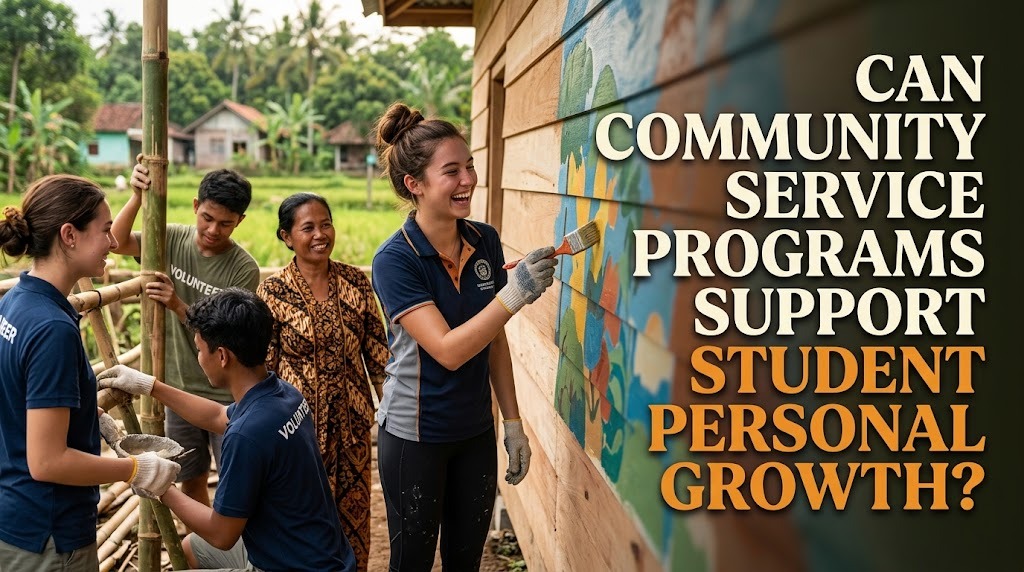
Community service programs give university students opportunities to learn outside the classroom while contributing to society. Through activities such as education, environmental programs, health campaigns, digital literacy, and local economic development, students encounter real situations that require responsibility and cooperation. These experiences can influence how students understand themselves, other people, and the communities around them. Personal growth can develop when students face unfamiliar situations, solve problems, and reflect on their experiences. Therefore, community service can become an important part of student development when it is designed and carried out meaningfully.
DEVELOPING SELF AWARENESS
Community service can help students understand their own strengths and weaknesses. Working directly with communities may reveal abilities that are not always visible in the classroom. A student may discover that they are good at communication, organization, teaching, or solving practical problems. At the same time, they may recognize areas that still need improvement. Self awareness allows students to understand their abilities more realistically.
Different situations can also challenge students' assumptions about themselves. Someone who initially feels uncomfortable speaking with strangers may gradually become more confident through regular interaction. Another student may discover that they need to improve their patience or teamwork skills. These experiences provide opportunities for personal reflection and self improvement. As students become more aware of themselves, they can make better decisions about their academic and professional development.
BUILDING CONFIDENCE AND INDEPENDENCE
Community service often places students in situations that are different from their normal campus routines. They may need to communicate with residents, organize activities, or solve unexpected problems without constant supervision. Successfully handling these responsibilities can strengthen self confidence and independence. Students begin to realize that they are capable of dealing with situations outside their comfort zones.
Independence also develops when students have to make practical decisions. They may need to adjust schedules, manage limited resources, or find alternatives when a planned activity cannot be completed. These experiences encourage students to take responsibility for their decisions. Confidence grows through action and experience, not simply through encouragement. This can prepare students to face future academic and professional challenges.
STRENGTHENING COMMUNICATION SKILLS
Effective communication is essential during community service. Students may interact with children, parents, business owners, community leaders, and other residents. Each group may have different expectations and communication styles. Students need to explain information using clear, simple, and respectful language. This experience can make them more comfortable communicating with people from different backgrounds.
Students also learn that good communication requires listening. They need to understand community concerns before proposing a solution. Asking questions and receiving feedback can help students avoid misunderstandings. Active listening and respectful dialogue can strengthen relationships between students and community members. These skills are also valuable in university projects and future workplaces.
DEVELOPING EMPATHY AND SOCIAL AWARENESS
Community service allows students to encounter different life experiences directly. They may learn about challenges related to education, economic conditions, health, employment, or the environment. These experiences can help students understand social issues from the perspective of people who experience them. Empathy and social awareness can grow through meaningful interaction. Students may become less likely to make quick judgments about situations they do not fully understand.
Empathy also encourages students to respect local knowledge and community experiences. Residents often understand their own needs and challenges better than outsiders. Students can therefore learn to listen before deciding what kind of assistance is appropriate. Understanding different perspectives can make students more respectful and socially responsible. This lesson can influence how they interact with people in other environments.
ENCOURAGING ADAPTABILITY
Every community has its own characteristics, traditions, resources, and expectations. Students may need to adjust their communication and activities according to local conditions. This can develop adaptability and open mindedness. Students learn that an approach that works in one environment may not necessarily work in another. Flexibility becomes an important part of effective community engagement.
Adaptability also involves accepting unexpected changes. Weather, schedules, community priorities, or available resources may require students to modify their plans. Instead of becoming frustrated, students can evaluate the situation and develop alternatives. Adaptability helps students remain effective in uncertain situations. This skill is particularly useful in a changing academic and professional environment.
BUILDING SOCIAL RESPONSIBILITY
Community service can change how students view their role in society. University education provides knowledge that can be used not only for personal achievement but also for addressing community needs. Students may develop a stronger sense of social responsibility and civic awareness. They can understand that even small contributions may have meaningful value when they respond to genuine needs. This perspective can influence their decisions after graduation.
Students may also learn that social change requires cooperation. Complex problems cannot usually be solved through short term activities by one group alone. Working with residents and other stakeholders teaches students the importance of shared responsibility and community participation. This can encourage them to remain involved in social activities beyond their university years. Personal growth therefore becomes connected to their contribution to others.
DEVELOPING A GROWTH MINDSET
Community service provides many opportunities for students to learn from mistakes. Not every program will achieve all of its original goals, and not every activity will receive the expected response. Students can use these experiences to evaluate what happened and identify ways to improve. A growth mindset encourages students to view difficulties as opportunities to develop. This can make them more willing to accept challenges.
Students can also learn that skills are developed through practice. Communication, leadership, organization, and problem solving may become stronger as students repeatedly use them. Instead of believing that ability is fixed, students can focus on continuous improvement. This mindset can support long term personal and academic development. It also encourages students to remain open to feedback.
REFLECTING ON PERSONAL DEVELOPMENT
Reflection is an important part of turning community service into meaningful personal growth. Students can review their experiences and consider how their attitudes, skills, and perspectives changed. They can identify both successful actions and mistakes that need improvement. Self reflection helps students understand the value of their experiences. Without reflection, students may complete activities without recognizing the lessons they gained.
Students can use journals, reports, group discussions, or personal evaluations to reflect on their experiences. Questions such as what did I learn, what challenged me, and what should I improve can encourage deeper thinking. This process can help students connect community experiences with their future goals. Reflection transforms experience into lasting learning. It can therefore make community service more valuable for personal development.
CONCLUSION
Community service programs can strongly support student personal growth by providing real opportunities to develop confidence, independence, communication, empathy, teamwork, leadership, responsibility, and adaptability. Students can also strengthen problem solving abilities and develop a more mature understanding of their role in society. The benefits become more meaningful when students actively participate, respect community perspectives, and reflect on their experiences. Community service should not be viewed only as an academic requirement but as an opportunity for personal learning and social development. Ultimately, meaningful community engagement can help students become more confident, responsible, adaptable, empathetic, and prepared for future challenges.
About the Author
Gusti Ayu Tita P
Author — STEKOM University
An active author focused on academic issues, educational technology, and human resource development in the campus environment.















