
Can Students Still Develop Their Potential Without Academic Competition
Gusti Ayu Tita P
24 Agustus 2026
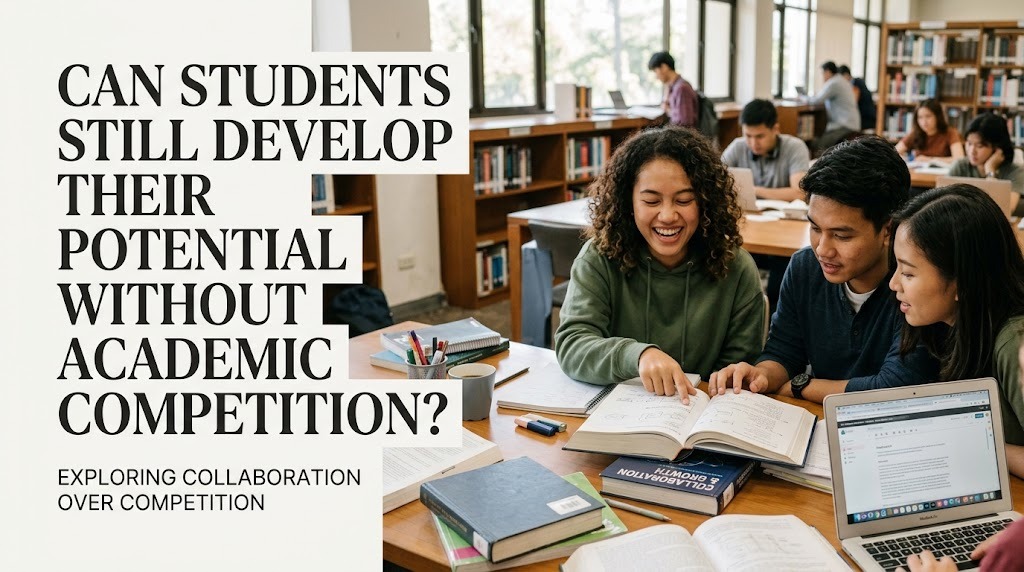
Academic competition is often seen as an important part of student development. Grades, awards, rankings, and academic contests can encourage students to work harder and measure their progress. However, competition is not the only way students can discover and develop their potential. Students can also grow through projects, organizations, practical experiences, creative activities, and personal learning goals. What matters most is having opportunities to learn, practice skills, receive feedback, and improve continuously.
UNDERSTANDING STUDENT POTENTIAL
Student potential refers to the abilities, interests, strengths, and qualities that can be developed through learning and experience. It is not limited to academic achievement or high grades. A student may have strong communication skills, creativity, leadership ability, problem-solving skills, or entrepreneurial talent. Potential often becomes visible when students receive opportunities to try different activities.
Academic competition can reveal some abilities, especially discipline and subject knowledge. However, not every important skill can be measured through exams or rankings. Students may discover their strengths when working on real projects or interacting with other people. Personal growth can happen through many forms of learning beyond traditional academic competition.
LEARNING WITHOUT COMPARING WITH OTHERS
Students can develop themselves by focusing on personal progress instead of constantly comparing their achievements with classmates. This approach allows them to identify their own strengths and weaknesses. They can set realistic goals based on their current abilities and gradually increase the level of difficulty. Personal improvement can become a powerful source of motivation.
For example, a student who struggles with public speaking can start by presenting in a small group. After gaining confidence, the student can participate in larger presentations or discussions. The progress may not produce an award, but it represents meaningful development. Growth should not always be measured by how someone ranks against others.
THE ROLE OF PROJECT BASED LEARNING
Project-based activities provide students with opportunities to apply knowledge to practical situations. They may involve creating a product, conducting research, developing a business idea, or solving a community problem. These activities encourage students to plan, make decisions, collaborate, and evaluate results. Practical projects can develop skills that academic competition may not fully capture.
Projects also allow students to experience failure in a controlled learning environment. A project may not work as expected, but students can identify what went wrong and make improvements. This process teaches persistence and problem solving. Learning from mistakes is an important part of developing long-term potential.
FEEDBACK IS MORE IMPORTANT THAN WINNING
Feedback helps students understand what they are doing well and what needs improvement. Teachers, mentors, classmates, and project partners can provide different perspectives. Constructive feedback can help students recognize mistakes without viewing them as permanent failures. Useful feedback turns experience into learning.
Students can also learn to evaluate their own performance. After completing an assignment or project, they can ask what worked, what did not, and what should be changed next time. This habit develops self-awareness and independent learning. Self-evaluation allows students to take greater responsibility for their own development.
HEALTHY CHALLENGES STILL MATTER
Removing academic competition does not mean removing challenges. Students still need situations that encourage them to leave their comfort zones. Challenges can come from projects, presentations, internships, competitions, community activities, or personal learning targets. Healthy challenges encourage growth without requiring constant comparison.
The important difference is how the challenge is designed. A healthy challenge focuses on learning and improvement rather than making students feel that their worth depends on winning. Students can compete with their previous performance instead of competing against everyone around them. Challenge should encourage development rather than create unnecessary pressure.
THE IMPORTANCE OF A SUPPORTIVE ENVIRONMENT
Students need an environment where they feel safe enough to experiment and make mistakes. Teachers, parents, friends, and educational institutions can contribute by providing encouragement and constructive guidance. Excessive pressure can make students afraid of failure and discourage them from trying unfamiliar activities. Support can make exploration more productive and meaningful.
A supportive environment does not mean lowering expectations. Students can still be encouraged to work seriously and pursue high standards. The difference is that mistakes are treated as opportunities to learn rather than reasons for humiliation. High expectations and emotional support can exist together.
CAN STUDENTS DEVELOP WITHOUT ACADEMIC COMPETITION?
Yes, students can still develop their potential without academic competition. They can grow through personal goals, practical projects, organizations, creative activities, mentorship, feedback, and real-world experiences. Competition can be useful for some students, but it should not be considered the only path to achievement. Every student has different interests, learning styles, and strengths.
The most effective learning environment gives students multiple ways to discover what they can do. Some students may thrive in competitions, while others may develop faster through projects or collaborative activities. Therefore, education should provide diverse opportunities rather than relying on a single measure of success. Student potential is broader than grades, rankings, and awards.
CONCLUSION
Academic competition can motivate students, but it is not a requirement for personal growth. Students can continue developing their potential through consistent practice, personal goals, practical experiences, creativity, teamwork, and constructive feedback. These activities can help them develop academic abilities as well as communication, leadership, problem-solving, and adaptability.
Ultimately, meaningful development comes from having opportunities to learn and improve. Students do not always need to defeat others to become better versions of themselves. A supportive environment combined with meaningful challenges can encourage growth without excessive comparison. When students understand their strengths and actively work on their weaknesses, they can continue developing their potential even without constant academic competition.
About the Author
Gusti Ayu Tita P
Author — STEKOM University
An active author focused on academic issues, educational technology, and human resource development in the campus environment.















