
Career Opportunities And Competency Development For Bank Indonesia Employees
Gusti Ayu Tita P
27 Juli 2026
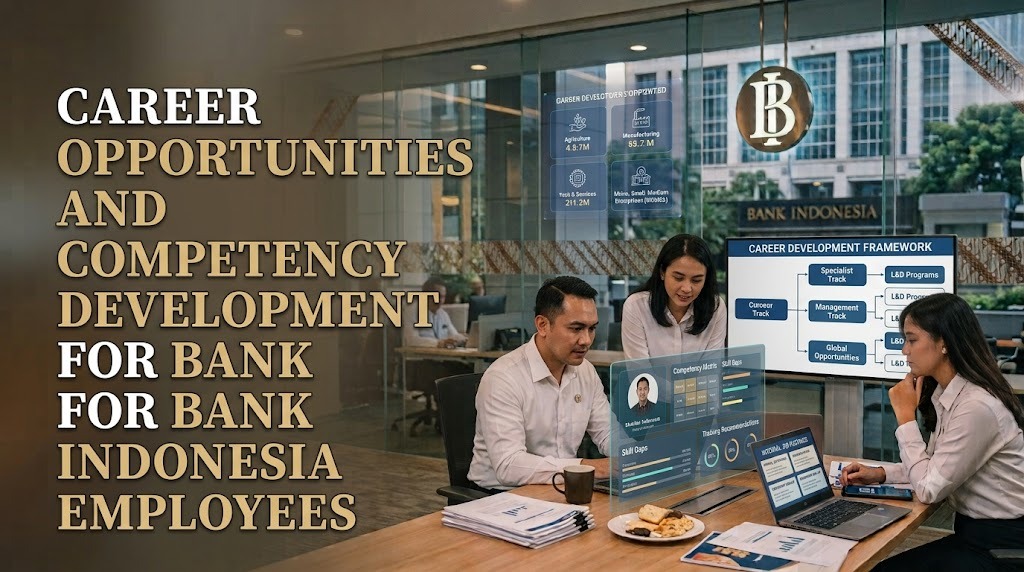
A career at Bank Indonesia offers excellent opportunities for individuals who are passionate about economics, finance, and public service. As the central bank of Indonesia, Bank Indonesia plays a vital role in maintaining economic stability, regulating payment systems, and supporting sustainable national development. Employees are given opportunities to contribute directly to the country's financial progress while developing rewarding professional careers.
Working at Bank Indonesia is more than having a stable job. Employees are encouraged to continuously improve their knowledge, technical expertise, and leadership abilities. Through structured career development programs, they can prepare themselves for greater responsibilities and long-term professional success.
DIVERSE CAREER OPPORTUNITIES FOR EMPLOYEES
Bank Indonesia offers career opportunities across various professional fields. Employees can work in monetary policy, financial system stability, digital payment systems, banking supervision support, economic research, human resource management, information technology, and corporate services. Each department provides unique experiences and opportunities for professional growth.
Career advancement is based on competence, performance, and continuous improvement. Employees who consistently demonstrate dedication and strong results have opportunities to take on higher responsibilities. This merit-based approach encourages professionals to perform at their best while contributing to the institution's objectives.
THE IMPORTANCE OF COMPETENCY DEVELOPMENT
Competency development is an essential part of building a successful career at Bank Indonesia. Employees are expected to continuously improve their technical knowledge, analytical abilities, communication skills, and professional behavior. These competencies enable them to respond effectively to changes in the financial and economic environment.
Continuous development also helps employees remain competitive in an increasingly digital workplace. By strengthening both technical and interpersonal skills, they become more capable of handling complex responsibilities. As a result, Bank Indonesia benefits from a highly qualified and adaptable workforce.
STRENGTHENING DIGITAL AND TECHNOLOGICAL SKILLS
The rapid advancement of financial technology requires Bank Indonesia employees to improve their digital competence. They need to understand digital banking, payment systems, cybersecurity, data management, and financial technology innovations. These capabilities help support a modern and secure financial ecosystem.
Technology training also allows employees to adapt to new working methods and digital transformation initiatives. Understanding emerging technologies improves operational efficiency and decision-making quality. Employees with strong digital skills are better prepared to support the future development of Indonesia's financial sector.
ENHANCING LEADERSHIP AND PROFESSIONAL SKILLS
Leadership is an important competency for employees at every career stage. Bank Indonesia encourages employees to develop leadership skills, strategic thinking, and decision-making abilities. These competencies prepare future leaders to manage teams and contribute to organizational success.
Professional skills such as communication, collaboration, and problem-solving are equally important. Employees who communicate effectively can build stronger relationships with colleagues, government institutions, and financial stakeholders. These abilities create a more productive and innovative work environment.
CONTINUOUS LEARNING AND PROFESSIONAL DEVELOPMENT
The financial sector changes rapidly because of globalization, technology, and economic developments. Therefore, continuous learning is necessary for every Bank Indonesia employee. Employees are encouraged to participate in training programs, workshops, seminars, certifications, and professional education.
Learning continuously helps employees stay updated with the latest financial trends and regulatory changes. It also strengthens their confidence in handling new responsibilities. A commitment to lifelong learning supports both personal growth and organizational excellence.
BUILDING INTEGRITY AND ETHICAL VALUES
Competency development is not limited to technical expertise. Bank Indonesia also emphasizes integrity, accountability, and professional ethics as fundamental values for every employee. These principles ensure that all responsibilities are carried out honestly, fairly, and transparently.
Employees with strong ethical values help maintain public confidence in Bank Indonesia. They make responsible decisions while prioritizing the public interest over personal gain. Integrity strengthens the institution's credibility and supports long-term economic stability.
PREPARING FOR FUTURE CAREER CHALLENGES
Future economic developments will continue to create new opportunities and challenges. Bank Indonesia employees must remain adaptable by improving their competencies and embracing innovation. A combination of technical expertise, leadership, and adaptability enables employees to respond effectively to future demands.
Preparing for future challenges also requires resilience and a willingness to learn from experience. Employees who continuously develop themselves will be more capable of contributing to Indonesia's financial development. This preparation ensures that Bank Indonesia remains a strong and trusted institution.
CONCLUSION
Career opportunities at Bank Indonesia provide employees with meaningful professional experiences and the chance to contribute to Indonesia's economic development. Through structured competency development, employees can strengthen their technical expertise, leadership abilities, digital skills, and professional ethics.
Continuous learning, integrity, and adaptability are the foundations of long-term career success. By consistently improving their competencies, Bank Indonesia employees can support innovation, maintain financial stability, and contribute to sustainable economic growth in Indonesia.
About the Author
Gusti Ayu Tita P
Author — STEKOM University
An active author focused on academic issues, educational technology, and human resource development in the campus environment.















