
Career Opportunities for Game Developers in the Global Gaming Industry
Gusti Ayu Tita P
24 Juli 2026
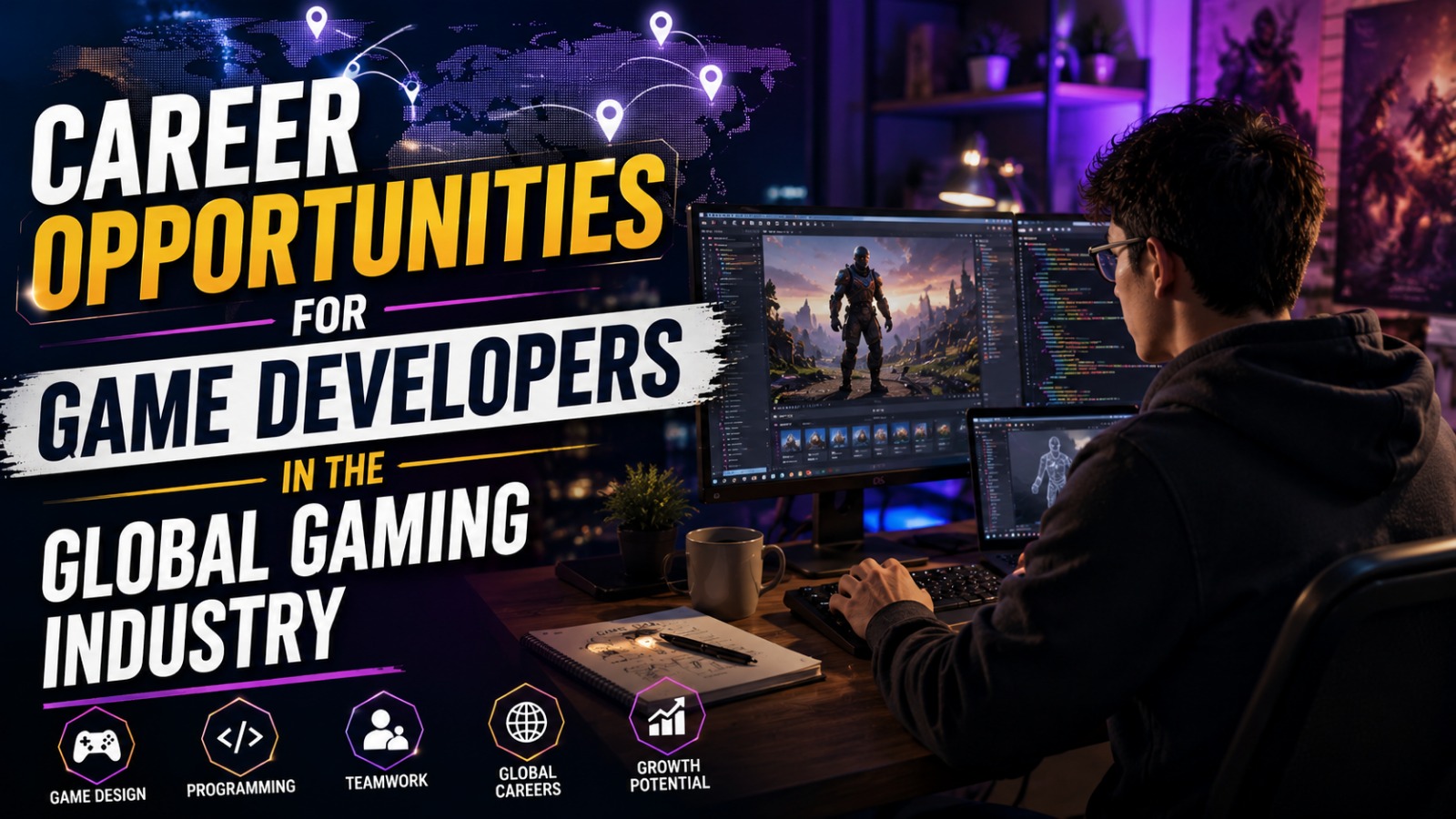
The global gaming industry has become one of the fastest-growing sectors in the digital economy, generating billions of dollars every year. As technology continues to advance, the demand for skilled game developers keeps increasing across various platforms, including PC, console, mobile, virtual reality, and cloud gaming. Companies are constantly searching for talented professionals who can create innovative and engaging gaming experiences. This growth has opened countless career opportunities for individuals with strong technical, creative, and problem-solving skills. Understanding the available career paths can help aspiring developers choose the right direction and build a successful future in the gaming industry.
UNDERSTANDING THE ROLE OF A GAME DEVELOPER
A game developer is responsible for transforming creative ideas into interactive digital games. Their responsibilities include programming gameplay mechanics, implementing graphics, integrating audio, optimizing performance, and fixing technical issues. Depending on the project, developers may work independently or collaborate with artists, designers, writers, and quality assurance teams. Every stage of development requires strong technical knowledge and excellent communication skills.
Game developers also contribute to improving player experiences by enhancing gameplay balance, user interfaces, and overall game performance. As technology evolves, developers continue learning new programming languages, game engines, and development tools. Their adaptability makes them valuable assets in both large game studios and independent development teams.
POPULAR CAREER PATHS IN GAME DEVELOPMENT
The gaming industry offers a wide range of specialized career opportunities. Professionals can become gameplay programmers, graphics programmers, AI developers, engine programmers, multiplayer network engineers, technical artists, mobile game developers, or user interface specialists. Each specialization focuses on different aspects of game creation while contributing to the overall success of a project.
Some developers prefer becoming indie developers, creating and publishing their own games independently. Others choose careers in major international game studios where they work on large-scale projects with multidisciplinary teams. These diverse career options allow developers to pursue roles that best match their interests and technical expertise.
ESSENTIAL SKILLS EMPLOYERS LOOK FOR
Companies hiring game developers seek candidates with strong programming abilities and practical development experience. Knowledge of C++, C#, Python, and scripting languages is highly valuable depending on the development environment. Employers also appreciate experience with popular game engines such as Unity and Unreal Engine, along with familiarity with version control systems like Git.
In addition to technical knowledge, employers value communication, teamwork, creativity, and problem-solving abilities. Developers who understand software architecture, optimization techniques, debugging, and project management often have a competitive advantage. Building a professional portfolio showcasing completed projects significantly increases employment opportunities.
GLOBAL DEMAND FOR GAME DEVELOPERS
The worldwide gaming market continues expanding due to increasing smartphone usage, faster internet connections, and growing interest in esports and online entertainment. Countries such as the United States, Canada, Japan, South Korea, Germany, and the United Kingdom actively recruit talented game developers for local and international projects. Remote work has also created opportunities for developers to collaborate with companies across different continents.
Many technology companies outside the gaming industry also hire game developers for simulations, educational software, healthcare applications, and virtual training systems. This broader demand demonstrates that game development skills are highly transferable across multiple industries. As digital technology continues evolving, global employment opportunities are expected to increase further.
THE IMPORTANCE OF BUILDING A STRONG PORTFOLIO
A professional portfolio is one of the most valuable assets for any aspiring game developer. Employers often prioritize practical experience over academic qualifications because completed projects demonstrate real technical abilities. Small independent games, prototypes, and participation in game jams showcase creativity, coding skills, and problem-solving capabilities.
Developers should clearly explain their contributions to each project, including technologies used, development challenges, and implemented solutions. Maintaining an updated portfolio with polished work helps attract recruiters and freelance clients alike. Publishing games on digital platforms further strengthens professional credibility.
FREELANCING AND ENTREPRENEURSHIP OPPORTUNITIES
Not every game developer chooses traditional employment. Many professionals build successful careers through freelancing, offering programming, game design, or technical consulting services to clients worldwide. Online marketplaces and remote collaboration tools make it easier than ever to work with international companies without relocating.
Entrepreneurial developers may establish independent game studios or publish games through digital distribution platforms. Although this path involves greater financial risk, it also offers creative freedom and unlimited growth potential. Successful indie games have demonstrated that small teams can compete with larger studios through innovation and quality.
CONTINUOUS LEARNING FOR LONG TERM CAREER SUCCESS
Technology changes rapidly, making continuous learning essential for long-term success in game development. Developers regularly study new rendering technologies, artificial intelligence, cloud gaming, augmented reality, and virtual reality to remain competitive. Online courses, industry conferences, technical documentation, and developer communities provide valuable learning opportunities.
Practical experience remains equally important because every completed project improves technical expertise and professional confidence. Developers who consistently update their skills adapt more easily to industry changes and emerging technologies. Lifelong learning ensures long-lasting career growth in the ever-evolving gaming industry.
CONCLUSION
The global gaming industry offers outstanding career opportunities for talented and dedicated game developers. From programming and technical art to freelancing and entrepreneurship, developers can pursue diverse professional paths that match their skills and interests. Building strong technical expertise, creating an impressive portfolio, and continuously learning new technologies are the keys to long-term success. As the gaming industry continues expanding worldwide, qualified game developers will remain in high demand across numerous industries and international markets.
About the Author
Gusti Ayu Tita P
Author — STEKOM University
An active author focused on academic issues, educational technology, and human resource development in the campus environment.















