
Career Opportunities For Young Generations To Support Indonesia’s Development
Gusti Ayu Tita P
6 Agustus 2026
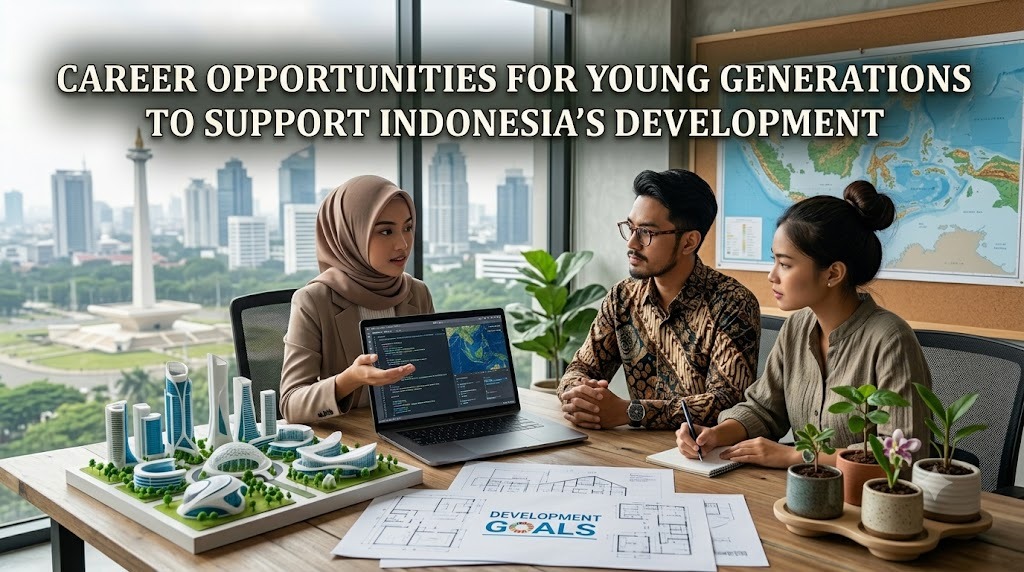
Indonesia has a large young population that can play an important role in the country’s future. Young people have the opportunity to contribute through education, entrepreneurship, technology, public service, creative industries, and many other fields. Choosing the right career opportunities is not only about earning an income but also about developing skills that can create positive impacts on society. With proper preparation, young generations can become productive contributors to economic and social development. Their creativity, adaptability, and willingness to learn are valuable assets for Indonesia.
THE ROLE OF YOUNG GENERATIONS IN INDONESIA’S DEVELOPMENT
Young people have an important role in supporting national development because they bring new ideas and different perspectives. They are generally more familiar with technological changes and can adapt quickly to new ways of working. Their involvement can help organizations and businesses respond to changing social and economic needs. Young workers can also contribute through innovation, research, community activities, and entrepreneurship. Therefore, career planning among young people can have a broader impact than individual success.
The contribution of young generations does not have to be limited to government institutions or large companies. A young person can support development by becoming an entrepreneur, teacher, healthcare worker, engineer, designer, farmer, researcher, or skilled professional. What matters is developing relevant skills and using them responsibly. Professional competence and social responsibility can work together to create meaningful contributions. This makes career development an important part of Indonesia's long-term progress.
CAREER OPPORTUNITIES IN TECHNOLOGY
The technology sector offers many opportunities for young people as digital transformation continues to influence businesses and public services. Careers in software development, cybersecurity, data analysis, cloud computing, and digital product development are increasingly relevant in a digital economy. Young people who develop technical skills can participate in creating solutions for businesses and communities. Technology careers can also support remote and international work opportunities. However, technical knowledge should be combined with communication and problem-solving abilities.
The digital sector also creates opportunities outside traditional technology jobs. Young people can work in digital marketing, content creation, user experience design, e-commerce, and technology-based entrepreneurship. These fields require creativity as well as an understanding of digital platforms. Digital skills can help young workers compete in a changing labor market. Continuous learning is important because technology and industry requirements can change rapidly.
ENTREPRENEURSHIP AS A CAREER PATH
Entrepreneurship is another career opportunity that can contribute directly to Indonesia’s economic development. Young entrepreneurs can create products, services, and business models that respond to consumer needs. When businesses grow, they can also create employment opportunities for other people. Small businesses can contribute to local economic activity and strengthen communities. For young people, entrepreneurship can also become a way to turn skills and ideas into practical solutions.
Starting a business does not always require a large amount of capital. Young people can begin with a small-scale business and gradually expand after understanding the market. They need to learn about financial management, marketing, customer service, and business planning. Mistakes can happen, especially during the early stages, so entrepreneurs need to evaluate and improve their strategies. With discipline and responsible decision-making, entrepreneurship can become a sustainable career path.
CAREERS IN EDUCATION AND RESEARCH
Education is essential for developing Indonesia’s human resources. Young people who pursue careers as teachers, lecturers, researchers, and education professionals can contribute by improving knowledge and learning quality. Their work can influence students and communities over a long period. Education professionals also have opportunities to introduce new teaching methods and use technology in learning. Their contribution is important because skilled human resources are necessary for national development.
Research also plays an important role in solving economic, social, environmental, and technological problems. Young researchers can study issues that affect communities and provide evidence for better decisions. Careers in research and innovation require curiosity, analytical thinking, and persistence. Research findings can support businesses, educational institutions, and policymakers. By developing a strong research culture, young professionals can contribute to Indonesia’s knowledge-based development.
CAREERS IN HEALTHCARE
The healthcare sector provides important career opportunities while directly supporting public welfare. Young people can pursue careers as doctors, nurses, pharmacists, nutritionists, medical laboratory professionals, public health workers, and other healthcare specialists. These professions require strong technical knowledge, ethical standards, and responsibility. Healthcare workers contribute not only by treating illness but also by supporting health promotion and disease prevention. Their role becomes particularly important as communities face changing health needs.
Young professionals in healthcare can also contribute to innovation. Technology is increasingly used in health information systems, telemedicine, medical research, and other services. People with appropriate skills can help improve healthcare accessibility and efficiency. However, healthcare careers require proper education, professional qualifications, and compliance with applicable regulations. Young people should understand these requirements before choosing a specific profession.
CAREERS IN THE CREATIVE INDUSTRY
Indonesia has a diverse creative sector that provides opportunities in design, film, music, photography, fashion, animation, publishing, advertising, and digital content. Young people can use their creativity and cultural knowledge to develop products that have economic and social value. The growth of digital platforms has also created new ways for creative professionals to reach audiences. A strong portfolio can be an important asset when entering creative careers. At the same time, creative workers need business and communication skills to manage professional opportunities.
The creative industry can also promote Indonesian culture to wider audiences. Young designers, filmmakers, writers, and content creators can introduce local stories, traditions, and products through modern formats. This can support both cultural preservation and economic activity. Creativity becomes more valuable when combined with originality, professionalism, and an understanding of audiences. Young people can therefore contribute to development while building sustainable careers.
CAREERS IN GREEN ECONOMY AND ENVIRONMENTAL SECTORS
Environmental challenges have created growing demand for skills related to sustainability. Young people can explore careers in renewable energy, environmental management, sustainable agriculture, waste management, and green technology. These fields can support efforts to use resources more efficiently and reduce environmental impacts. Careers in sustainability often require knowledge from science, engineering, business, or social studies. Young professionals can contribute by developing practical solutions for environmental problems.
The transition toward a greener economy can also create new business opportunities. Young entrepreneurs can develop products based on sustainable materials, energy efficiency, recycling, or responsible production. Such businesses can create economic value while addressing environmental concerns. Sustainability skills are likely to become increasingly relevant as industries respond to environmental challenges. Young people who prepare early can position themselves for emerging career opportunities.
CAREERS IN PUBLIC SERVICE
Public service provides another important path for young people who want to contribute to national development. Government employees and public-sector professionals can work in administration, education, healthcare, infrastructure, social services, and other areas. Their responsibilities involve serving communities and supporting government programs. Careers in public service require integrity, discipline, competence, and a strong sense of responsibility. Young people who choose this path should understand that public service involves accountability to society.
Public-sector careers can also provide opportunities to participate in policy implementation and public innovation. Young professionals can contribute ideas for improving administrative processes and public services. Digital transformation has created opportunities to make government services more accessible and efficient. However, candidates should follow official recruitment procedures and understand the requirements for the positions they seek. Professional ethics should remain a central part of public service.
SKILLS YOUNG PEOPLE NEED FOR FUTURE CAREERS
Choosing a career is not enough without developing relevant skills. Young people should build a combination of technical skills, communication skills, critical thinking, problem-solving, teamwork, and adaptability. Employers and organizations often value people who can learn and adjust when circumstances change. Digital literacy is also increasingly important across many industries. These skills can make young workers more prepared for different career environments.
Soft skills are equally important because professional success depends on how people communicate and collaborate. Young professionals should learn how to manage time, receive feedback, solve conflicts, and work with people from different backgrounds. Lifelong learning should become part of career development because industries continue to change. Courses, internships, projects, certifications, and practical experience can strengthen professional abilities. Building skills consistently can increase both career opportunities and confidence.
HOW YOUNG PEOPLE CAN PREPARE FOR CAREER OPPORTUNITIES
Career preparation should begin by identifying personal interests, strengths, and long-term goals. Young people can research industries and occupations that match their abilities and future plans. Internships, volunteer activities, organizational experience, and practical projects can provide valuable exposure to real working environments. These experiences can also help young people understand whether a particular career is suitable for them. Career decisions should be based on realistic information rather than trends alone.
Networking can also help young people discover opportunities and learn from experienced professionals. Building a professional portfolio and maintaining a clear résumé can make it easier to present skills to potential employers. Young people should also monitor changes in the labor market and identify skills that are becoming more relevant. Continuous improvement and career planning can make the transition from education to employment smoother. Preparation does not guarantee immediate success, but it can increase readiness for available opportunities.
CONCLUSION
Career opportunities for young generations to support Indonesia’s development are available across many sectors, including technology, entrepreneurship, education, healthcare, creative industries, environmental fields, and public service. Each sector requires different knowledge and skills, but all can provide ways for young people to contribute to society. The most important steps are identifying suitable career goals, developing relevant skills, gaining practical experience, and maintaining a willingness to learn. Young people should also understand that career success is not only measured by income but also by the value and positive impact they create. By preparing themselves carefully and using their abilities responsibly, young generations can become an important force in supporting Indonesia’s economic and social development.
About the Author
Gusti Ayu Tita P
Author — STEKOM University
An active author focused on academic issues, educational technology, and human resource development in the campus environment.















