Career Opportunities in Customs That Offer Long Term Growth
Gusti Ayu Tita P
8 Agustus 2026
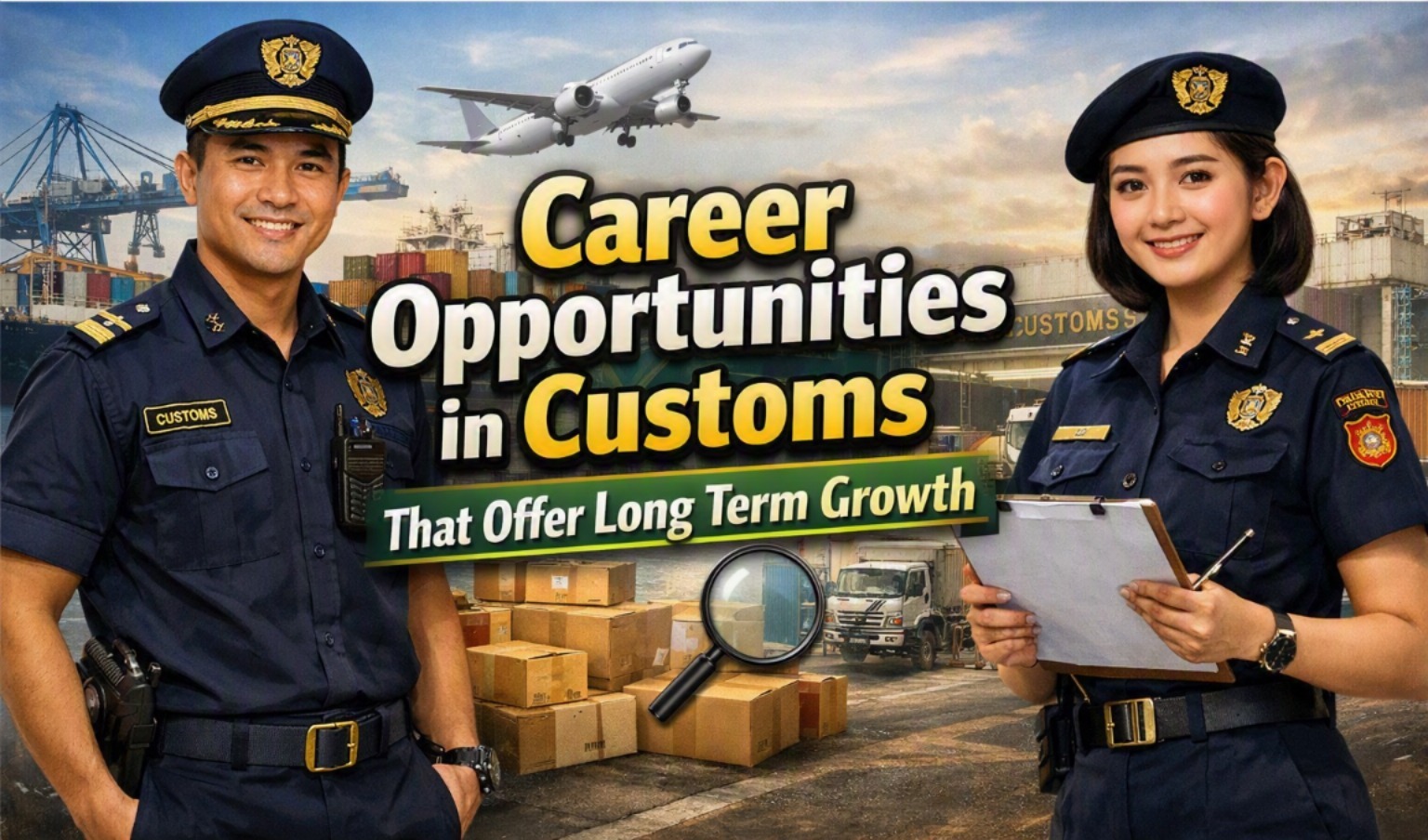
A career in customs offers more than routine administrative work. Customs professionals play an important role in international trade, border protection, revenue collection, and the enforcement of trade regulations. As global commerce continues to develop, organizations need skilled people who understand customs procedures, technology, logistics, and compliance.
For people looking for a long term career, the customs field can provide opportunities to develop specialized skills and take on greater responsibilities. Career paths can be available in government agencies, logistics companies, import and export businesses, consulting firms, and other organizations involved in cross border trade.
UNDERSTANDING A CAREER IN CUSTOMS
Customs work focuses on controlling and facilitating the movement of goods across borders. Customs professionals may check import and export documents, assess duties and taxes, monitor shipments, investigate violations, and help ensure that businesses follow applicable regulations. Their work supports both national economic interests and legitimate international trade.
The field also requires accuracy, responsibility, communication skills, and knowledge of changing regulations. Because international trade involves many countries and business sectors, customs professionals can gain experience in areas such as trade compliance, logistics, risk management, and customs technology.
GOVERNMENT CUSTOMS CAREER OPPORTUNITIES
One of the most recognized career paths is working for a government customs authority. Customs officers and related professionals may be responsible for collecting duties, supervising imports and exports, preventing illegal trade, and implementing customs policies. Depending on the country and agency, career opportunities can include operational officers, analysts, investigators, administrators, and technical specialists.
Government customs careers can also provide structured professional development. Employees may receive training in customs regulations, inspection procedures, risk analysis, information systems, and international trade practices. With experience, qualified employees may progress toward positions with greater responsibility, such as supervisors, managers, or policy-related roles.
CAREERS IN CUSTOMS COMPLIANCE
Businesses involved in international trade need professionals who can help them comply with customs requirements. A customs compliance specialist may review import and export documentation, product classifications, customs valuation, origin information, and applicable duties. The role helps businesses reduce errors and avoid unnecessary delays or regulatory problems.
This career can provide strong long term growth because international businesses must continually adapt to changing trade rules. Experienced compliance professionals can develop expertise in particular industries, products, or markets. They may eventually move into senior compliance, trade management, consulting, or corporate leadership positions.
OPPORTUNITIES IN LOGISTICS AND SUPPLY CHAINS
The growth of global e commerce has increased the importance of logistics and supply chain management. Customs knowledge is valuable in freight forwarding, shipping, warehousing, transportation, and international distribution. Professionals who understand both customs procedures and supply chain operations can help companies move goods efficiently while meeting regulatory requirements.
A person can begin in an entry level logistics or documentation position and gradually build expertise in international shipments. Additional knowledge of customs clearance, trade documentation, and supply chain technology can create opportunities for advancement. Over time, professionals may move into roles such as customs manager, trade operations manager, or supply chain specialist.
CUSTOMS RISK MANAGEMENT AND INVESTIGATION
Another career direction involves risk management and investigation. Customs organizations use data and risk assessment to identify shipments that may require additional attention. Professionals in this area may analyze trade information, identify unusual patterns, support investigations, and help improve border control processes.
These positions require strong analytical thinking and attention to detail. Knowledge of data analysis, trade regulations, documentation, and investigative procedures can become valuable as professionals gain experience. The increasing use of technology in customs operations also creates opportunities for people who can combine customs knowledge with digital skills.
TECHNOLOGY AND DIGITAL CUSTOMS CAREERS
Modern customs operations increasingly depend on digital systems. Electronic declarations, automated risk assessment, data exchange, cargo tracking, and other technologies are changing how customs processes are managed. This creates opportunities for professionals who understand both customs operations and information technology.
People with backgrounds in data analysis, cybersecurity, software systems, or digital transformation can contribute to the development and improvement of customs processes. Combining technical knowledge with an understanding of trade regulations can create a valuable specialization. As governments and businesses continue to modernize trade systems, digital customs expertise may become increasingly important.
SKILLS NEEDED FOR LONG TERM CAREER GROWTH
Long term success in customs requires more than understanding basic procedures. Professionals should develop regulatory knowledge, analytical ability, communication skills, problem solving, and attention to detail. English language skills can also be useful because international trade frequently involves foreign companies, international regulations, and cross border communication.
Technology skills are becoming equally important. Learning how to work with data, digital documentation, customs platforms, and business systems can increase career flexibility. Continuous learning is especially important because customs regulations and international trade practices can change over time.
HOW TO BUILD A SUCCESSFUL CUSTOMS CAREER?
A strong career can begin by gaining relevant education or practical experience in customs, logistics, international business, accounting, law, supply chain management, or information technology. Internships, professional training, and entry level positions can help develop practical knowledge. Understanding how customs declarations, tariffs, product classification, and import and export procedures work can also provide a useful foundation.
Career growth usually depends on continuous skill development and professional experience. Workers can seek specialized training, improve their digital abilities, learn about international trade, and develop leadership skills. Building a reputation for accuracy, integrity, and professionalism can also help create opportunities for promotion and more specialized positions.
CONCLUSION
Customs remains important because countries need to manage international trade, collect applicable revenue, protect society, and enforce trade laws. At the same time, businesses need efficient customs processes to keep international supply chains moving. This combination creates demand for professionals who can balance regulatory compliance and trade efficiency.
The future of customs is also closely connected to digitalization, data analysis, automation, and changing global trade patterns. Professionals who continue learning and adapt to new technologies can remain competitive as the industry evolves. For individuals interested in international trade and public or private sector careers, customs can provide a flexible path with opportunities for long term professional development.
About the Author
Gusti Ayu Tita P
Author — STEKOM University
An active author focused on academic issues, educational technology, and human resource development in the campus environment.