Career Opportunities in History and Historic Tomb Preservation
Gusti Ayu Tita P
4 September 2026
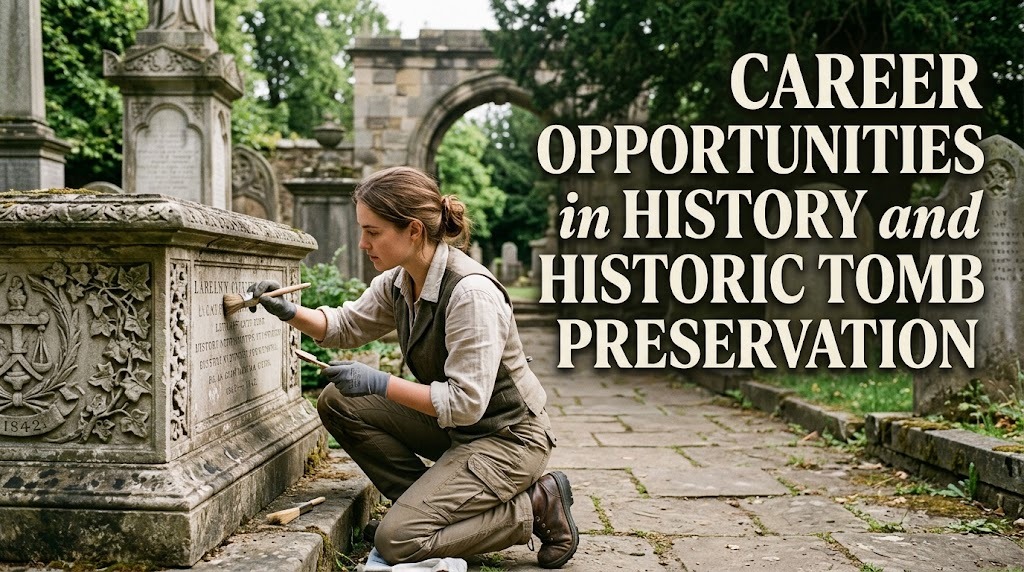
A career in history and historic tomb preservation offers opportunities for people who enjoy studying the past while helping protect valuable cultural resources. Historic tombs can contain information about architecture, traditions, historical figures, religion, and social development. Professionals in this field contribute to research, documentation, conservation, education, and heritage management. As interest in cultural heritage continues to develop, these careers can provide meaningful professional paths.
CAREER OPPORTUNITIES IN HISTORY
People with knowledge of history can work in various fields related to research, education, museums, archives, and cultural heritage. Historians may study documents, oral traditions, historical sites, and other sources to develop a better understanding of the past. Their research can also support the interpretation and preservation of historic tombs.
History graduates may also work as educators, researchers, writers, archivists, museum staff, or cultural heritage professionals. Some positions require additional education or specialized training. Strong research, writing, communication, and analytical skills can help professionals succeed in these roles.
CAREERS IN HISTORIC TOMB PRESERVATION
Historic tomb preservation involves protecting burial sites that have historical, cultural, archaeological, or architectural significance. Professionals may document structures, monitor their condition, conduct research, support conservation projects, or develop educational programs. Their work helps prevent valuable heritage resources from being lost or damaged.
Several professions can contribute to preservation activities. Archaeologists, conservators, architects, historians, heritage managers, researchers, and museum professionals may work together on a single project. Each specialist contributes different knowledge to ensure that preservation decisions are carefully planned.
ROLES IN ARCHAEOLOGY AND CONSERVATION
Archaeologists can study historic burial sites to understand past societies, technologies, traditions, and cultural practices. Their work may involve field documentation, analysis of archaeological evidence, research, and interpretation. Archaeological activities must follow appropriate laws, professional standards, and ethical principles.
Conservators focus more directly on protecting physical materials and structures. They may assess deterioration, recommend appropriate treatments, and monitor the condition of historic buildings or objects. Conservation science and technical knowledge are particularly valuable when working with fragile materials.
OPPORTUNITIES IN MUSEUMS AND HERITAGE MANAGEMENT
Museums and heritage institutions can provide career opportunities for people interested in public education and cultural preservation. Museum professionals may develop exhibitions, educational programs, collections documentation, and public activities related to historical sites. Historic tombs can become part of exhibitions that help visitors understand the wider history of a community.
Heritage managers have broader responsibilities involving site planning, visitor management, conservation programs, and community relationships. They may coordinate different stakeholders and help develop strategies for sustainable heritage management. Good organizational and communication skills are important for this type of work.
DIGITAL HERITAGE CAREER OPPORTUNITIES
Digital technology is becoming increasingly useful in documenting and presenting cultural heritage. Professionals can work with 3D scanning, digital mapping, photography, geographic information systems, virtual tours, and digital archives. These tools can create detailed records of historic tombs and make historical information more accessible.
Digital heritage can also create opportunities for people with backgrounds in technology and communication. Professionals may help develop online exhibitions, digital educational resources, virtual experiences, or heritage databases. Combining technology skills with historical knowledge can create valuable career opportunities in modern heritage work.
SKILLS AND EDUCATION FOR CAREER DEVELOPMENT
People interested in these careers can begin by developing knowledge in history, archaeology, cultural heritage, conservation, architecture, anthropology, or museum studies. The appropriate educational path depends on the specific career being pursued. Specialized positions may require university degrees, professional training, field experience, or advanced study.
Practical experience can be just as valuable as academic knowledge. Internships, research projects, museum activities, field studies, documentation projects, and community heritage programs can help develop useful skills. Professionals should also build critical thinking, teamwork, digital skills, ethical awareness, and communication abilities.
CONCLUSION
Career opportunities in history and historic tomb preservation cover a wide range of professional fields. Historians, archaeologists, conservators, museum professionals, heritage managers, educators, and digital heritage specialists can all contribute to protecting and understanding the past. Building relevant education, practical experience, research skills, and technical abilities can help individuals prepare for these careers. Working in heritage preservation can provide not only professional opportunities but also the chance to protect important cultural resources for future generations.
About the Author
Gusti Ayu Tita P
Author — STEKOM University
An active author focused on academic issues, educational technology, and human resource development in the campus environment.