
Career Prospects In Logistics And Mobility During The Homecoming Period
Gusti Ayu Tita P
10 Agustus 2026
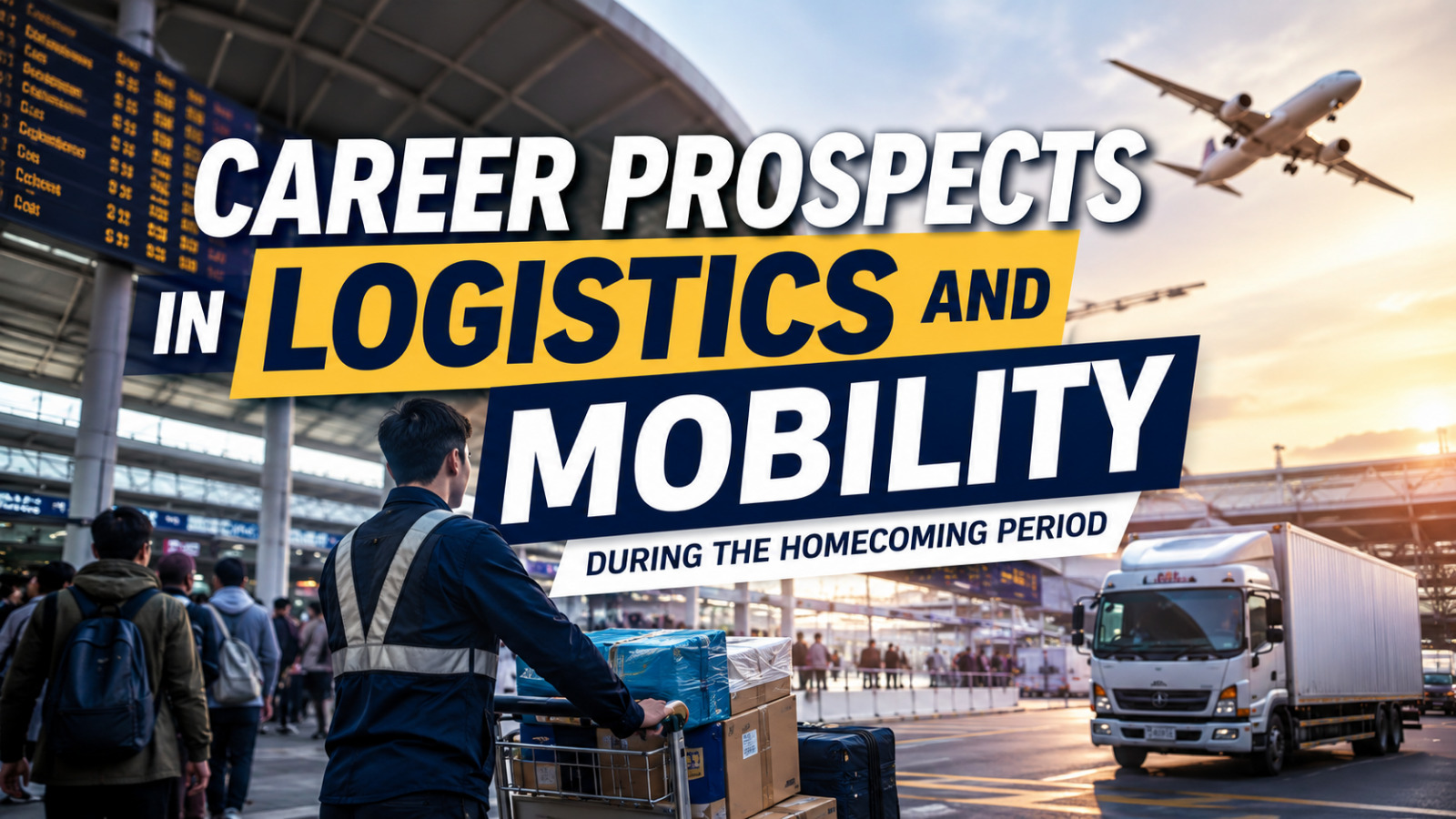
The homecoming period creates significant activity across Indonesia's transportation and logistics networks. Millions of people travel to their hometowns, while goods, food, fuel, luggage, and other supplies must continue moving between different locations. This increased activity creates demand for professionals who can manage transportation and logistics operations effectively. As a result, the Mobility Industry can provide valuable career opportunities for people with different educational and professional backgrounds.
Logistics and mobility are closely connected. Transportation moves people and goods, while logistics ensures that resources are available at the right place and time. During the homecoming period, both systems need to operate efficiently despite higher demand. This situation creates opportunities in operations, warehousing, fleet management, customer service, technology, planning, and supply chain activities.
WHY HOMECOMING CREATES CAREER DEMAND?
The Homecoming Period is one of the busiest travel periods in Indonesia. Transportation companies may experience significant increases in passenger numbers, vehicle activity, and operational requirements. Logistics businesses must also prepare for changes in demand for fuel, food, vehicle parts, and other essential products.
Higher demand can require additional workers and stronger operational teams. Companies may need staff to coordinate vehicles, monitor deliveries, manage warehouses, assist customers, and analyze transportation data. Seasonal opportunities can also provide useful experience for people entering the industry. These experiences may become a foundation for long-term Career Prospects.
CAREERS IN LOGISTICS OPERATIONS
Logistics Careers include many different roles related to the movement and management of goods. Logistics coordinators, warehouse staff, inventory officers, dispatchers, and distribution planners help ensure that products reach their destinations efficiently. During homecoming, these responsibilities can become more demanding because transportation networks are busier.
Professionals in logistics need strong organizational and communication abilities. They may need to coordinate suppliers, drivers, warehouses, customers, and transportation companies. They also need to monitor schedules and respond when deliveries are delayed. Good planning can help companies maintain service quality even when transportation conditions become challenging.
SUPPLY CHAIN MANAGEMENT
Supply Chain management is another important career area connected to logistics and mobility. Supply chain professionals coordinate activities from suppliers to producers, warehouses, transportation providers, and customers. Their work helps ensure that goods and materials are available when needed.
During the homecoming period, demand for certain products can increase rapidly. Businesses need to prepare inventory and transportation capacity to prevent shortages. Supply chain professionals use forecasting, planning, and data analysis to support these decisions. This makes supply chain management a promising field for people interested in business and transportation.
FLEET MANAGEMENT
Fleet management focuses on the operation and maintenance of vehicles used by transportation and logistics companies. Fleet managers may monitor vehicle locations, maintenance schedules, fuel consumption, driver performance, and operational efficiency. During busy travel periods, effective fleet management becomes especially important.
Professionals in this field need strong organizational and analytical skills. They must balance vehicle availability, maintenance requirements, operational costs, and safety standards. Digital fleet management systems can provide useful information for monitoring vehicle performance. Experience in this area can create valuable Career Prospects within the transportation sector.
WAREHOUSING AND DISTRIBUTION
Warehouses play an important role in supporting transportation and logistics networks. Workers manage inventory, organize products, prepare shipments, and coordinate goods for distribution. During periods of increased demand, warehouses may need to process larger volumes of goods.
People working in warehousing need attention to detail and good organizational skills. Modern warehouses increasingly use barcode systems, inventory software, automated equipment, and digital tracking. Employees who understand these technologies may have greater opportunities for career advancement. Warehousing can therefore provide an accessible entry point into Logistics Careers.
TRANSPORTATION PLANNING
Transportation planning involves designing efficient ways to move people and goods. Professionals analyze routes, schedules, traffic conditions, transportation capacity, and operational requirements. During homecoming, transportation planners may need to consider significantly higher travel demand.
Strong analytical and problem-solving abilities are useful in this career area. Planners need to evaluate different options and consider safety, cost, travel time, and available infrastructure. Knowledge of transportation systems and data analysis can provide a strong foundation for this profession. Transportation planning is an important part of the wider Mobility Industry.
CUSTOMER SERVICE AND MOBILITY SERVICES
The growth of transportation activity also increases the need for customer service professionals. Passengers and customers may require information about schedules, tickets, deliveries, routes, or delays. Customer service employees help users understand available services and respond to problems.
Strong communication and patience are essential for this role. Workers should provide accurate information while remaining professional when customers are frustrated. Good customer service can improve trust in transportation and logistics providers. It also provides useful experience for people seeking to develop careers in mobility services.
TECHNOLOGY AND DIGITAL MOBILITY
Technology is changing the way logistics and mobility systems operate. Companies increasingly use GPS tracking, digital ticketing, fleet management software, route optimization, automated inventory systems, and data analysis. This creates demand for employees who understand digital tools and transportation technology.
People with backgrounds in information technology, data analysis, software development, or business systems can explore opportunities in this area. However, transportation professionals without technical degrees can also develop useful digital skills. Understanding technology can improve workplace efficiency and support better decision-making. Digital Mobility is likely to remain an important part of future transportation careers.
SAFETY AND COMPLIANCE
Safety is essential across logistics and mobility operations. Companies need employees who understand transportation regulations, operational procedures, vehicle safety, and workplace standards. During the homecoming period, increased activity can create additional operational risks.
Safety professionals help identify risks and ensure that appropriate procedures are followed. They may also support employee training and incident reporting. Attention to safety can protect workers, customers, passengers, and transportation assets. A strong understanding of Safety Management can therefore improve career opportunities in the industry.
SKILLS NEEDED FOR LOGISTICS CAREERS
People interested in Logistics Careers should develop several practical skills. Communication, organization, time management, problem solving, teamwork, and basic digital abilities are useful across many positions. Analytical skills can also help professionals understand transportation data and improve operational decisions.
Adaptability is especially valuable because logistics conditions can change quickly. Employees may need to respond to delivery delays, vehicle problems, demand changes, or unexpected transportation restrictions. A willingness to learn can help workers remain competitive. Professional development should continue throughout a logistics career.
HOW TO BUILD A CAREER IN MOBILITY?
Building a career in the mobility sector can begin with education, training, internships, or entry-level employment. Candidates should identify the area that best matches their interests, such as logistics, fleet management, transportation planning, customer service, or technology. Relevant experience can make it easier to understand real operational challenges.
Professional networking can also be useful. Connecting with industry professionals, attending training programs, and following transportation developments can provide valuable knowledge. Candidates should maintain a clear résumé that highlights relevant skills and experience. Continuous improvement can strengthen long-term Career Prospects.
CONCLUSION
The homecoming period creates significant activity across logistics and transportation networks, making it an important time to observe opportunities in the Mobility Industry. Careers are available in logistics operations, supply chain management, fleet management, warehousing, transportation planning, customer service, technology, and safety.
The industry offers opportunities for people with different educational backgrounds and interests. Strong Communication Skills, organization, problem solving, digital knowledge, and adaptability can help candidates succeed. By gaining relevant experience and continuing to develop their abilities, job seekers can build promising Logistics Careers and contribute to the development of modern mobility systems.
About the Author
Gusti Ayu Tita P
Author — STEKOM University
An active author focused on academic issues, educational technology, and human resource development in the campus environment.















