
Challenges Faced by Diplomats in Global Politics
Gusti Ayu Tita P
24 Juli 2026
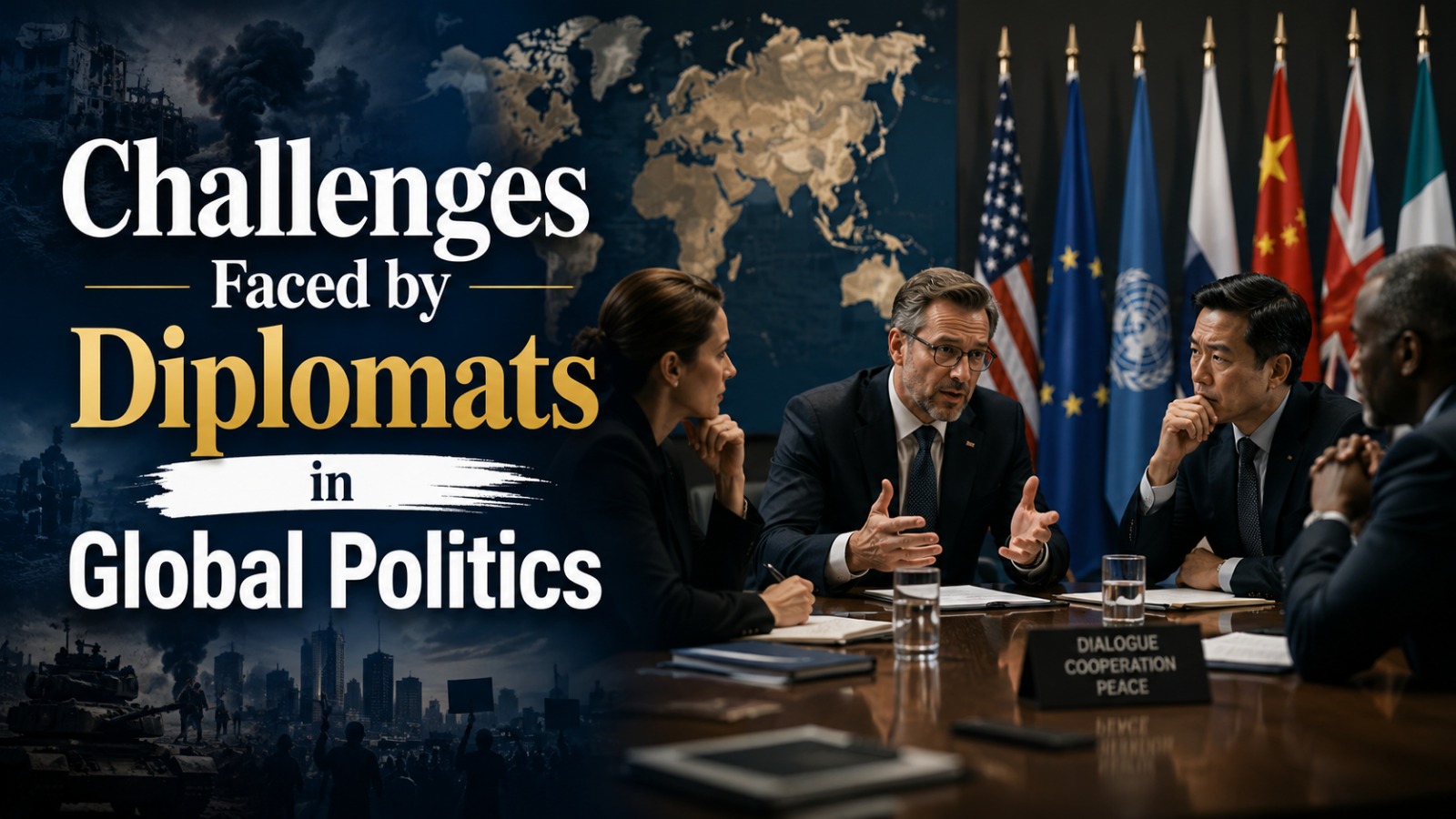
Diplomacy plays a vital role in maintaining international peace, strengthening cooperation, and resolving conflicts between nations. However, the work of diplomats has become increasingly challenging as global politics grows more complex. Political tensions, economic competition, technological advancements, and global crises require diplomats to adapt quickly while protecting their country's interests. Modern diplomacy is no longer limited to formal meetings but also involves digital communication, public engagement, and crisis management. Understanding these challenges highlights why skilled diplomats remain essential in today's interconnected world.
UNDERSTANDING THE COMPLEXITY OF GLOBAL POLITICS
Global politics is influenced by many interconnected factors, including economic competition, security concerns, environmental issues, and international trade. Diplomats must carefully balance their country's priorities while maintaining positive relationships with foreign governments. Every decision can have long-term political and economic consequences, making diplomatic work highly demanding.
International organizations, regional alliances, and multinational agreements also add complexity to diplomatic negotiations. Diplomats often represent their countries in discussions where multiple interests compete at the same time. They must understand international law, cultural differences, and political dynamics before making important decisions. This requires extensive preparation, patience, and excellent communication skills.
MANAGING INTERNATIONAL CONFLICTS
One of the biggest challenges diplomats face is preventing and resolving international conflicts. Political disagreements over borders, natural resources, or national security can quickly escalate if not handled carefully. Diplomats must encourage dialogue while avoiding actions that increase tensions between countries.
Conflict resolution requires strong negotiation skills and the ability to remain neutral during sensitive discussions. Diplomats frequently work behind the scenes to build trust between opposing parties and identify practical solutions. Their efforts often prevent misunderstandings from developing into larger regional or global crises. Successful diplomacy depends on patience, compromise, and long-term strategic thinking.
ADAPTING TO DIGITAL DIPLOMACY
Technology has significantly transformed how diplomacy is conducted. Governments now communicate through digital platforms, online conferences, and social media in addition to traditional diplomatic meetings. While technology allows faster communication, it also creates new risks such as misinformation, cyberattacks, and data security threats.
Diplomats must learn how to communicate effectively in digital environments while protecting confidential information. False information can spread rapidly across the internet, influencing public opinion and international relations. As a result, diplomats need strong digital literacy alongside traditional diplomatic skills. Balancing transparency with national security has become an increasingly important responsibility.
BALANCING NATIONAL INTERESTS AND GLOBAL COOPERATION
Every diplomat is responsible for protecting the interests of their own country. At the same time, they must cooperate with other nations to address shared global challenges such as climate change, pandemics, and economic instability. Finding common ground is often difficult because countries have different priorities and political systems.
Diplomats must negotiate agreements that benefit their nation without damaging long-term international partnerships. This balance requires flexibility, respect, and a deep understanding of international cooperation. Strong diplomatic relationships help countries respond more effectively to global challenges that no single nation can solve alone.
DEALING WITH CULTURAL AND POLITICAL DIFFERENCES
Cultural diversity makes diplomacy both rewarding and challenging. Every country has unique traditions, communication styles, and political values that influence negotiations. Misunderstandings caused by cultural differences can create unnecessary tension if diplomats are not well prepared.
Successful diplomats invest time in understanding local customs and respecting cultural expectations. They also study political systems to better understand how decisions are made in different countries. Cultural awareness improves communication and builds trust during negotiations. Respect for diversity remains one of the foundations of successful international diplomacy.
RESPONDING TO GLOBAL CRISES
Modern diplomats frequently deal with unexpected global emergencies such as armed conflicts, humanitarian disasters, financial crises, and health emergencies. These situations require immediate international coordination and effective communication between governments. Diplomatic missions often become key centers for assisting citizens abroad and coordinating emergency responses.
During global crises, diplomats must make informed decisions under significant pressure while maintaining international cooperation. They also work closely with international organizations to deliver humanitarian aid and promote peaceful solutions. Quick adaptation and calm leadership are essential qualities during times of uncertainty. Their actions can significantly influence regional stability and international confidence.
THE IMPORTANCE OF CONTINUOUS LEARNING
Global politics constantly evolves as new technologies, economic trends, and geopolitical developments emerge. Diplomats must continuously improve their knowledge to remain effective in international negotiations. Learning about international law, cybersecurity, economics, and foreign cultures helps diplomats respond to changing global conditions.
Professional development also strengthens communication, leadership, and negotiation abilities. Continuous education enables diplomats to anticipate challenges before they become major international issues. Governments increasingly value diplomats who combine traditional diplomatic expertise with modern technological and strategic knowledge. Lifelong learning is now an essential part of a successful diplomatic career.
CONCLUSION
Diplomats face a wide range of challenges in global politics, from managing international conflicts and adapting to digital diplomacy to balancing national interests with international cooperation. Their work requires patience, cultural understanding, strategic thinking, and strong communication skills. As global issues become more interconnected, the role of diplomacy continues to grow in importance. Skilled diplomats help maintain peace, encourage cooperation, and protect national interests while contributing to global stability. Investing in capable diplomatic professionals remains essential for building a safer and more cooperative international community.
About the Author
Gusti Ayu Tita P
Author — STEKOM University
An active author focused on academic issues, educational technology, and human resource development in the campus environment.















