
Challenges Faced by District Heads in Modern Governance
Gusti Ayu Tita P
12 Agustus 2026
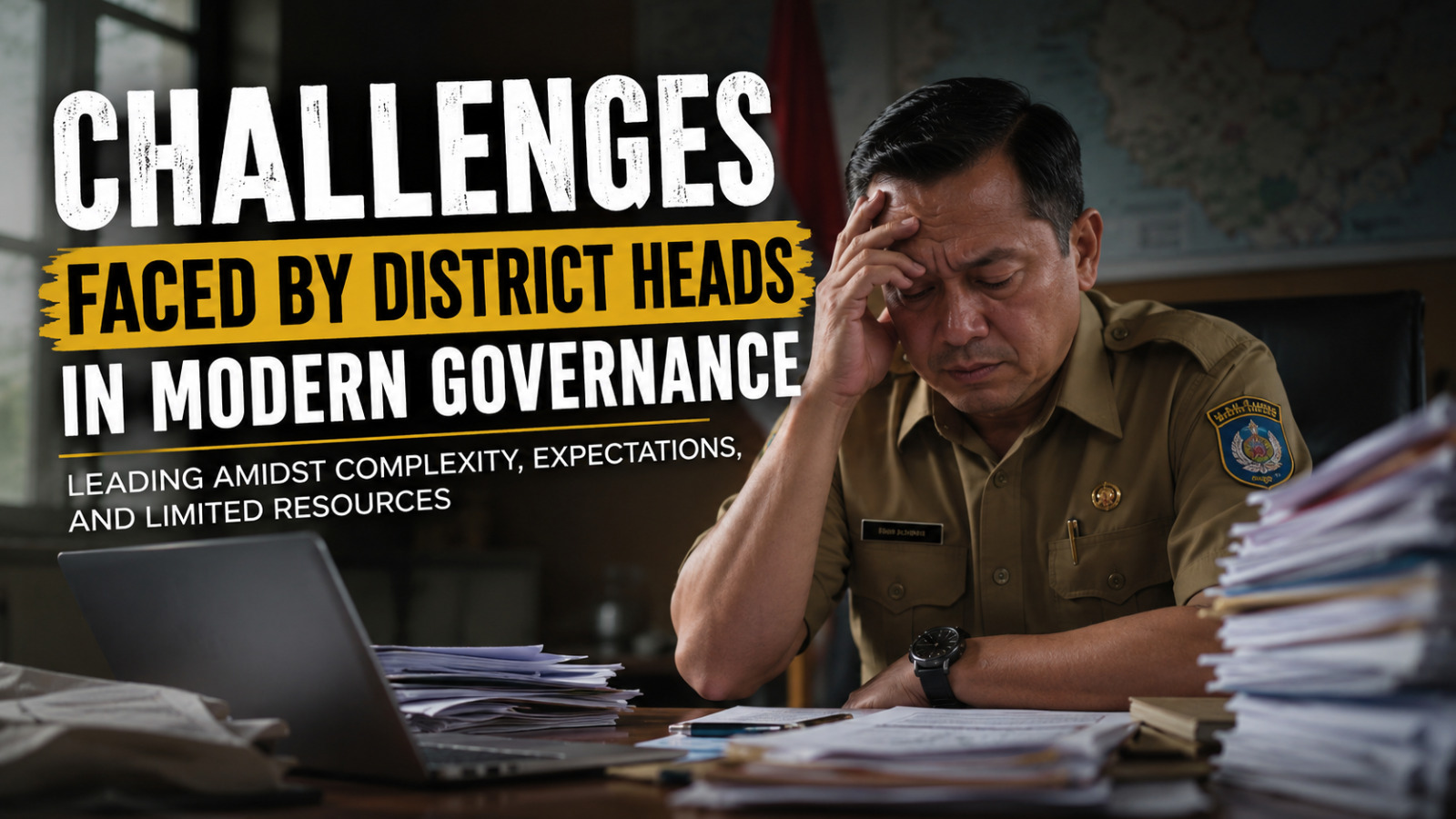
District heads play an important role in connecting local government institutions with communities. They are responsible for coordinating government activities, supporting public services, and helping implement policies at the local level. However, modern governance has become more complex because communities expect services that are faster, more transparent, and responsive. District heads must therefore adapt to technological, social, economic, and administrative changes while continuing to serve the public effectively.
CHANGING PUBLIC EXPECTATIONS
One of the biggest challenges faced by district heads is the increasing expectations of the community. People expect government services to be fast, accessible, fair, and easy to understand. They also want their complaints and suggestions to receive proper attention from local authorities. This requires district heads to improve communication and ensure that public services respond to real community needs.
Modern communities are also more informed because they can access information through digital platforms. District heads must therefore be prepared to explain government programs clearly and respond to public concerns in a professional manner. Good communication and transparency can help build public trust and reduce misunderstandings between government officials and residents.
DIGITAL TRANSFORMATION IN LOCAL GOVERNANCE
Technology has changed how governments provide services and communicate with citizens. District heads may face challenges when introducing digital public services, especially in areas where internet access, equipment, or digital skills remain limited. Government employees also need sufficient training to use digital systems properly and securely.
Digital transformation can make administrative processes more efficient, but it should not leave behind people who have limited access to technology. District heads need to support a balanced approach by improving digital services while maintaining appropriate offline alternatives. This can help ensure that modernization benefits different groups within the community.
LIMITED RESOURCES AND BUDGET CONSTRAINTS
Another important challenge is managing limited financial and human resources. Local governments often have to prioritize different programs while working within available budgets. District heads must coordinate activities carefully so that essential public services can continue to operate effectively.
Resource limitations can also affect infrastructure, community programs, administrative services, and staff development. Effective planning and coordination are therefore essential. District heads need to identify priorities, use available resources responsibly, and work with relevant government agencies and community groups to achieve better results.
COORDINATING DIFFERENT GOVERNMENT PROGRAMS
District heads often need to coordinate programs involving multiple government institutions and stakeholders. Each institution may have different responsibilities, procedures, and priorities. Without effective coordination, programs can overlap, experience delays, or fail to address community needs properly.
Strong leadership can help bring different parties together and establish clear responsibilities. District heads can encourage regular communication between government offices, village administrations, community organizations, and other relevant stakeholders. Effective coordination allows local programs to become more consistent and responsive.
MAINTAINING PUBLIC ORDER AND SOCIAL HARMONY
Maintaining public order is another challenge in modern local governance. Communities can experience disagreements related to social issues, development projects, public facilities, or other local interests. Social media can sometimes make disagreements spread more quickly and create misunderstandings among residents.
District heads need to encourage dialogue, cooperation, and peaceful problem solving. They should work within their legal authority and coordinate with appropriate institutions when public order issues arise. A proactive approach can help prevent small disagreements from developing into larger community conflicts.
RESPONDING TO ENVIRONMENTAL AND URBAN CHANGES
Population growth, urban development, waste management, flooding, and other environmental concerns can create additional responsibilities for local governments. District heads must understand local conditions and coordinate appropriate responses with relevant agencies. These challenges can be particularly difficult when infrastructure and resources are limited.
Local leaders can support sustainable community development by encouraging environmental awareness and responsible use of public spaces. They can also facilitate communication between residents and government agencies when environmental problems occur. Cooperation is important because many environmental challenges cannot be solved by one government office alone.
BUILDING PUBLIC TRUST AND TRANSPARENCY
Public trust is an important foundation of effective governance. Communities are more likely to support government programs when they understand their purpose and believe that public officials act fairly. District heads therefore need to promote transparency, accountability, and ethical administration in accordance with applicable regulations.
Clear communication about government programs can help residents understand decisions and procedures. District heads should also encourage public participation where appropriate, allowing communities to provide feedback about local issues. Trust grows when government institutions listen, communicate clearly, and deliver services consistently.
ADAPTING TO SOCIAL AND ECONOMIC CHANGES
Local communities continue to experience changes in employment, education, technology, business, and social relationships. These changes can create new opportunities but may also produce challenges for vulnerable groups. District heads must understand these developments when coordinating local government programs.
Supporting inclusive community development requires attention to different social and economic conditions. District heads can facilitate cooperation among government institutions, communities, and other stakeholders to address local priorities. Programs should be based on actual conditions rather than relying only on assumptions about what communities need.
DEVELOPING EFFECTIVE LEADERSHIP
Modern governance requires district heads to possess more than administrative knowledge. They need leadership, communication, problem-solving, coordination, and decision-making skills. They must also be able to work with people from different backgrounds and respond to changing circumstances.
Effective leadership involves listening to staff and residents while maintaining responsibility for decisions within the district head's authority. District heads should encourage teamwork and professional development among government employees. Strong local leadership can improve organizational performance and contribute to better public services.
CONCLUSION
District heads face many challenges in modern governance, from changing public expectations and digital transformation to limited resources and social issues. They must coordinate government programs while maintaining public services, supporting community development, and strengthening public trust. These responsibilities require adaptability, effective communication, responsible resource management, and strong leadership.
The success of a district head depends not only on administrative authority but also on the ability to work collaboratively with communities and other government institutions. By embracing appropriate technology, encouraging transparency, listening to residents, and responding to local conditions, district heads can help create more effective and responsive local governance.
About the Author
Gusti Ayu Tita P
Author — STEKOM University
An active author focused on academic issues, educational technology, and human resource development in the campus environment.















