
Challenges Faced By Local Brands In The Digital Era
Gusti Ayu Tita P
31 Agustus 2026
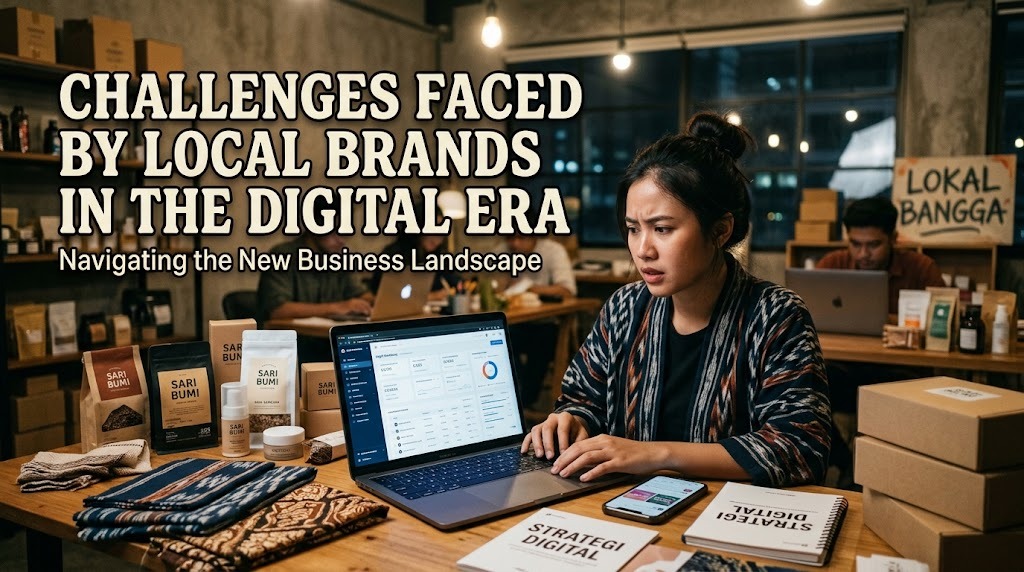
The digital era has created many opportunities for local brands to reach consumers more easily. Social media, online marketplaces, websites, and digital advertising allow businesses to promote their products beyond their local areas. However, digital development also creates new challenges that local brands must understand. Businesses now compete not only with other local brands but also with larger national and international companies.
The rapid development of technology means that consumer behavior can change quickly. Local brands need to adapt to digital trends, customer expectations, online competition, and changing marketing strategies. Businesses that fail to keep up may find it difficult to maintain visibility and customer interest. Understanding these challenges can help local brands prepare better strategies for sustainable growth.
INTENSE ONLINE COMPETITION
One of the biggest challenges for local brands is the high level of online competition. Digital platforms allow almost every business to promote its products, making it harder for individual brands to stand out. Consumers can compare prices, designs, reviews, and features from many businesses within a short time. This creates pressure for local brands to communicate their value clearly.
Large companies may also have bigger advertising budgets and more resources for digital campaigns. Local brands cannot always compete through spending alone. They need to focus on unique products, strong branding, relevant content, and close customer relationships. A clear competitive advantage can help smaller businesses gain attention despite limited resources.
KEEPING UP WITH DIGITAL TRENDS
Digital platforms continue to change their features, algorithms, and popular content formats. A marketing strategy that works today may produce different results in the future. Local brands need to monitor digital trends and consumer behavior regularly. This can require significant time and effort, especially for small businesses with limited staff.
Following every trend is also not a good solution. Some trends may not match the brand's target audience or identity. Businesses should focus on trends that are relevant and can create genuine value. Strategic adaptation allows local brands to stay current without losing their unique character.
LIMITED DIGITAL MARKETING RESOURCES
Many local brands operate with limited financial and human resources. Professional photography, advertising, website development, content production, and digital tools can require additional investment. Small businesses may also have only a few employees who handle several responsibilities at once. This can make it difficult to maintain consistent digital marketing activities.
However, limited resources do not necessarily prevent a brand from developing an online presence. Businesses can prioritize platforms that are most relevant to their customers and create simple but useful content. Efficient resource management can help brands focus their efforts on activities that have the greatest potential impact.
BUILDING BRAND AWARENESS ONLINE
Getting noticed online can be difficult because consumers encounter large amounts of content every day. Local brands need to create content that is relevant, recognizable, and useful to their target audience. Simply posting product advertisements repeatedly may not be enough to attract attention. Businesses need to communicate why their products deserve consideration.
Brand awareness also takes time to develop. A business should maintain consistent visual elements, messages, and customer experiences across digital channels. Brand consistency can help consumers recognize the business when they encounter its content repeatedly. Over time, familiarity can contribute to stronger brand recognition.
MAINTAINING CONTENT QUALITY
Creating digital content consistently can become a major challenge for local businesses. Social media users are exposed to photos, videos, articles, and advertisements from countless sources. Poor quality or repetitive content may receive little attention. Local brands therefore need to balance content quality and publishing consistency.
Content does not always have to be highly complicated or expensive. Businesses can share product demonstrations, customer stories, educational information, behind the scenes activities, and useful tips. The most important factor is whether the content provides value to the intended audience. Relevant content can help a brand maintain engagement more effectively.
DEALING WITH NEGATIVE REVIEWS
Online reviews can strongly influence consumer decisions. Positive reviews can increase confidence, while negative reviews may discourage potential buyers. Local brands need to be prepared to handle customer complaints and negative feedback professionally. Ignoring legitimate problems can damage the brand's reputation.
Businesses should respond calmly and try to understand the underlying issue. If the complaint is valid, offering an appropriate solution can demonstrate responsibility. Even when criticism cannot be completely avoided, professional reputation management can reduce its negative impact. Customers may appreciate brands that are willing to listen and improve.
PROTECTING CUSTOMER DATA
Digital businesses often collect customer information during purchases, registrations, or communication. Local brands need to understand the importance of data privacy and information security. Poor handling of personal information can create financial, legal, and reputational risks. Customers need confidence that their information is treated responsibly.
Businesses should limit data collection to legitimate needs and use appropriate security practices. They should also communicate clearly when customer information is required for a service. Responsible data management can strengthen consumer confidence and support long term relationships.
ADAPTING TO CHANGING CONSUMER BEHAVIOR
Digital technology has changed how consumers discover, compare, and purchase products. Customers may research products through social media, search engines, reviews, and online communities before making decisions. Local brands need to understand these changing customer journeys. A business that focuses on only one stage of the buying process may miss valuable opportunities.
Consumer expectations can also change quickly. Customers may expect fast responses, convenient payment methods, reliable delivery, and clear product information. Businesses should regularly evaluate their customer experience and identify areas for improvement. Customer centered strategies can help local brands remain relevant in a changing market.
COMPETING ON PRICE
Price competition can be challenging for local brands, especially when larger businesses can benefit from economies of scale. Customers can easily compare prices across multiple online stores. Competing only through low prices can reduce profit margins and make long term growth difficult. Local brands need to communicate the broader value of their products.
Value can include quality, uniqueness, customer service, design, durability, or local production. Businesses should explain these benefits clearly rather than relying entirely on discounts. Value based competition can help brands avoid becoming dependent on constant price reductions.
MANAGING ONLINE SALES AND LOGISTICS
Selling through digital platforms can increase orders, but it also creates operational challenges. Local brands need to manage inventory, packaging, order processing, shipping, and returns effectively. Delays or incorrect orders can negatively affect customer satisfaction. As sales increase, businesses may need to improve their internal systems.
Reliable logistics are particularly important for customers who expect convenient online shopping. Businesses should choose delivery methods that match their products and target markets. Efficient order management can reduce mistakes and create a smoother customer experience. Operational improvements should therefore develop alongside digital marketing efforts.
DEVELOPING DIGITAL SKILLS
Technology is useful only when businesses know how to use it effectively. Local entrepreneurs and employees may need skills in content creation, social media management, search engine optimization, online advertising, analytics, and e commerce. Learning these skills can require time and continuous practice. Digital tools also change frequently, making ongoing learning necessary.
Businesses can improve their capabilities through training, online learning, collaboration, or hiring specialists when appropriate. They do not need to master every digital skill at once. Prioritizing essential skills can help small businesses use their resources more efficiently. Strong digital capabilities can gradually improve competitiveness.
CONCLUSION
Local brands face various challenges in the digital era, including intense online competition, changing trends, limited resources, negative reviews, data security concerns, and changing consumer expectations. Digital transformation creates opportunities, but businesses must be prepared to adapt continuously. Strong product quality alone may not be enough if customers cannot discover or trust the brand online.
The most effective approach is to combine digital adaptability, strong branding, quality content, customer focus, responsible data management, and efficient operations. Local brands should choose digital strategies that match their capabilities instead of trying to follow every trend. Continuous learning and improvement can help businesses respond to changes more effectively. With the right strategy, digital challenges can become opportunities for stronger and more sustainable local brand growth.
About the Author
Gusti Ayu Tita P
Author — STEKOM University
An active author focused on academic issues, educational technology, and human resource development in the campus environment.