
Challenges Faced by Managers in the Digital Era
Gusti Ayu Tita P
13 Agustus 2026
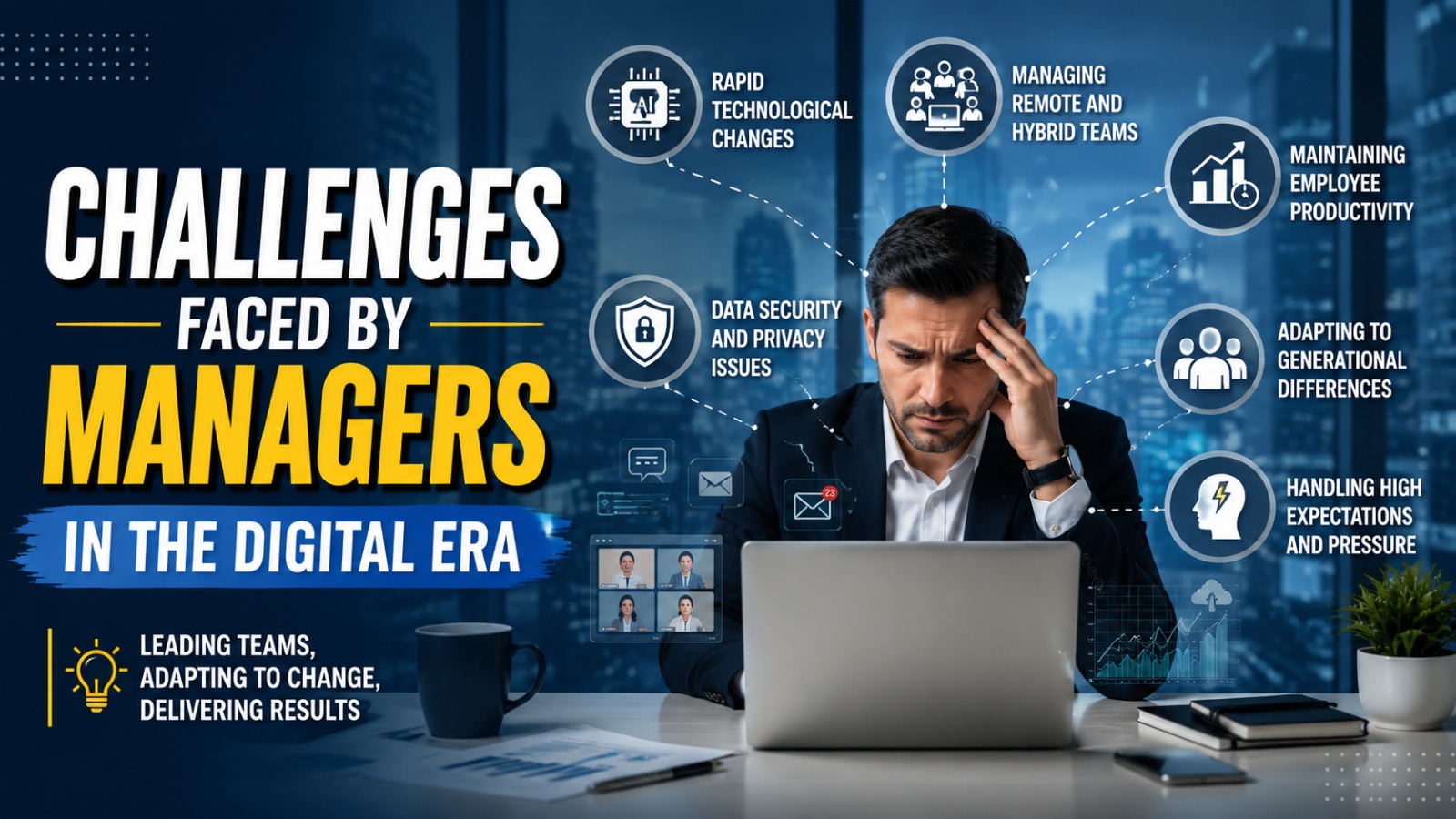
The digital era has transformed the way companies operate, communicate, and compete in the global market. Technology continues to evolve rapidly, forcing businesses to adapt to new systems, tools, and working methods. In this situation, managers play a crucial role in ensuring that teams remain productive, innovative, and competitive. However, managing people and operations in the digital age is not always easy.
Managers today face various challenges, from handling remote teams to adapting to technological changes. To stay effective, leaders must develop strong communication skills, digital literacy, and the ability to make quick decisions in a fast-changing environment.
RAPID TECHNOLOGICAL CHANGES
One of the biggest challenges faced by managers is keeping up with rapid technological developments. New software, automation systems, and artificial intelligence tools continue to emerge every year. Managers are expected to understand these technologies and determine how they can improve business performance.
If managers fail to adapt, companies may lose competitiveness in the market. Therefore, continuous learning and digital training are essential for leaders who want to stay relevant in the modern workplace.
MANAGING REMOTE AND HYBRID TEAMS
The rise of remote and hybrid work systems has changed traditional management styles. Managers can no longer rely solely on face-to-face supervision. Instead, they must learn how to maintain communication, collaboration, and employee engagement through digital platforms.
This challenge becomes even more difficult when team members work in different locations or time zones. Managers must ensure that every employee feels connected, motivated, and valued despite physical distance.
MAINTAINING EMPLOYEE PRODUCTIVITY
Digital distractions are another major concern in the modern workplace. Social media, constant notifications, and online meetings can reduce focus and efficiency. Managers must create strategies to help employees stay productive without causing stress or burnout.
Setting clear goals, prioritizing tasks, and using productivity tools are effective ways to improve work performance. Managers should also encourage healthy work-life balance to maintain employee well-being.
DATA SECURITY AND PRIVACY ISSUES
In the digital era, companies store large amounts of sensitive information online. This increases the risk of cyberattacks, data leaks, and privacy violations. Managers are responsible for ensuring that employees follow security policies and use digital systems safely.
A single security mistake can damage a company’s reputation and financial stability. As a result, managers must work closely with IT teams to strengthen cybersecurity awareness in the workplace.
ADAPTING TO GENERATIONAL DIFFERENCES
Modern workplaces often consist of employees from different generations, including Baby Boomers, Millennials, and Generation Z. Each generation has unique communication styles, work preferences, and expectations.
Managers need to understand these differences to build harmonious teamwork. Flexible leadership approaches and open communication can help create a more inclusive and collaborative work environment.
HANDLING HIGH EXPECTATIONS AND PRESSURE
Digital transformation has increased competition in almost every industry. Companies expect managers to achieve faster results, improve efficiency, and drive innovation continuously. This pressure can become overwhelming if not managed properly.
Successful managers must remain calm under pressure and develop strong problem-solving abilities. Emotional intelligence and adaptability are also important qualities that help leaders face modern business challenges effectively.
THE IMPORTANCE OF DIGITAL LEADERSHIP
To overcome digital-era challenges, managers must embrace digital leadership. This means being open to innovation, encouraging creativity, and supporting continuous improvement within teams.
A strong digital leader not only understands technology but also knows how to inspire employees during times of change. Companies with adaptive and forward-thinking managers are more likely to succeed in the modern business landscape.
CONCLUSION
The digital era brings both opportunities and challenges for managers. Rapid technological changes, remote work systems, cybersecurity threats, and high workplace expectations require leaders to become more flexible and innovative. Managers who continue learning and adapting will be better prepared to lead successful teams in the future.
In today’s competitive world, effective leadership is no longer just about giving instructions. It is about guiding teams through change, building strong communication, and creating a positive work culture in the digital age.
About the Author
Gusti Ayu Tita P
Author — STEKOM University
An active author focused on academic issues, educational technology, and human resource development in the campus environment.















