
Challenges Faced by Ministry Civil Servants and Effective Ways to Overcome Them
Gusti Ayu Tita P
27 Juli 2026
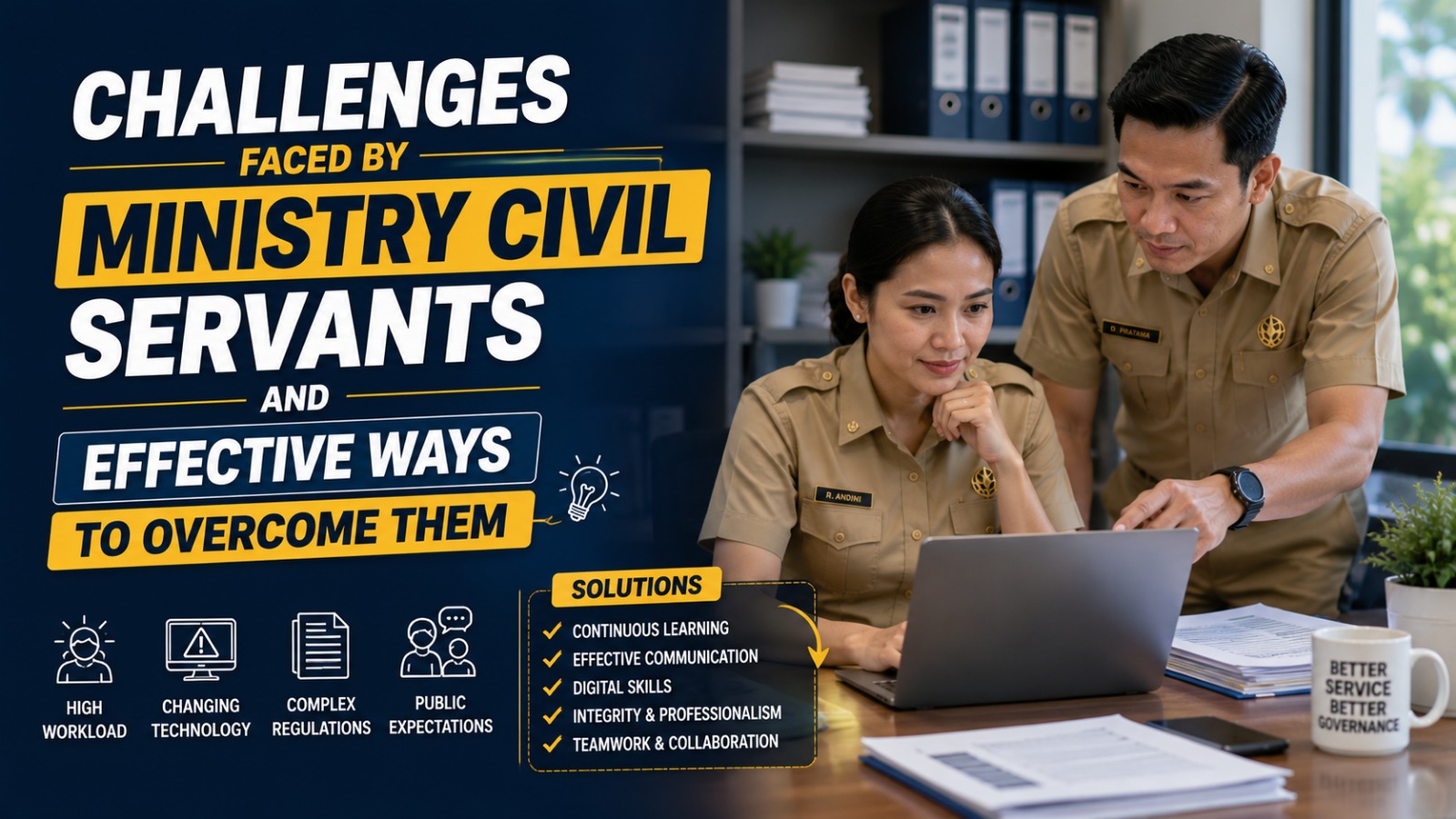
Ministry civil servants play an important role in implementing government policies, managing public administration, and supporting services for citizens. Their responsibilities require them to work professionally while responding to changes in technology, regulations, and public expectations. However, working in a government institution also presents various challenges that can affect productivity and service quality.
These challenges can come from internal factors, such as limited skills or workload, as well as external factors, including technological changes and increasingly complex public needs. To address these issues, ministry civil servants need to develop adaptability, digital competence, communication skills, integrity, and problem-solving abilities. With the right strategies and organizational support, these challenges can be managed more effectively.
ADAPTING TO RAPID TECHNOLOGICAL CHANGES
One of the major challenges faced by ministry civil servants is the rapid development of technology. Government institutions increasingly use digital platforms for administration, data management, communication, and public services. Civil servants who are not familiar with new systems may find it difficult to adjust their working methods.
The solution is to encourage continuous digital learning through training, workshops, and practical guidance. Civil servants should gradually improve their ability to use relevant digital tools instead of trying to master everything at once. Ministries also need to provide reliable infrastructure and technical support so employees can adapt to digital transformation more confidently.
MANAGING HIGH WORKLOADS AND COMPLEX RESPONSIBILITIES
Ministry civil servants may face workloads that involve multiple tasks, deadlines, and responsibilities at the same time. Complex government programs can require coordination between different teams and institutions. Without effective planning, a heavy workload may reduce productivity and affect the quality of work.
A practical way to overcome this challenge is to apply effective time management and establish clear priorities. Civil servants can organize tasks according to urgency and importance, set realistic deadlines, and divide large assignments into manageable stages. Managers can also help by distributing responsibilities fairly and reviewing workloads when necessary.
KEEPING UP WITH CHANGING REGULATIONS AND POLICIES
Government regulations and policies may change as national priorities and public needs evolve. Civil servants need to understand these changes because their work must follow applicable laws and administrative procedures. Failure to keep up with new regulations can lead to misunderstandings or mistakes in implementation.
To address this challenge, civil servants should develop a habit of continuous professional learning. They can participate in official briefings, training programs, and discussions related to their areas of responsibility. Ministries should also ensure that updated regulations and guidelines are communicated clearly so employees can apply them correctly.
IMPROVING DIGITAL AND DATA SECURITY AWARENESS
The use of digital systems creates opportunities for more efficient government services but also introduces cybersecurity risks. Civil servants may work with personal information, internal documents, and other sensitive data. Weak security practices can increase the risk of unauthorized access or data breaches.
The solution requires strong cybersecurity awareness across all levels of an organization. Civil servants should follow security procedures, protect account credentials, verify suspicious messages, and use government systems responsibly. Regular awareness programs can help employees recognize common digital threats and understand their role in protecting government information.
RESPONDING TO INCREASING PUBLIC EXPECTATIONS
Citizens increasingly expect government services to be fast, accessible, transparent, and responsive. Meeting these expectations can be challenging, especially when administrative procedures are complex or resources are limited. Civil servants may also need to handle complaints and questions from people with different needs and levels of understanding.
A citizen-centered approach can help ministries respond more effectively. Civil servants should communicate service requirements clearly and treat every citizen fairly and respectfully. Feedback and complaint channels should also be used as sources of information for improving service procedures and identifying recurring problems.
MAINTAINING PROFESSIONALISM AND INTEGRITY
Civil servants are expected to uphold high standards of professionalism and ethical conduct. However, maintaining these standards consistently can be challenging in a complex work environment. Pressure, conflicts of interest, or unclear situations may create difficult decisions that require careful judgment.
Strong integrity and accountability are essential for overcoming these challenges. Civil servants should follow established regulations, avoid conflicts of interest, and be prepared to take responsibility for their decisions. Organizations can support ethical behavior through clear standards, leadership examples, training, and consistent enforcement of applicable rules.
CONCLUSION
Ministry civil servants face various challenges, including rapid technological changes, heavy workloads, changing regulations, cybersecurity risks, increasing public expectations, and the need to maintain professionalism and integrity. These challenges require civil servants to continuously develop their skills and adapt to changes in the government work environment.
By strengthening digital competence, time management, professional learning, cybersecurity awareness, communication skills, and integrity, civil servants can respond to workplace challenges more effectively. With continuous learning and proper organizational support, they can improve productivity, maintain service quality, and contribute to more effective and responsive government administration.
About the Author
Gusti Ayu Tita P
Author — STEKOM University
An active author focused on academic issues, educational technology, and human resource development in the campus environment.















