Challenges Faced by Regents in Leading and Developing Their Regions
Gusti Ayu Tita P
12 Agustus 2026
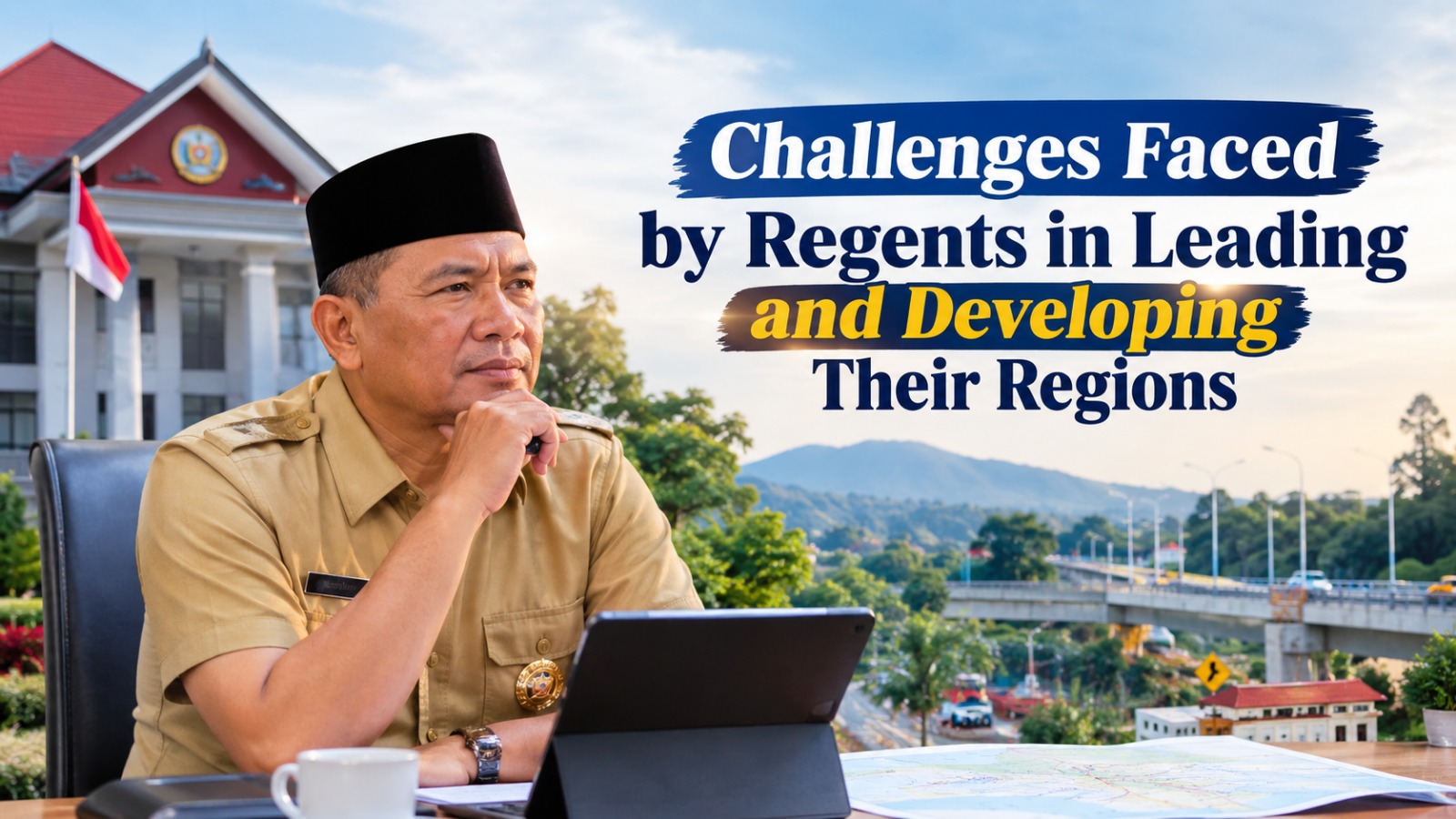
Leading a region is a complex responsibility that requires strong leadership, careful planning, and continuous cooperation. A regent must manage government administration while addressing the economic, social, infrastructure, and environmental needs of the community. Each regency has different challenges depending on its geography, population, economic potential, and available resources. At the same time, citizens expect government programs to produce visible and meaningful results. Understanding these challenges is important for building effective regional leadership and sustainable development.
MANAGING LIMITED REGIONAL RESOURCES
One of the major challenges faced by a regent is managing limited public resources. Regional governments have to determine which programs should receive priority while considering available budgets, personnel, infrastructure, and other resources. Public needs can be much greater than the resources available to address them. A regent therefore needs to establish clear priorities based on community needs and regional development plans. Effective resource management is essential to prevent waste and improve the impact of government programs.
Resource limitations can become more difficult when unexpected problems occur. Natural disasters, economic disruptions, or urgent public service needs may require additional government attention. Regional leaders need to remain flexible while maintaining important long-term development priorities. Careful budgeting and regular evaluation can help government agencies respond to changing circumstances. Responsible resource management can strengthen regional government performance.
REDUCING POVERTY AND INEQUALITY
Poverty remains a significant challenge for many regional governments. Economic growth does not automatically ensure that all residents receive equal opportunities. Some communities may have limited access to education, healthcare, employment, transportation, or other basic services. A regent needs to develop policies that address these different forms of disadvantage. Poverty reduction should focus not only on short-term assistance but also on creating sustainable opportunities.
Regional inequality can also exist between urban and rural areas. Remote communities may face greater transportation and infrastructure barriers than residents in more developed locations. Local government needs accurate data to identify areas that require greater attention. Programs should be targeted carefully so that limited public resources reach people who need them most. Inclusive policies can support community welfare and reduce long-term inequality.
IMPROVING PUBLIC SERVICES
Citizens expect government services to be fast, accessible, fair, and professional. However, public services can face challenges such as complicated procedures, limited staff, inadequate facilities, and uneven access between different areas. A regent must coordinate regional government organizations to improve these services. Public service improvement requires continuous monitoring rather than occasional changes.
Technology can help simplify some administrative processes, but digital transformation also presents challenges. Not every citizen has reliable internet access or sufficient digital skills. Government therefore needs to provide suitable alternatives while gradually improving digital services. Staff training is equally important because technology cannot replace the need for capable public servants. Better service delivery can increase public trust in local government.
DEVELOPING REGIONAL INFRASTRUCTURE
Infrastructure development is another major challenge for regents. Roads, bridges, drainage, clean water systems, transportation facilities, and digital connectivity require substantial investment. Some regions also have difficult geographical conditions that make construction more expensive or complicated. A regent must determine which infrastructure projects are most urgent and beneficial to the community. Regional infrastructure development should be based on clear priorities and long-term planning.
Building infrastructure is only part of the responsibility. Existing facilities also need regular maintenance to remain safe and functional. Poor maintenance can reduce the value of previous investments and create additional costs. Infrastructure planning should therefore include construction, maintenance, safety, accessibility, and environmental considerations. Well-managed infrastructure can strengthen regional economic development and improve daily life.
STRENGTHENING THE LOCAL ECONOMY
Regional economic development can be challenging when local industries face limited investment, weak market access, low productivity, or inadequate skills. A regent needs to understand the economic potential of the region and create policies that support productive activities. Agriculture, fisheries, tourism, trade, manufacturing, and creative industries may require different forms of government support. Local economic development should be designed according to actual regional conditions.
Small and Medium Enterprises are also important contributors to local economies. However, many small businesses may struggle with technology, management, marketing, capital information, or market competition. Government can support them through appropriate training, business information, market connections, and simplified services within its authority. Partnerships with private organizations and educational institutions can provide additional support. A stronger local business environment can create employment opportunities and increase household incomes.
CREATING QUALITY EMPLOYMENT
Providing enough productive employment opportunities is another challenge. A growing population can increase demand for jobs, especially among young people. If the local economy cannot absorb new workers, unemployment or underemployment may become more serious. A regent can support job creation by encouraging business growth, responsible investment, vocational training, and entrepreneurship. Employment development should be connected to the actual skills required by local industries.
Skills mismatches can make employment challenges even more difficult. Some graduates may have qualifications that do not match available jobs, while businesses may struggle to find workers with specific skills. Cooperation between government, schools, training centers, and employers can help reduce this gap. Programs should also consider digital skills because technology is changing many occupations. A skilled workforce can improve both individual employment prospects and regional competitiveness.
MAINTAINING ENVIRONMENTAL SUSTAINABILITY
Economic development can create environmental pressures if it is not planned responsibly. Regions may face problems involving waste, pollution, water resources, land use, forest protection, or natural resource management. A regent must balance economic priorities with environmental responsibilities within the authority of the regional government. Sustainable regional development requires long-term thinking and compliance with environmental regulations.
Climate-related risks and natural disasters can also affect regional development. Floods, landslides, droughts, and other hazards may damage infrastructure and disrupt economic activity. Regional governments need appropriate preparedness, risk reduction, and response strategies. Communities should also be involved in environmental protection and disaster awareness. Protecting natural resources can strengthen the region's resilience and support future generations.
MANAGING RAPID TECHNOLOGICAL CHANGE
Technology is changing how governments, businesses, and citizens interact. Digital platforms can improve public services, but they also require infrastructure, trained personnel, reliable data, and appropriate security measures. A regent must ensure that digital transformation supports actual community needs rather than becoming technology for its own sake. Digital government should make services easier while maintaining accessibility for residents who are less familiar with technology.
Cybersecurity and data protection are also important concerns. Government institutions handle various types of administrative information that must be managed responsibly. Staff need appropriate knowledge of digital security and data management. Citizens should also receive clear information about digital services and how their data is handled. Responsible technology management can improve efficiency while protecting public trust.
BUILDING TRANSPARENT AND ACCOUNTABLE GOVERNMENT
Transparency and accountability are essential but can be challenging to maintain consistently. Citizens want to understand how public resources are used and how government programs are performing. A regent needs to encourage proper administrative procedures, monitoring, reporting, and public information. Transparent governance can help reduce misunderstandings and strengthen confidence in regional institutions.
Accountability also requires government officials to respond appropriately when programs do not achieve their intended results. Evaluation should identify weaknesses and provide opportunities for improvement. Collaboration with oversight institutions and public participation mechanisms can strengthen accountability. Government communication should also be clear and based on reliable information. These practices can contribute to good governance.
COORDINATING DIFFERENT INTERESTS
Regional development involves many stakeholders with different priorities. Citizens, businesses, community organizations, government agencies, educational institutions, and other groups may have different expectations. A regent must coordinate these interests while remaining within legal authority and regional development priorities. Stakeholder coordination can prevent conflicts and improve the quality of development decisions.
Effective communication is important when different groups disagree. Government leaders need to explain policies clearly and provide appropriate opportunities for consultation. Listening to different perspectives does not mean accepting every demand, but it can help identify practical solutions. Strong collaboration can make development programs more widely supported. This approach can create a more stable environment for regional development.
RESPONDING TO PUBLIC EXPECTATIONS
Citizens naturally expect improvements in their daily lives after regional development programs are implemented. They may expect better roads, cleaner public facilities, stronger education, easier healthcare access, more jobs, and efficient government services. Meeting all expectations immediately may not be possible because government resources and authority are limited. A regent must therefore communicate priorities and limitations honestly. Public expectations management is an important part of responsible leadership.
Regular communication can help residents understand government programs and their progress. Citizens should also have appropriate channels to provide feedback and raise concerns. Government leaders can use this information to identify problems and adjust programs when necessary. Maintaining realistic expectations does not mean lowering development goals. It means building trust through clear communication, measurable results, and consistent action.
CONCLUSION
Regents face many challenges when leading and developing their regions. These include limited resources, poverty, inequality, public service quality, infrastructure needs, employment, economic development, environmental sustainability, technological change, and accountability. Addressing these challenges requires strategic leadership, accurate data, responsible resource management, strong coordination, and community participation. No single program can solve every regional problem, so development must be approached through coordinated and long-term strategies. With effective governance and a strong commitment to public welfare, a regent can turn regional challenges into opportunities for creating a more resilient, prosperous, and developed region.
About the Author
Gusti Ayu Tita P
Author — STEKOM University
An active author focused on academic issues, educational technology, and human resource development in the campus environment.