
Challenges for Civil Servants in Facing Government Digital Transformation
Gusti Ayu Tita P
29 Juli 2026
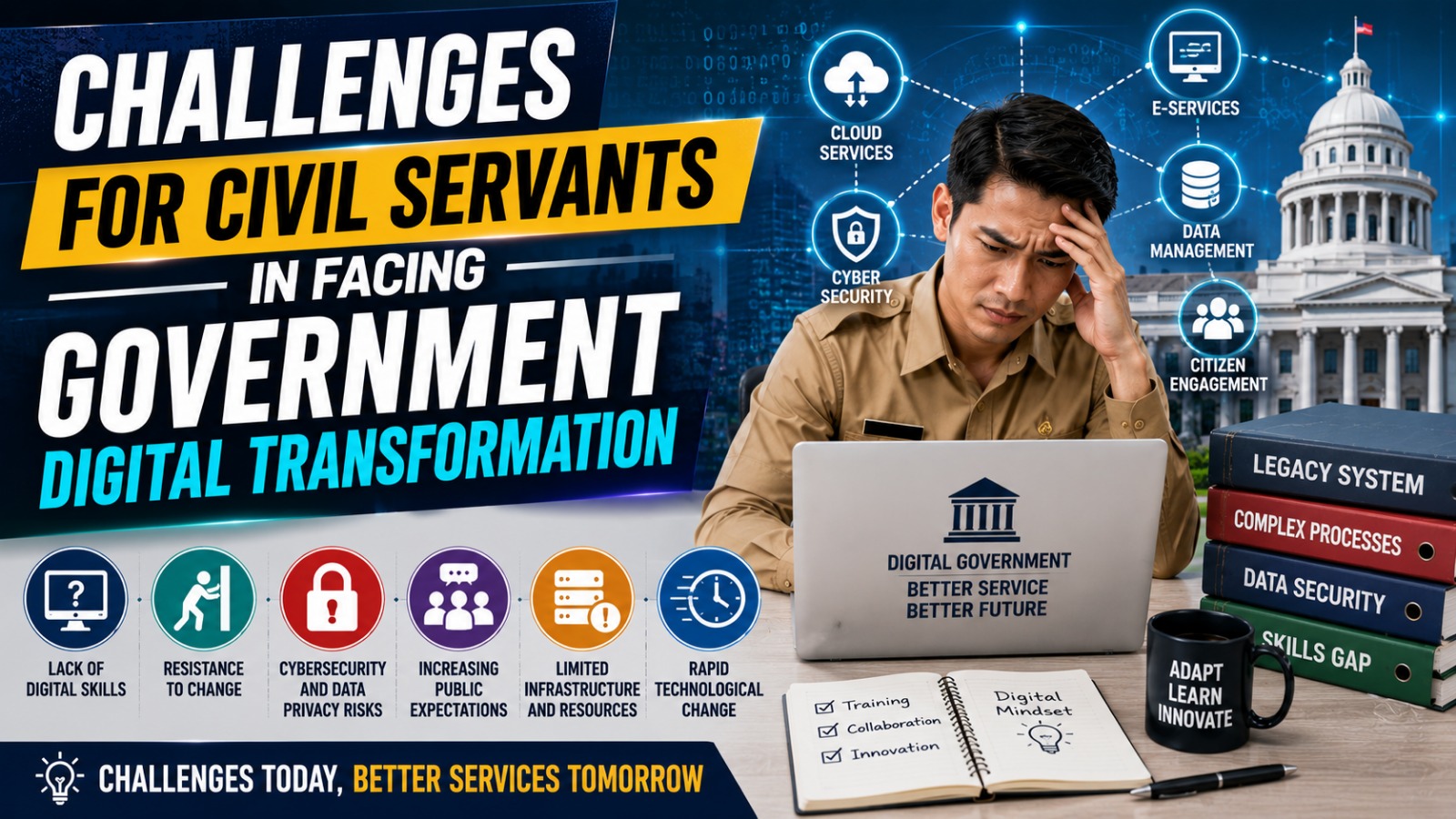
Government digital transformation has become an important part of modern public administration. Many governments around the world are adopting digital systems to improve efficiency, transparency, and public service quality. While digital transformation offers many advantages, it also creates significant challenges for civil servants.
Civil servants must adapt to technological changes, learn new skills, and maintain service quality in a rapidly evolving environment. Understanding these challenges is important to ensure that government institutions can successfully implement digital transformation programs.
UNDERSTANDING GOVERNMENT DIGITAL TRANSFORMATION
Digital transformation refers to the use of technology to improve government operations and public services. This process includes online administration systems, digital databases, electronic services, and automated workflows.
The main goals of digital transformation include:
- Improving service efficiency
- Increasing transparency
- Reducing administrative delays
- Enhancing public accessibility
- Supporting data-driven decision-making
Although these improvements benefit both governments and citizens, the transition process is not always easy for civil servants.
LACK OF DIGITAL SKILLS
One of the biggest challenges faced by civil servants is the lack of digital literacy and technology skills. Some employees may not be familiar with modern software, online systems, or digital communication tools.
Without proper training, civil servants may struggle to adapt to new technologies. This situation can reduce productivity and slow down the implementation of digital services.
To overcome this challenge, governments need to provide:
- Technology training programs
- Digital literacy workshops
- Continuous technical support
- Opportunities for skill development
Improving digital competence is essential for successful transformation.
RESISTANCE TO CHANGE
Change can create uncertainty in the workplace. Some civil servants may feel uncomfortable with new systems because they are already familiar with traditional work methods.
Resistance to change often occurs due to:
- Fear of technology
- Concerns about job security
- Lack of understanding
- Limited training opportunities
- Anxiety about increased workload
Strong leadership and effective communication are important to help employees adapt positively to organizational changes.
CYBERSECURITY AND DATA PRIVACY RISKS
Digital government systems store large amounts of sensitive information. As technology usage increases, cybersecurity threats also become more serious.
Civil servants must understand the importance of:
- Protecting confidential data
- Preventing cyberattacks
- Using secure systems
- Following digital security policies
- Maintaining data privacy
A lack of cybersecurity awareness can lead to serious risks, including data breaches and system failures.
INCREASING PUBLIC EXPECTATIONS
Digital transformation has changed public expectations regarding government services. Citizens now expect services to be faster, more transparent, and accessible online at any time.
Civil servants face pressure to provide:
- Quick responses
- Accurate information
- User-friendly digital services
- Efficient online support
- Reliable communication
Meeting these expectations requires continuous improvement in both technology and employee performance.
LIMITED INFRASTRUCTURE AND RESOURCES
Not all government institutions have sufficient infrastructure to support digital transformation. Some offices may experience problems such as slow internet connections, outdated systems, or limited technological equipment.
Budget limitations can also slow down modernization efforts. Without proper infrastructure, civil servants may find it difficult to work efficiently in digital environments.
Governments need to invest in modern technology and infrastructure to support effective public service delivery.
BALANCING TECHNOLOGY AND HUMAN INTERACTION
Although digital services improve efficiency, human interaction remains important in public service. Some citizens still require direct assistance, especially elderly individuals or people with limited digital skills.
Civil servants must balance technology usage with personalized service. They need to ensure that digital transformation does not reduce empathy, communication quality, and accessibility for all citizens.
ADAPTING TO RAPID TECHNOLOGICAL CHANGE
Technology continues to evolve quickly, forcing civil servants to learn continuously. New software, digital platforms, and automated systems require regular adaptation.
Employees who cannot adapt may struggle to maintain productivity and service quality. Therefore, continuous learning and flexibility are essential in modern public administration.
CONCLUSION
Government digital transformation brings both opportunities and challenges for civil servants. Lack of digital skills, resistance to change, cybersecurity risks, and increasing public expectations are some of the major issues faced during modernization.
To overcome these challenges, governments must invest in employee training, technological infrastructure, and strong organizational support. By improving digital readiness and adaptability, civil servants can contribute to more efficient, transparent, and citizen-focused public services in the future.
About the Author
Gusti Ayu Tita P
Author — STEKOM University
An active author focused on academic issues, educational technology, and human resource development in the campus environment.















