
Challenges Governors Face in Leading Regions
Gusti Ayu Tita P
12 Agustus 2026
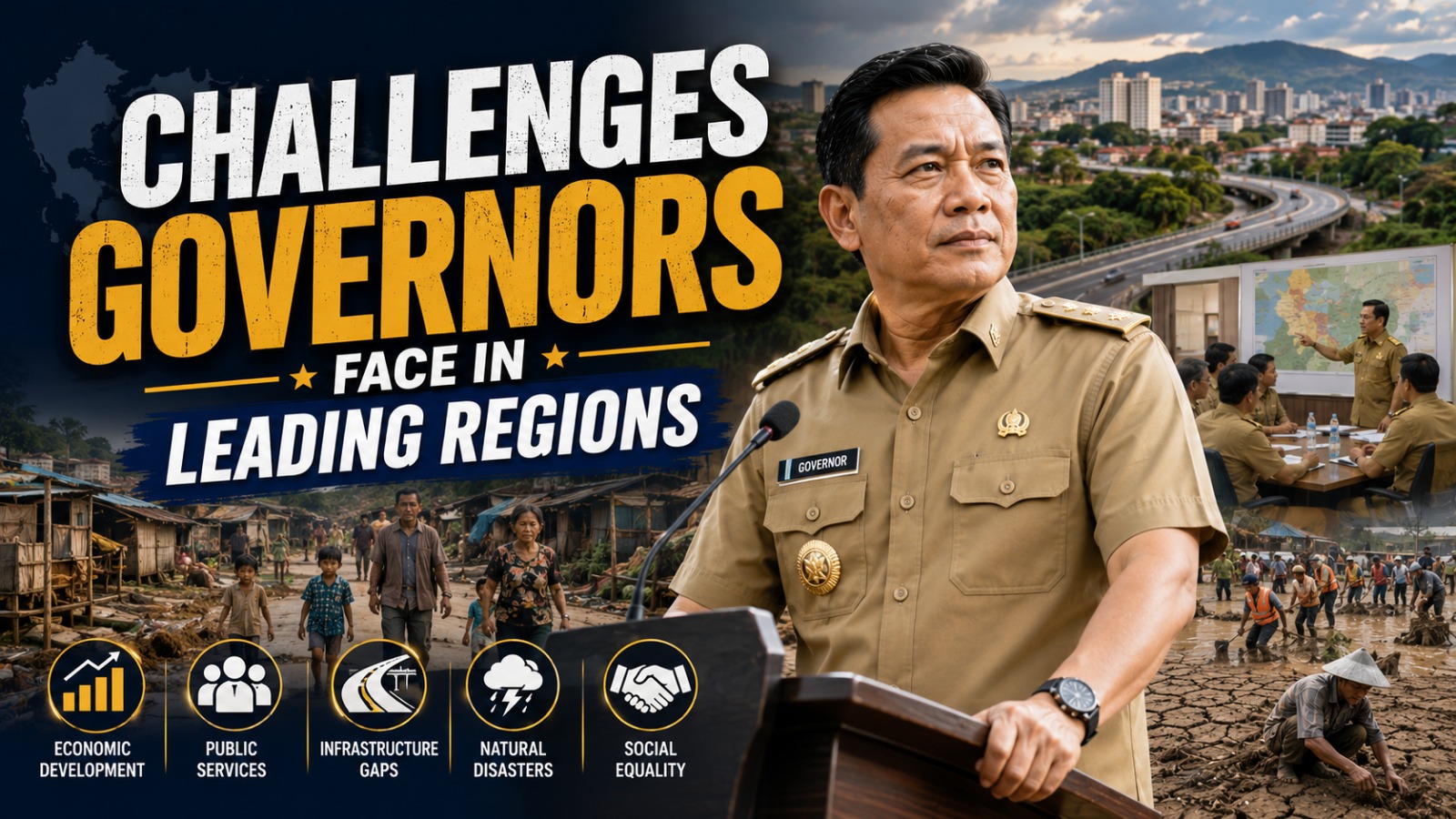
Governors have an important role in leading regional governments and improving the quality of life of their communities. They must manage public services, support economic development, coordinate government institutions, and respond to changing social conditions. These responsibilities require strong leadership, careful planning, and the ability to make decisions based on reliable information.
Leading a region is not always easy because every province has different challenges and priorities. Governors must balance public expectations with available resources while ensuring that government programs remain effective. Understanding these challenges is important to see why regional leadership requires cooperation, accountability, and long-term strategies.
MANAGING LIMITED REGIONAL RESOURCES
One of the main challenges governors face is managing limited financial and human resources. Regional governments have many priorities, including education, healthcare, infrastructure, transportation, environmental protection, and social services. However, available budgets cannot always cover every need at the same time. Governors must therefore establish clear priorities based on community needs and development goals.
Effective budgeting requires careful planning and accountability. Public funds should be directed toward programs that provide meaningful benefits rather than unnecessary spending. Governors also need to monitor program performance so that resources can be used efficiently and adjusted when results do not meet expectations.
REDUCING REGIONAL INEQUALITY
Regional inequality can make leadership more complicated. Some areas may have better infrastructure, education, healthcare, and economic opportunities than others. Rural, remote, or less-developed communities may face greater difficulties accessing basic services. Governors need to ensure that development does not focus only on major cities or economically advanced areas.
Reducing inequality requires accurate data and targeted policies. Infrastructure, education, healthcare, and economic programs should be adapted to the conditions of each area. A balanced development strategy can help ensure that people in different parts of a province have more equal opportunities.
IMPROVING PUBLIC SERVICES
Citizens expect government services to be accessible, reliable, and responsive. Governors must work to improve services such as healthcare, education, transportation, administration, and social assistance. Poor service quality can reduce public trust and make government programs less effective.
Technology can help improve efficiency through digital administration and online public services. However, not all citizens have the same access to technology or digital skills. Governors must therefore ensure that digital transformation is accompanied by accessible alternatives for communities that still need direct services.
CREATING JOBS AND SUPPORTING ECONOMIC GROWTH
Economic development is another major challenge for governors. Regions need sufficient employment opportunities to support household incomes and reduce unemployment. However, economic conditions can vary significantly between provinces, making a single strategy unsuitable for every region.
Governors need to identify and develop local economic potential while supporting small businesses, investment, agriculture, tourism, manufacturing, and other relevant sectors. Workforce training is also important because employers increasingly require new technical and digital skills. Cooperation between government, businesses, and educational institutions can help create a stronger regional labor market.
COORDINATING DIFFERENT LEVELS OF GOVERNMENT
Regional development often involves the central government, provincial government, and local governments. Governors need to coordinate with mayors, regents, government agencies, and other institutions to ensure that policies and programs work together. Differences in priorities can make this coordination challenging.
Strong communication and clearly defined responsibilities can reduce conflicts and overlapping programs. Governors must also coordinate issues that cross administrative boundaries, such as transportation, environmental management, water resources, and disaster response. Effective cooperation can make regional programs more efficient and responsive.
RESPONDING TO ENVIRONMENTAL AND DISASTER RISKS
Environmental problems can have a direct impact on public welfare. Pollution, deforestation, waste management issues, flooding, and land degradation can threaten communities and economic activities. Governors must balance development goals with environmental protection within their legal responsibilities.
Disaster preparedness is equally important in regions exposed to natural hazards. Governments need early warning systems, emergency plans, resilient infrastructure, and public education. Quick coordination during emergencies can reduce damage and help communities recover more effectively.
MAINTAINING PUBLIC TRUST
Public trust is essential for effective regional leadership. Citizens are more likely to support government programs when they believe leaders are transparent, responsible, and responsive. Governors therefore need to communicate government policies clearly and provide reliable information about public programs.
Criticism and public feedback should also be treated as part of democratic governance. Governors can use public consultations, complaint systems, and community engagement to understand problems directly. Listening to citizens can help improve policies and strengthen the relationship between government and society.
ADAPTING TO RAPID CHANGES
Governors must respond to changes in technology, the economy, demographics, and social expectations. Policies that were effective in the past may not always solve current problems. Regional leaders therefore need to monitor new developments and adjust strategies when necessary.
Adaptability does not mean changing policies without careful consideration. Governors should use data, evaluation, expert input, and public feedback when making adjustments. A flexible but evidence-based approach can help regional governments respond to new challenges without losing sight of long-term development goals.
CONCLUSION
The challenges governors face in leading regions are complex and interconnected. Limited resources, regional inequality, public service demands, employment issues, government coordination, environmental risks, and public trust all require careful attention. These challenges cannot be solved through short-term decisions alone.
Effective regional leadership requires strategic planning, responsible budgeting, transparent governance, and cooperation with different stakeholders. Governors also need to remain responsive to changing conditions and listen to the needs of their communities. By combining strong leadership with inclusive and evidence-based policies, regional governments can address challenges while creating better opportunities for their citizens.
About the Author
Gusti Ayu Tita P
Author — STEKOM University
An active author focused on academic issues, educational technology, and human resource development in the campus environment.















