
Challenges in Managing Ports in the Modern Era
Gusti Ayu Tita P
10 Agustus 2026
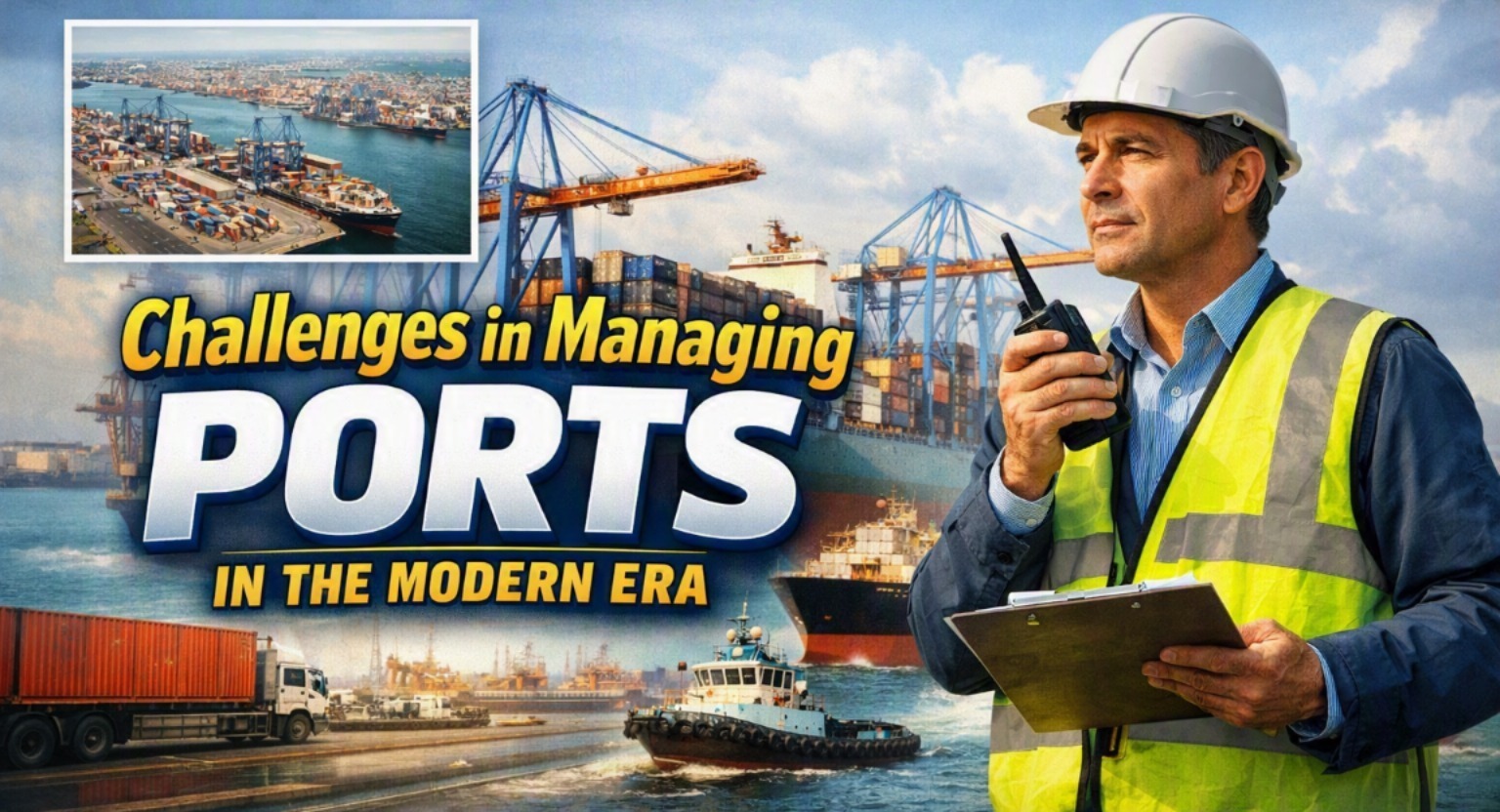
Ports are a vital part of global trade because they connect sea transportation with national and international supply chains. Millions of tons of goods move through ports every year, making efficient port management essential for businesses, consumers, and governments. However, managing a modern port is becoming more complex as trade volumes grow, technology develops, and environmental requirements become stricter. Port operators must balance efficiency, safety, security, sustainability, and cost control at the same time. Understanding these challenges is important for building ports that can support economic growth in the future.
INCREASING CARGO VOLUMES AND OPERATIONAL COMPLEXITY
One of the biggest challenges in modern port management is handling increasing cargo volumes without causing delays. Larger ships can carry more containers, but they also require deeper channels, longer berths, and more capable handling equipment. When cargo arrives in large quantities at the same time, terminals can experience congestion in yards, gates, and transportation networks. These problems may increase waiting times and raise logistics costs for businesses. Therefore, ports need efficient scheduling, adequate infrastructure, and well-coordinated operations.
Port managers also have to coordinate many activities simultaneously, including vessel arrivals, cargo loading and unloading, customs procedures, storage, and inland transportation. A delay in one part of the process can affect the entire supply chain. Digital planning systems and real-time data can help operators identify bottlenecks and improve the movement of goods. However, technology must be supported by trained workers and effective management procedures. Operational coordination remains essential even in highly automated ports.
ADAPTING TO RAPID TECHNOLOGICAL CHANGE
Technology has transformed the way modern ports operate. Automation, artificial intelligence, Internet of Things devices, digital platforms, and data analytics can improve productivity and provide better visibility across port operations. Automated cranes and smart tracking systems, for example, can reduce manual work and improve the accuracy of cargo handling. However, adopting new technology requires substantial investment in equipment, software, maintenance, and employee training. Smaller ports may face greater difficulties because they have limited financial and technical resources.
Another challenge is ensuring that different digital systems can communicate with each other. Ports often work with shipping companies, customs authorities, logistics providers, terminal operators, and other stakeholders that may use different platforms. Poor system integration can create duplicated data, communication problems, and inefficient processes. Port operators therefore need interoperable digital systems and reliable data management. Technology should not simply be introduced for modernization but should solve real operational problems.
MAINTAINING PORT SECURITY AND CYBERSECURITY
Ports are important infrastructure, so security is a major concern. They must protect vessels, cargo, employees, facilities, and surrounding communities from various physical threats. Security measures may include access controls, surveillance systems, cargo inspections, identification systems, and emergency response procedures. At the same time, security procedures should not create unnecessary delays for legitimate trade. Effective port management requires a careful balance between security and operational efficiency.
The growing use of digital technology has also increased cybersecurity risks. Port systems may contain sensitive information and control important operational processes. Cyberattacks could disrupt cargo handling, vessel scheduling, communication, or other critical services. For this reason, ports need strong network protection, regular security assessments, data backups, and employee awareness programs. Cybersecurity must be treated as an ongoing management responsibility rather than a one-time investment.
MEETING ENVIRONMENTAL AND SUSTAINABILITY REQUIREMENTS
Modern ports are under increasing pressure to reduce their environmental impact. Port activities can contribute to air pollution, greenhouse gas emissions, water pollution, noise, and waste. Ships, cargo-handling equipment, trucks, and other vehicles may all contribute to emissions around port areas. As environmental standards become more demanding, port authorities and operators must find cleaner and more efficient ways to conduct their activities. This can require significant investment in cleaner equipment, energy systems, and environmental management.
Ports are also exploring solutions such as shore power, renewable energy, electric equipment, cleaner fuels, and efficient waste management. These measures can reduce emissions, but their implementation depends on infrastructure, technology availability, costs, and cooperation among stakeholders. Port development must also consider the impact on nearby communities and marine ecosystems. Sustainable management is therefore not only an environmental issue but also a long-term economic and social responsibility.
DEALING WITH INFRASTRUCTURE LIMITATIONS
A modern port needs infrastructure that can accommodate changing trade patterns and increasingly large vessels. However, expanding berths, terminals, navigation channels, storage areas, roads, rail connections, and supporting facilities can require large amounts of money and land. Construction may also take years and can be affected by environmental regulations, urban development, and community concerns. Ports must therefore carefully determine which infrastructure projects provide the greatest long-term benefits.
Infrastructure planning is particularly challenging when cargo demand changes unexpectedly. Building facilities that are too small can create congestion, while excessive expansion can result in underused assets and financial losses. Port managers need accurate forecasts and flexible development strategies to respond to future demand. Strong connections with road, rail, and inland logistics networks are also important because port efficiency depends on what happens beyond the terminal gates.
MANAGING COSTS AND COMPETITIVE PRESSURE
Port management requires continuous investment, but operators must also keep services cost-efficient and competitive. Expenses can include infrastructure maintenance, labor, energy, equipment, technology, security, environmental programs, and regulatory compliance. Rising operational costs can affect port charges and ultimately influence the competitiveness of businesses using the port. Managers must therefore identify opportunities to improve productivity without reducing service quality or safety.
Competition between ports can also become intense as shipping companies and logistics providers compare cost, reliability, connectivity, handling speed, and service quality. A port with modern facilities may still lose customers if its operations are slow or its inland connections are inefficient. Port authorities need to understand changing market demands and continuously improve their services. Competitive port management depends on efficiency, reliability, innovation, and the ability to respond to customer needs.
DEVELOPING SKILLED HUMAN RESOURCES
Although automation is increasing, skilled workers remain essential to modern port operations. Employees need to understand digital systems, automated equipment, safety procedures, logistics processes, and emergency response. As technology changes, some traditional roles may also require new skills. This creates a challenge for port operators because employee training must keep pace with technological developments.
Effective human resource management should include regular training, certification, safety education, and opportunities to develop technical skills. Workers also need to understand how to cooperate with automated systems rather than simply operate traditional equipment. A skilled workforce can help ports adopt new technologies while maintaining safe and reliable operations. Investing in people is therefore just as important as investing in infrastructure and machines.
STRENGTHENING COLLABORATION AMONG STAKEHOLDERS
Ports involve many stakeholders, including port authorities, terminal operators, shipping companies, customs agencies, freight forwarders, trucking companies, railway operators, and government institutions. Each organization has different responsibilities and operational priorities. Weak coordination can lead to information gaps, delays, duplicated procedures, and inefficient use of resources. Modern ports need stronger cooperation to ensure that cargo moves smoothly from ships to final destinations.
Digital platforms can support collaboration by allowing stakeholders to share information about vessel schedules, cargo status, documentation, and transportation arrangements. Clear regulations and standardized procedures can also reduce unnecessary administrative barriers. Successful port management depends on communication, data sharing, and coordinated decision-making. Strong collaboration helps ports become more resilient and responsive when unexpected disruptions occur.
CONCLUSION
Managing ports in the modern era involves much more than loading and unloading cargo. Port operators must address congestion, technological change, cybersecurity, environmental requirements, infrastructure limitations, rising costs, workforce development, and stakeholder coordination. These challenges are closely connected, meaning that solving one problem often requires improvements in several other areas. Ports that fail to adapt may face higher costs, lower competitiveness, and greater operational risks.
The future of port management depends on combining smart technology, sustainable infrastructure, skilled workers, strong security, and effective cooperation. Modernization should focus not only on increasing capacity but also on improving reliability, safety, environmental performance, and supply chain resilience. By responding strategically to these challenges, ports can continue to support international trade and contribute to long-term economic development.
About the Author
Gusti Ayu Tita P
Author — STEKOM University
An active author focused on academic issues, educational technology, and human resource development in the campus environment.















