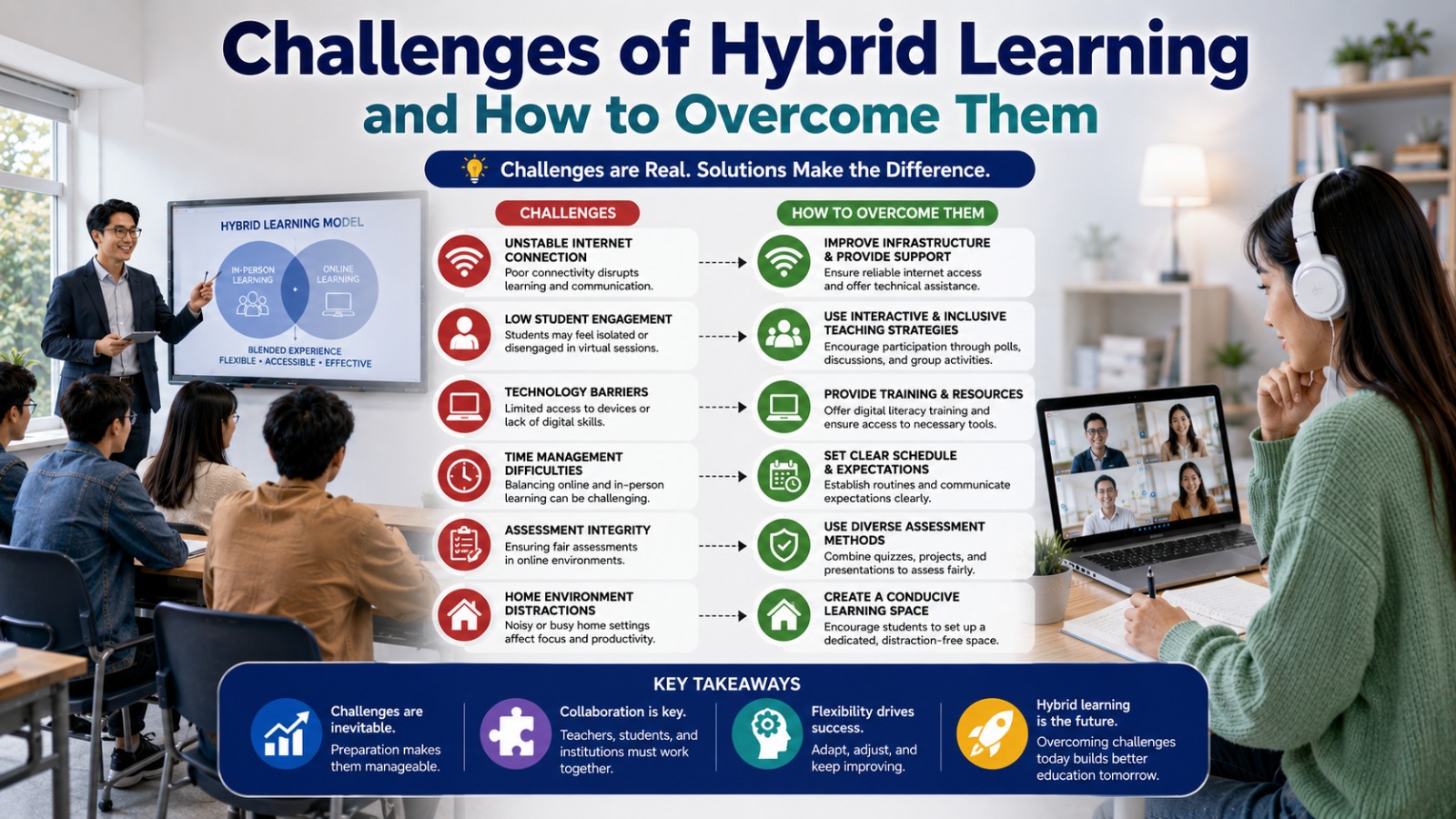
Hybrid learning has become one of the most popular educational methods in the modern digital era. By combining face-to-face classroom instruction with online learning activities, this approach offers flexibility, accessibility, and interactive learning experiences for students and lecturers. Many schools, universities, and educational institutions have adopted hybrid learning to meet the changing demands of education and technology.
However, despite its many advantages, hybrid learning also presents several challenges. Technical issues, communication barriers, and student engagement problems can affect the effectiveness of the learning process. To maximize the benefits of hybrid learning, educational institutions must understand these challenges and develop effective strategies to overcome them.
UNDERSTANDING HYBRID LEARNING
Hybrid learning is a teaching method that integrates traditional classroom learning with digital education systems. In this model, students participate in both in-person classes and online learning activities through digital platforms such as video conferencing tools, learning management systems, and virtual discussion forums.
This combination allows students to enjoy flexible learning opportunities while maintaining direct interaction with lecturers and classmates. Hybrid learning also encourages the use of technology to support modern educational practices.
LIMITED INTERNET ACCESS
One of the biggest challenges in hybrid learning is unstable or limited internet access. Online learning activities require reliable internet connections for video conferences, digital assignments, and access to educational resources.
Students who live in remote areas or have limited financial resources may struggle to participate effectively in online classes. Poor internet connectivity can cause interruptions during lessons, reduce communication quality, and negatively affect academic performance.
HOW TO OVERCOME THIS CHALLENGE
Educational institutions can help solve this problem by providing offline learning materials, recorded lectures, and downloadable resources that students can access anytime. Governments and universities can also improve internet infrastructure and offer financial assistance for internet access and digital devices.
Lecturers should design flexible learning activities that do not rely entirely on real-time online participation.
LACK OF DIGITAL DEVICES
Not all students have access to laptops, tablets, or smartphones that support online learning platforms. Limited access to technology can create inequality among students and reduce learning effectiveness.
Students without proper devices may face difficulties completing assignments, joining virtual discussions, or accessing digital learning materials.
HOW TO OVERCOME THIS CHALLENGE
Educational institutions can provide device loan programs or establish computer laboratories with internet access for students who need technological support. Universities can also collaborate with technology companies to provide affordable devices for students.
Creating mobile-friendly learning platforms can also help students participate using smartphones when other devices are unavailable.
LOW STUDENT ENGAGEMENT
Maintaining student participation and motivation during online sessions can be difficult. Some students may feel distracted, isolated, or less interested in digital learning environments compared to traditional classrooms.
Long online lectures and limited interaction can reduce student enthusiasm and participation levels.
HOW TO OVERCOME THIS CHALLENGE
Lecturers should create engaging and interactive learning experiences using quizzes, group discussions, multimedia presentations, and collaborative projects. Shorter learning sessions combined with interactive activities can help maintain student attention.
Providing regular feedback and encouraging open communication can also improve student motivation and participation.
DIFFICULTIES IN TIME MANAGEMENT
Hybrid learning requires students to manage their schedules independently. Some students may struggle with balancing online assignments, classroom activities, and personal responsibilities.
Poor time management can lead to missed deadlines, reduced productivity, and increased academic stress.
HOW TO OVERCOME THIS CHALLENGE
Lecturers should provide clear schedules, assignment deadlines, and learning expectations from the beginning of the course. Educational institutions can also offer time management workshops and academic support services to help students develop organizational skills.
Using digital calendars and reminder systems can assist students in managing their learning responsibilities more effectively.
LIMITED FACE-TO-FACE INTERACTION
Although hybrid learning includes classroom sessions, students and lecturers may still experience reduced direct interaction compared to fully traditional learning environments.
Limited social interaction can affect collaboration, communication, and emotional connection among students.
HOW TO OVERCOME THIS CHALLENGE
Lecturers should encourage collaborative activities, group projects, and classroom discussions to strengthen social interaction. Virtual breakout rooms and online teamwork exercises can also help students communicate and collaborate more effectively.
Creating supportive learning communities can improve student relationships and increase engagement.
CHALLENGES FOR LECTURERS
Hybrid learning also creates challenges for lecturers. They must adapt to new technologies, prepare digital learning materials, and manage both online and offline teaching environments simultaneously.
Designing effective hybrid courses often requires additional time and technical skills.
HOW TO OVERCOME THIS CHALLENGE
Educational institutions should provide professional training programs to improve lecturers’ digital teaching skills. Technical support teams can help lecturers solve technological issues and use educational platforms more effectively.
Collaboration among lecturers can also encourage the sharing of teaching strategies and innovative learning methods.
ASSESSMENT AND EVALUATION PROBLEMS
Evaluating student performance in hybrid learning environments can be more complicated than in traditional classrooms. Online exams may create concerns about academic honesty, while digital assignments may not fully measure student understanding.
HOW TO OVERCOME THIS CHALLENGE
Lecturers can use various assessment methods such as project-based assignments, presentations, open-book exams, and online discussions to evaluate student performance more accurately.
Combining online and in-person assessments can create a more balanced and reliable evaluation system.
MENTAL FATIGUE AND SCREEN TIME
Spending long hours in front of screens can cause physical and mental fatigue for both students and lecturers. Online learning fatigue may reduce concentration, productivity, and motivation.
HOW TO OVERCOME THIS CHALLENGE
Lecturers should balance online and offline activities to reduce excessive screen time. Short breaks during online sessions and interactive activities can help students stay focused and energized.
Educational institutions should also encourage healthy study habits and provide mental health support when needed.
CONCLUSION
Hybrid learning offers many benefits, including flexibility, accessibility, and technological integration. However, challenges such as limited internet access, low student engagement, lack of digital devices, and time management difficulties can affect learning effectiveness.
By implementing proper strategies, educational institutions can overcome these obstacles and create successful hybrid learning environments. With continuous improvement and technological support, hybrid learning will continue to play an important role in the future of education.
About the Author
Gusti Ayu Tita P
Author — STEKOM University
An active author focused on academic issues, educational technology, and human resource development in the campus environment.