Challenges Of Sea Transportation In Indonesia And How To Overcome Them
Gusti Ayu Tita P
11 Agustus 2026
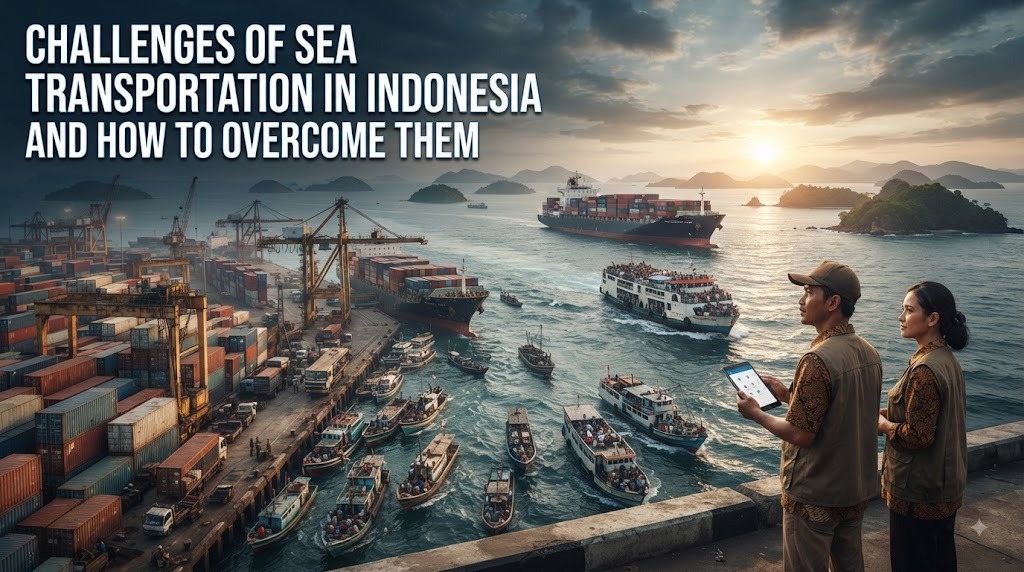
Indonesia is an archipelagic country with thousands of islands separated by large areas of sea. This geographical condition makes sea transportation essential for connecting communities, businesses, industries, and markets. Ships transport food, fuel, raw materials, manufactured products, and other essential goods between islands. Sea transportation also supports Indonesia's export and import activities through major ports. However, the country still faces several challenges that can affect the efficiency, safety, and reliability of maritime transportation.
These challenges include differences in infrastructure quality, high logistics costs, weather conditions, limited connectivity, human resource issues, and technological gaps. Some ports have modern facilities, while others still need significant improvements. These differences can make transportation services less efficient in certain regions. Addressing these problems requires cooperation between the government, private companies, port operators, shipping businesses, and local communities. With appropriate strategies, Indonesia can strengthen its maritime transportation system and improve national connectivity.
THE IMPORTANCE OF SEA TRANSPORTATION IN INDONESIA
Sea transportation is a major part of Indonesia's national logistics network. Ships can transport large quantities of cargo over long distances, making them suitable for moving goods between islands. Maritime routes help connect production centers with consumer markets and industrial areas. They also provide access to regions where land transportation is limited or unavailable. Sea transportation therefore plays an important role in Indonesia's economic and social connectivity.
Maritime transportation also supports international trade. Indonesian commodities are transported through ports to overseas markets, while imported goods and raw materials enter the country through maritime routes. Reliable shipping services can help businesses manage their supply chains and maintain stable inventories. Efficient maritime connectivity can also support tourism and regional economic development. Strengthening sea transportation is therefore important for Indonesia's long-term economic growth.
LIMITED PORT INFRASTRUCTURE
One of the major challenges is the uneven quality of port infrastructure. Some major ports have modern terminals, advanced equipment, and large cargo-handling capacities. However, smaller and remote ports may have limited facilities and lower operational capacity. Limited port infrastructure can cause longer loading and unloading times. It can also increase transportation costs and create delays in the distribution process.
Improving port infrastructure requires long-term investment and careful planning. Ports need suitable berths, cargo-handling equipment, storage areas, navigation systems, and reliable access roads. Development should consider the actual needs of each region rather than applying the same approach everywhere. Modernizing smaller ports can improve connections between remote areas and larger economic centers. Better infrastructure can ultimately make maritime transportation more efficient and reliable.
HIGH LOGISTICS COSTS
High logistics costs remain another challenge for Indonesian maritime transportation. Costs can be influenced by fuel prices, port fees, cargo handling, vessel operations, storage, and inland transportation. Long waiting times can also increase expenses for shipping companies. These additional costs may eventually affect the prices paid by consumers. Logistics efficiency is therefore important for improving the competitiveness of Indonesian businesses.
Reducing logistics costs requires better coordination across the entire supply chain. Shipping schedules should be planned efficiently to reduce empty trips and unnecessary waiting. Ports can improve cargo handling processes through digital systems and modern equipment. Better connections between ports, warehouses, roads, and distribution centers can also reduce additional transportation expenses. An integrated logistics system can help make maritime transportation more affordable.
WEATHER AND SEA CONDITIONS
Weather and sea conditions can significantly affect maritime transportation in Indonesia. Heavy rain, strong winds, high waves, storms, and poor visibility can delay vessel operations. These conditions may also create safety risks for ships and passengers. Weather disruptions can affect delivery schedules and cause uncertainty in supply chains. Smaller vessels and routes in exposed waters may be particularly vulnerable to difficult conditions.
Modern technology can help reduce some of these risks. Weather forecasting systems, satellite information, and digital navigation tools can provide crews with updated information. Shipping companies can use this information to adjust routes or departure times when necessary. However, technology cannot eliminate all weather-related risks. Proper safety procedures, trained crews, and effective emergency planning remain essential.
UNEVEN MARITIME CONNECTIVITY
Indonesia has many remote islands that are separated from major economic centers. Some regions have regular shipping services, while others may have limited schedules and fewer transportation options. Uneven maritime connectivity can make it difficult for businesses in remote areas to reach larger markets. It can also increase the cost of supplying essential goods to isolated communities. Improving connectivity is therefore an important national priority.
One solution is to strengthen regular shipping routes between major ports and smaller regional ports. Shipping networks should be designed according to local economic needs and cargo demand. Government-supported services can also help maintain connectivity in areas where commercial services are not yet profitable. Better connections between sea, road, and other transportation modes are equally important. Improved connectivity can support more balanced regional development.
OLD VESSELS AND OPERATIONAL EFFICIENCY
Some vessels operating in regional routes may have older designs or equipment. Older vessels can consume more fuel and may require more frequent maintenance. Aging equipment can also affect operational reliability if maintenance is not managed properly. Vessel modernization can improve fuel efficiency, safety, and service reliability. However, replacing or upgrading vessels requires significant financial investment.
Shipping companies can gradually improve their fleets through maintenance, equipment upgrades, and the introduction of more efficient vessels. Digital monitoring systems can help operators identify equipment problems earlier. Government policies and financing programs can also encourage fleet modernization when appropriate. Safety inspections must remain a priority throughout the process. A modern and well-maintained fleet can improve the overall quality of maritime services.
LIMITED USE OF DIGITAL TECHNOLOGY
Digital technology can improve maritime operations, but adoption is not equal across all regions. Major shipping companies and ports may already use advanced digital systems, while smaller operators may still depend heavily on manual processes. Limited digitalization can slow down documentation, cargo tracking, and communication. Maritime digitalization can help solve these problems by connecting information across different parts of the supply chain.
Digital platforms can be used for booking, documentation, vessel tracking, cargo management, and port coordination. Real-time information can help businesses monitor shipments and respond to delays more quickly. However, digital transformation requires reliable internet infrastructure and trained personnel. Cybersecurity measures are also necessary to protect sensitive information. Gradual and practical digital adoption can help smaller operators participate in the modern maritime economy.
COMPLEX REGULATIONS AND ADMINISTRATION
Maritime transportation involves many regulations related to safety, customs, cargo, environmental protection, and port operations. Complex administrative processes can sometimes increase the time required to complete transportation activities. Efficient maritime regulation should provide strong safety and environmental protection without creating unnecessary delays. Digital documentation can help simplify some administrative processes.
Government agencies and maritime stakeholders need effective coordination. Electronic systems can allow information to be shared more efficiently between relevant authorities and businesses. Clear procedures can reduce confusion and administrative errors. Regulations should also be reviewed as technology and maritime business models develop. A transparent and efficient regulatory system can support a more competitive maritime sector.
HOW TO IMPROVE PORT EFFICIENCY
Improving port efficiency is one of the most effective ways to strengthen sea transportation. Ports can increase productivity by using modern cargo-handling equipment and digital management systems. Better scheduling can reduce vessel waiting times and improve berth utilization. Smart port systems can also improve communication between shipping companies, terminal operators, and logistics providers.
Port efficiency should also be supported by good connections to roads, warehouses, and distribution centers. Cargo should be able to move quickly after leaving the port. Digital tracking can provide information about cargo status and reduce uncertainty. Regular performance evaluations can help identify operational problems. Efficient ports can reduce logistics costs and improve the competitiveness of Indonesian trade.
STRENGTHENING MARITIME CONNECTIVITY
Improving maritime connectivity requires a network approach rather than focusing only on individual ports. Major ports need strong connections with regional and smaller ports. Regular shipping services can help ensure that remote communities have access to essential goods and markets. Maritime connectivity can also support the development of local industries and tourism.
Transportation planning should integrate sea routes with road, rail, warehouse, and distribution systems. This approach can reduce unnecessary transfers and improve delivery times. Government support may be needed for routes that are socially important but commercially challenging. Private companies can contribute through investment and improved services. Strong connectivity can help reduce regional economic disparities.
USING MODERN TECHNOLOGY
Technology provides many opportunities to overcome challenges in Indonesian sea transportation. Satellite navigation, vessel tracking, artificial intelligence, sensors, and digital port systems can improve operational control. Modern maritime technology can help companies reduce fuel consumption, monitor equipment, and improve route planning. Digital platforms can also make cargo information easier to access.
Technology adoption should be based on actual operational needs and available resources. Smaller companies may require affordable digital solutions rather than complex systems. Workers must receive adequate training to operate new technologies. Cybersecurity should be included in every digital transformation strategy. Responsible technology adoption can improve efficiency without creating unnecessary financial burdens.
PROMOTING GREEN SEA TRANSPORTATION
Indonesia can strengthen its maritime sector by encouraging cleaner and more efficient transportation. Fuel-efficient engines, alternative fuels, hybrid systems, and improved vessel designs can reduce environmental impacts. Green sea transportation can also improve long-term energy efficiency. Ports can support the transition by developing suitable infrastructure for cleaner vessels.
The transition should be gradual and adapted to different types of vessels and routes. Not every technology is suitable for every maritime operation. Investment decisions should consider technical feasibility, safety, fuel availability, and economic costs. Research and cooperation with technology providers can help identify practical solutions. Sustainable maritime development can provide environmental benefits while supporting economic growth.
COOPERATION BETWEEN GOVERNMENT AND INDUSTRY
Solving maritime transportation challenges requires cooperation between different stakeholders. The government has an important role in infrastructure development, regulations, safety standards, and connectivity programs. Private companies contribute through investment, innovation, fleet management, and service improvements. Public and private cooperation can accelerate maritime development.
Local communities and educational institutions also have important roles. Communities can provide local knowledge about regional transportation needs and economic conditions. Educational institutions can prepare skilled workers for the changing maritime industry. Regular communication between stakeholders can help identify problems and develop practical solutions. Strong cooperation can create a more resilient and competitive maritime transportation system.
THE FUTURE OF INDONESIAN SEA TRANSPORTATION
The future of Indonesian sea transportation depends on improvements in infrastructure, technology, safety, connectivity, and sustainability. Smart ports and digitally connected vessels can improve the movement of goods and information. Cleaner technologies can reduce environmental impacts while improving energy efficiency. Future maritime transportation will need to balance economic growth with safety and environmental responsibility.
Indonesia has significant potential to strengthen its maritime position because of its geography and extensive sea routes. Continued investment can improve connections between islands and international markets. Better workforce development can support the adoption of new technologies. Effective regulations can create a stable environment for innovation and investment. With coordinated development, Indonesia can build a stronger and more reliable maritime transportation system.
CONCLUSION
Sea transportation is essential for Indonesia, but its development still faces challenges involving infrastructure, logistics costs, weather, connectivity, technology, safety, human resources, and environmental sustainability. These challenges can affect the reliability and competitiveness of maritime transportation. However, they can be addressed through better infrastructure, modern technology, skilled workers, efficient regulations, and stronger maritime networks.
The development of smart ports, digital logistics, modern vessels, green technologies, and integrated transportation systems can provide practical solutions. Cooperation between government agencies, private companies, educational institutions, and local communities is also necessary. By implementing these strategies consistently, Indonesia can improve maritime efficiency and strengthen economic connectivity between regions. A modern, safe, efficient, and sustainable sea transportation system can support Indonesia's long-term economic development.
About the Author
Gusti Ayu Tita P
Author — STEKOM University
An active author focused on academic issues, educational technology, and human resource development in the campus environment.