
Changing Mobility Patterns in the Digital Era
Gusti Ayu Tita P
11 Agustus 2026
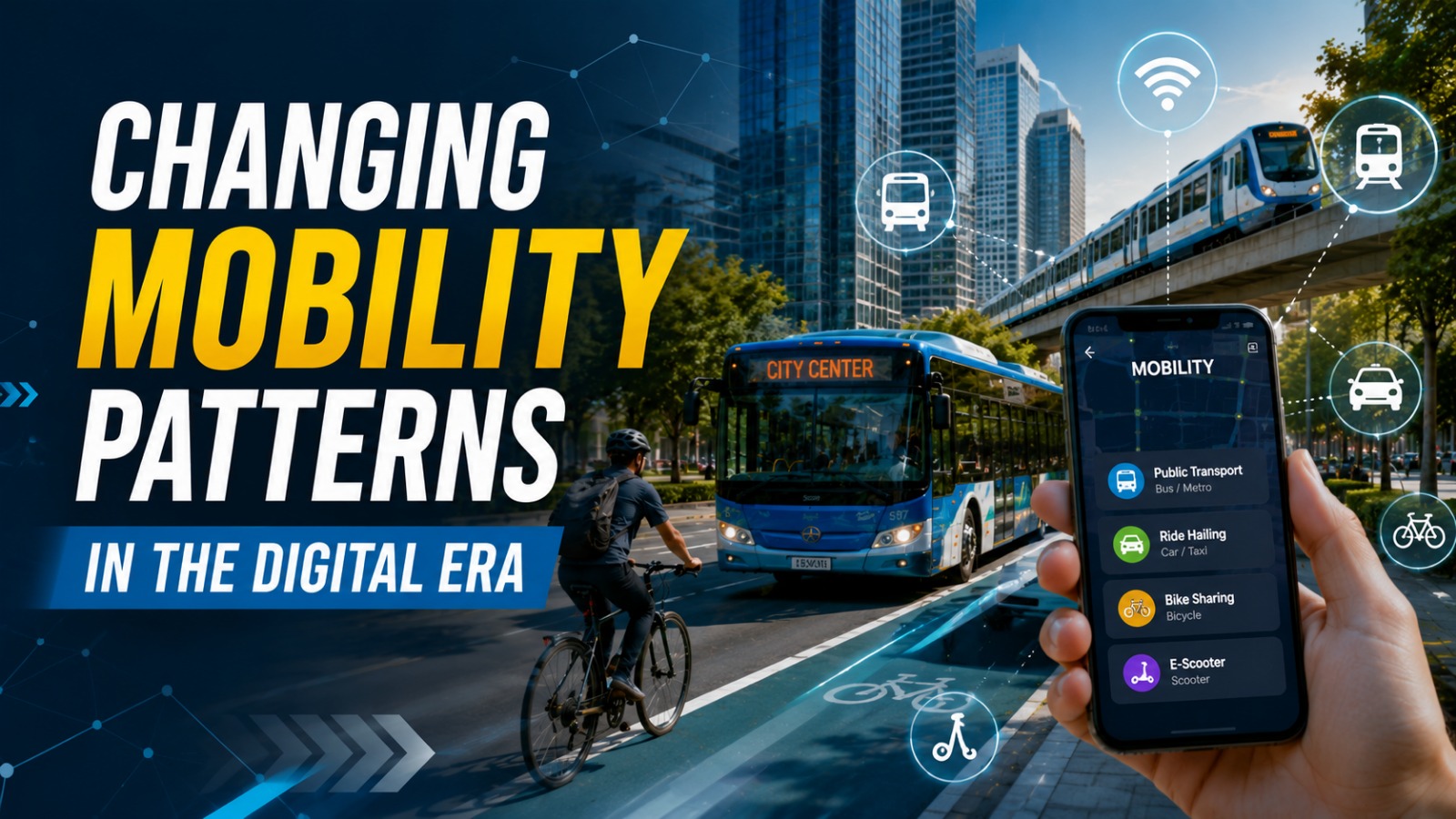
The way people travel is changing as digital technology becomes part of everyday life. Smartphones, online platforms, navigation applications, digital payments, and real-time information have changed how people plan and complete journeys. Travelers can now compare routes, check traffic conditions, order transportation, and make payments through connected devices. These developments are creating new mobility patterns that are more flexible and increasingly influenced by digital information.
Digitalization is also changing the relationship between passengers, transportation providers, and urban infrastructure. People can combine different modes of transportation based on time, cost, convenience, and availability. At the same time, transportation operators can use data to understand demand and improve their services. Technology is therefore becoming an important part of modern mobility management, although it also creates challenges related to privacy, cybersecurity, accessibility, and digital inequality.
THE RISE OF DIGITAL TRAVEL PLANNING
Travel planning has become easier through digital navigation and journey planning applications. Instead of relying only on printed maps or fixed schedules, travelers can receive directions based on current traffic, public transport availability, and estimated travel times. Applications can suggest different routes and allow users to compare transportation options before starting a journey.
Real-time information is particularly valuable when unexpected disruptions occur. Passengers can receive updates about delays, road closures, accidents, or changes in public transport services. Access to timely information gives travelers greater control over their journeys and can help them make faster decisions when conditions change.
GROWTH OF RIDE HAILING SERVICES
Digital platforms have transformed how many people access ride hailing and on-demand transportation. Through mobile applications, users can request a vehicle, select a destination, receive estimated fares, and track their driver's location. This provides greater convenience than traditional transportation services that may require passengers to find a vehicle directly on the street.
Ride hailing can also influence travel behavior by making transportation available on demand. However, its effect on congestion and sustainability can vary depending on how the service is used. Shared rides and integration with public transport may provide different outcomes from trips that replace walking, cycling, or public transportation.
DIGITAL PAYMENTS AND TICKETING
The spread of cashless payment systems has changed the way passengers pay for transportation. Mobile wallets, contactless cards, QR codes, and transportation applications can reduce the need to carry cash. Faster payment processes can also make boarding more efficient, especially in busy public transport systems.
Digital ticketing can become even more useful when different services are connected. A single payment system may allow passengers to use multiple modes during one journey, depending on the local transportation network. Integrated digital payments can make transfers simpler and improve the overall passenger experience.
THE EXPANSION OF SHARED MOBILITY
The digital era has encouraged the growth of shared mobility services. Bike sharing, scooter sharing, car sharing, and other short-term rental services can provide additional transportation choices without requiring users to own a vehicle. Mobile applications usually allow users to locate, unlock, pay for, and return shared vehicles.
Shared mobility can be useful for short journeys and first or last mile connections. For example, a passenger may take a train for a long part of a journey and use a shared bicycle to reach the final destination. Combining shared mobility with public transportation can create more flexible travel options and potentially reduce dependence on private vehicle ownership.
REMOTE WORK AND CHANGING TRAVEL DEMAND
Digital technology has also changed mobility by enabling remote and hybrid work. Employees who can work from home may no longer need to commute to an office every day. This can reduce certain types of daily commuting, although travel patterns may become more spread throughout the day and week.
The effects vary between industries, occupations, and locations. Some workers still need to travel to workplaces, while others combine home working with occasional office visits. Flexible work arrangements can change peak-hour travel demand, creating new challenges for transportation operators that traditionally design services around predictable commuting patterns.
DATA DRIVEN TRANSPORTATION MANAGEMENT
Transportation providers can use digital technology to collect and analyze mobility data. Information from GPS systems, ticketing platforms, sensors, and transportation applications can provide insights into passenger demand and traffic conditions. This information can help authorities understand where congestion occurs and how people move through cities.
Data can support decisions about routes, schedules, vehicle allocation, and infrastructure improvements. However, collecting mobility data also requires responsible management. Privacy protection, cybersecurity, data accuracy, and transparent governance are important when transportation systems rely increasingly on digital information.
SMARTER PUBLIC TRANSPORTATION
Public transportation is becoming more connected through smart mobility technology. Buses and trains can use GPS, sensors, automated monitoring, and digital communication systems to improve operations. Passengers can receive real-time arrival information, while operators can monitor vehicles and respond to disruptions more effectively.
Smart systems can also support predictive maintenance and energy management. By analyzing vehicle conditions and operational data, transport providers may identify potential problems before they cause major service disruptions. Digital tools can improve reliability and efficiency, but their success depends on good infrastructure, skilled personnel, and effective management.
CHANGING VEHICLE OWNERSHIP AND USAGE
Digital mobility services may influence how people think about vehicle ownership. In some urban areas, people can access ride hailing, car sharing, public transport, bicycles, and other services without owning every type of vehicle they need. This can make mobility more service-oriented rather than completely ownership-based.
However, vehicle ownership remains important for many households, particularly where public transport coverage is limited. Rural areas and suburban communities may have fewer shared mobility options than dense urban centers. Digital mobility does not affect every community in the same way, so transportation planning must consider local conditions and accessibility.
CHALLENGES OF DIGITAL MOBILITY
The digital transformation of transportation also creates important challenges. People without smartphones, reliable internet connections, bank accounts, or digital skills may have difficulty accessing some modern mobility services. This creates a risk of digital exclusion, particularly for vulnerable groups.
Cybersecurity is another major concern because transportation systems increasingly depend on connected devices and digital platforms. Service disruptions, data breaches, or system failures can affect large numbers of passengers. Transportation providers therefore need strong security, backup systems, accessible alternatives, and clear emergency procedures.
THE FUTURE OF MOBILITY
Future mobility will likely become increasingly connected, flexible, and data-driven. Autonomous vehicle technology, electric mobility, smart infrastructure, artificial intelligence, and integrated transportation platforms may change how people travel. However, adoption will depend on technological reliability, regulations, infrastructure, affordability, and public acceptance.
The most successful digital mobility systems will not focus only on technology. They will prioritize safe, affordable, accessible, and sustainable transportation while using digital tools to improve the passenger experience. Technology should support people's mobility needs rather than create unnecessary complexity.
CONCLUSION
Changing mobility patterns in the digital era are transforming how people plan, access, pay for, and experience transportation. Navigation applications, ride hailing, digital payments, shared mobility, remote work, and data-driven transportation management are influencing daily travel decisions. These developments can make mobility more flexible and convenient while giving transportation providers new tools for improving services.
At the same time, digital mobility must address privacy, cybersecurity, accessibility, digital inequality, and system reliability. The future of transportation will depend on combining technological innovation with thoughtful planning and inclusive policies. When digital tools are implemented effectively, they can help create mobility systems that are more connected, responsive, efficient, and adaptable to changing travel needs.
About the Author
Gusti Ayu Tita P
Author — STEKOM University
An active author focused on academic issues, educational technology, and human resource development in the campus environment.















