
College Years Are Short Do Not Just Be a Spectator
Gusti Ayu Tita P
24 Februari 2026
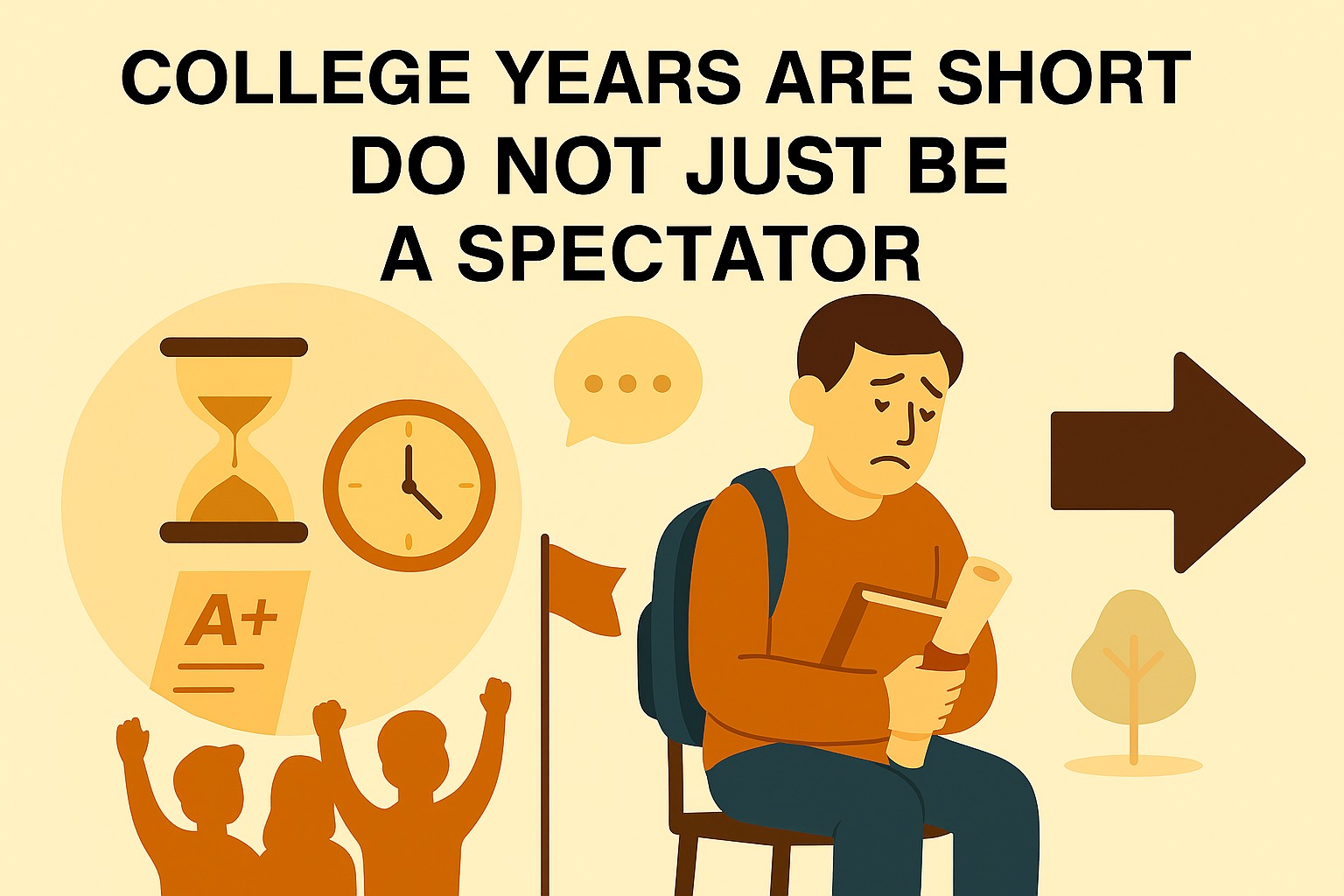
College is often described as one of the most transformative phases of life. It is a time filled with new ideas, diverse communities, and endless possibilities. Yet, many students spend these valuable years merely observing rather than participating.
The reality is simple: college years are short. If you choose to only watch from the sidelines, you may graduate with a degree—but without the stories, skills, and connections that truly shape your future.
WHY COLLEGE TIME PASSES SO QUICKLY
The first semester feels long and unfamiliar. Adjusting to lectures, assignments, and new environments takes energy. However, as routines settle in, semesters begin to move faster than expected.
Before you realize it, final projects replace orientation days, and graduation approaches. Many students look back wishing they had taken more chances, joined more activities, or spoken up more often.
Time in college is limited, and once it passes, it cannot be repeated.
THE DIFFERENCE BETWEEN OBSERVING AND PARTICIPATING
Being a spectator means attending classes, listening quietly, and leaving campus once requirements are fulfilled. Participation, on the other hand, involves engaging in discussions, joining organizations, attending seminars, and building networks.
Active students experience challenges that stretch their abilities. They learn to collaborate, lead projects, manage conflict, and solve real problems. Spectators may avoid discomfort, but they also miss opportunities for meaningful growth.
Participation transforms learning from theory into lived experience.
OPPORTUNITIES THAT SHAPE YOUR FUTURE
Campus life offers more than academic lectures. Internships, research programs, student organizations, competitions, and community initiatives are designed to prepare students for professional life.
These opportunities help develop communication skills, leadership qualities, and adaptability. They also create networks that may open doors long after graduation.
Students who actively engage often leave college with stronger portfolios and greater confidence in their abilities.
STEPPING OUT OF THE COMFORT ZONE
Fear of failure or self-doubt often keeps students on the sidelines. However, growth rarely happens without discomfort. Speaking in public for the first time, applying for leadership roles, or volunteering for projects may feel intimidating—but these moments build resilience.
Start small. Join one club. Participate in one event. Initiate one conversation with a lecturer or peer. Small actions accumulate into meaningful experiences.
Each step beyond hesitation expands your confidence.
MAKING YOUR COLLEGE YEARS COUNT
College is not just a stage to collect credits; it is a platform to discover who you are and who you can become. The friendships you build, the challenges you overcome, and the risks you take will shape your personal and professional journey.
Do not let these years pass while you remain a spectator. Engage, contribute, and explore. When graduation arrives, you should carry not only a diploma but also experiences that define your growth.
In the end, the value of college is not measured solely by grades—but by how fully you choose to participate.
About the Author
Gusti Ayu Tita P
Author — STEKOM University
An active author focused on academic issues, educational technology, and human resource development in the campus environment.